
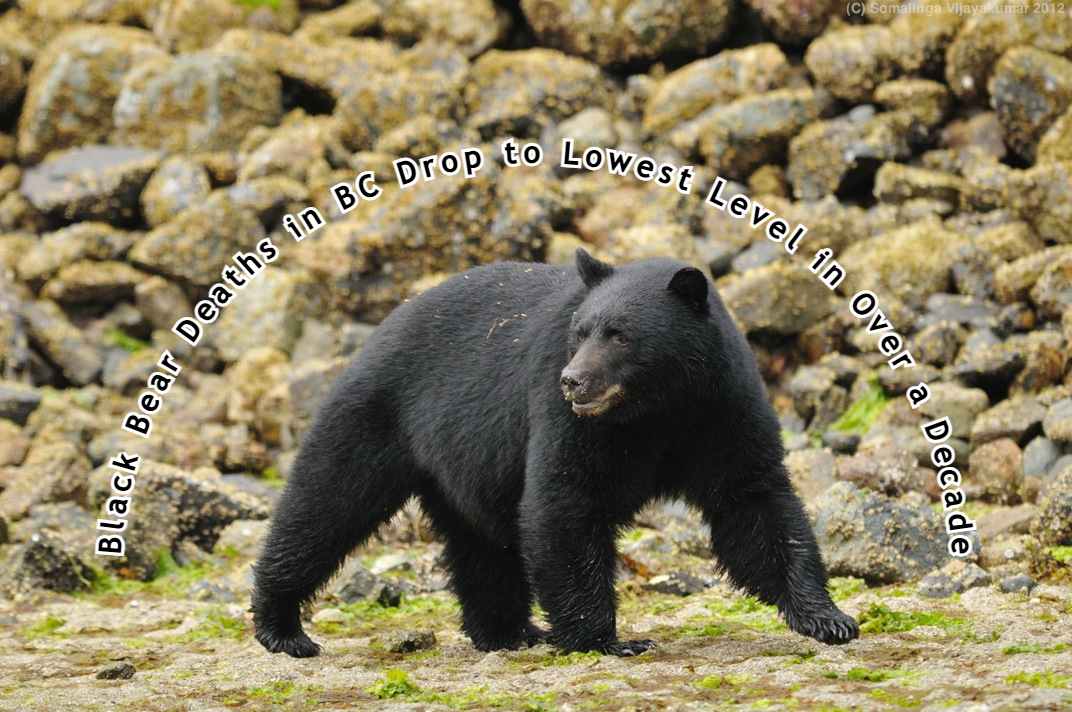
New data from the British Columbia Conservation Officer Service shows that fewer black bears were killed in the province in 2025 than in any year over the past decade, marking a significant decline in lethal wildlife encounters.
According to the figures, conservation officers dispatched 178 black bears for public safety reasons and euthanized 33 bears due to injury or welfare concerns. The combined total represents the lowest number of bears killed in conflict situations in roughly 15 years of available records and reflects a substantial drop compared with previous years, including a sharp decrease from 2023 levels.
Conservation officials note that bears are classified differently depending on circumstances. Bears are dispatched when they pose an immediate risk to public safety, often after becoming habituated to human food sources and repeatedly entering residential areas. Euthanization occurs when bears are suffering from serious injuries or health issues that cannot be treated.
Regionally, the West Coast recorded the highest number of bears killed for public safety reasons, while the Okanagan reported the most euthanizations linked to animal welfare concerns.
Strong Natural Food Supply Credited for Decline
Wildlife experts point to a particularly strong berry crop across much of British Columbia in 2025 as a key factor behind the reduced number of bear conflicts. When natural food sources are abundant, bears are less likely to roam into communities in search of unsecured garbage, compost, or other human-related attractants.
Some communities also reported fewer bear sightings overall, suggesting that many bears remained deeper in forested areas rather than venturing into populated zones.
Focus Remains on Prevention and Public Safety
Despite the encouraging numbers, conservation officers stress that human-bear conflicts remain largely preventable and continue to emphasize public education as a cornerstone of wildlife management.
Residents are encouraged to:
- Secure garbage, compost, pet food, and bird feeders;
- Keep barbecues clean and manage fruit trees carefully;
- Practice bear-aware behaviour when hiking or living near forested areas;
- Report bear sightings when animals show concerning behaviour.
Officials say proactive measures help protect both people and wildlife by reducing situations that lead to bears becoming habituated and ultimately destroyed.
A Positive Trend, With Caution
While the decline in bear killings is viewed as a positive sign for wildlife conservation in British Columbia, authorities caution that continued vigilance is necessary, particularly as communities expand into traditional bear habitat.
Conservation officers and wildlife advocates agree that ongoing education, community cooperation, and responsible management of attractants will be essential to maintaining and improving this trend in the years ahead.