
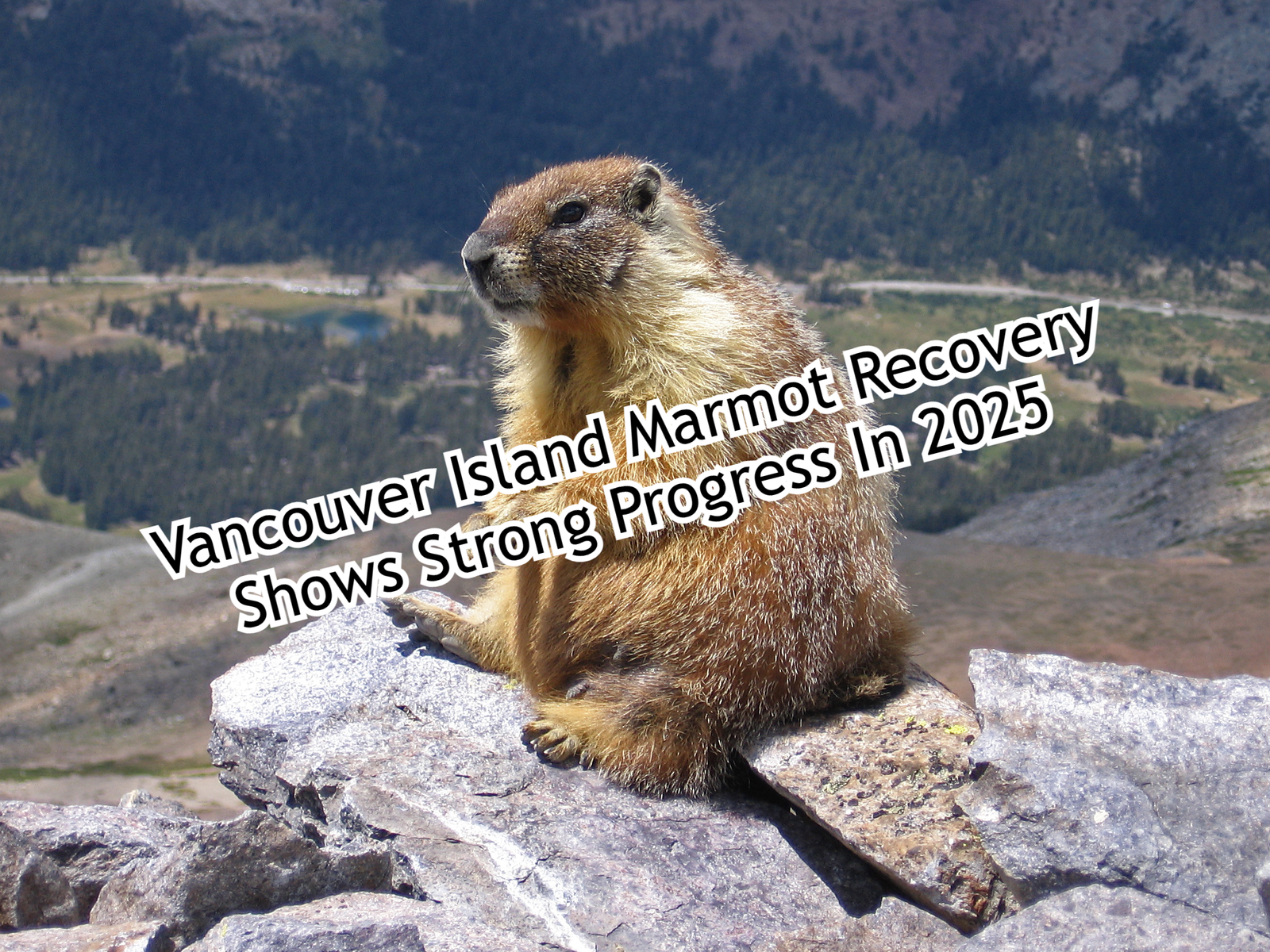
The recovery of the Vancouver Island marmot continues to gain momentum, offering a rare conservation success story for residents of Sayward and communities across northern Vancouver Island. The Marmot Recovery Foundation’s 2025 annual report shows the species has reached its highest-ever recorded wild population.
Once reduced to fewer than 30 animals in the early 2000s, the marmot has made a remarkable comeback thanks to decades of coordinated conservation work. Surveys in 2025 counted roughly 420 to 427 marmots living in the wild across nearly 40 colonies in alpine and subalpine habitats — steady progress for a species still listed as critically endangered.
What’s Driving the Recovery
The report credits a broad network of partners — conservation groups, governments, researchers, zoos, volunteers, and private landowners — for the species’ continued rebound. Key efforts in 2025 included:
Conservation breeding and releases
Captive-bred marmots were released into carefully chosen mountain habitats to strengthen small colonies and improve genetic diversity. These releases help stabilize vulnerable populations facing predation or environmental pressures.
Monitoring and field research
Biologists spent months in remote terrain tracking survival, reproduction, dispersal, and threats. This on-the-ground work helps identify which colonies are thriving and which may need additional support.
Habitat management
Marmots rely on open alpine meadows with clear sightlines to spot predators. Ongoing efforts to maintain and restore these meadows — especially where forests are encroaching due to climate shifts or reduced avalanche activity — remain essential for long-term survival.
Challenges Still Ahead
Despite encouraging numbers, the report stresses that recovery remains fragile. Marmots reproduce slowly, often only every second year, and are highly sensitive to environmental changes. Predation continues to be a major threat, and shifts in snowpack, vegetation, and weather patterns could affect habitat quality.
Because colonies are isolated on separate mountaintops, a single harsh winter or poor breeding season can significantly impact local populations. Continued monitoring and targeted intervention remain critical.
Why This Matters to Sayward
For Sayward residents, the marmot’s recovery highlights the importance of protecting the ecosystems that define northern Vancouver Island. Many colonies are located within a few hours of the community, in mountain areas familiar to hikers, forestry workers, and backcountry users.
The marmot’s rebound also shows how conservation and resource use can coexist when guided by science and careful planning. It reinforces the value of preserving the natural landscapes that shape daily life and identity in rural communities.
Local residents contribute by respecting wildlife habitats, supporting conservation programs, and helping raise awareness about the species’ vulnerability.
Looking Ahead
The Marmot Recovery Foundation plans to continue releases, monitoring, and habitat restoration in the coming years, with the long-term goal of building larger, self-sustaining wild populations that require less human intervention. Full recovery will take time, but the steady gains documented in 2025 offer cautious optimism.
For Sayward and the rest of Vancouver Island, the marmot’s gradual return is a reminder that long-term commitment, community involvement, and collaboration can reverse even the most severe wildlife declines.