
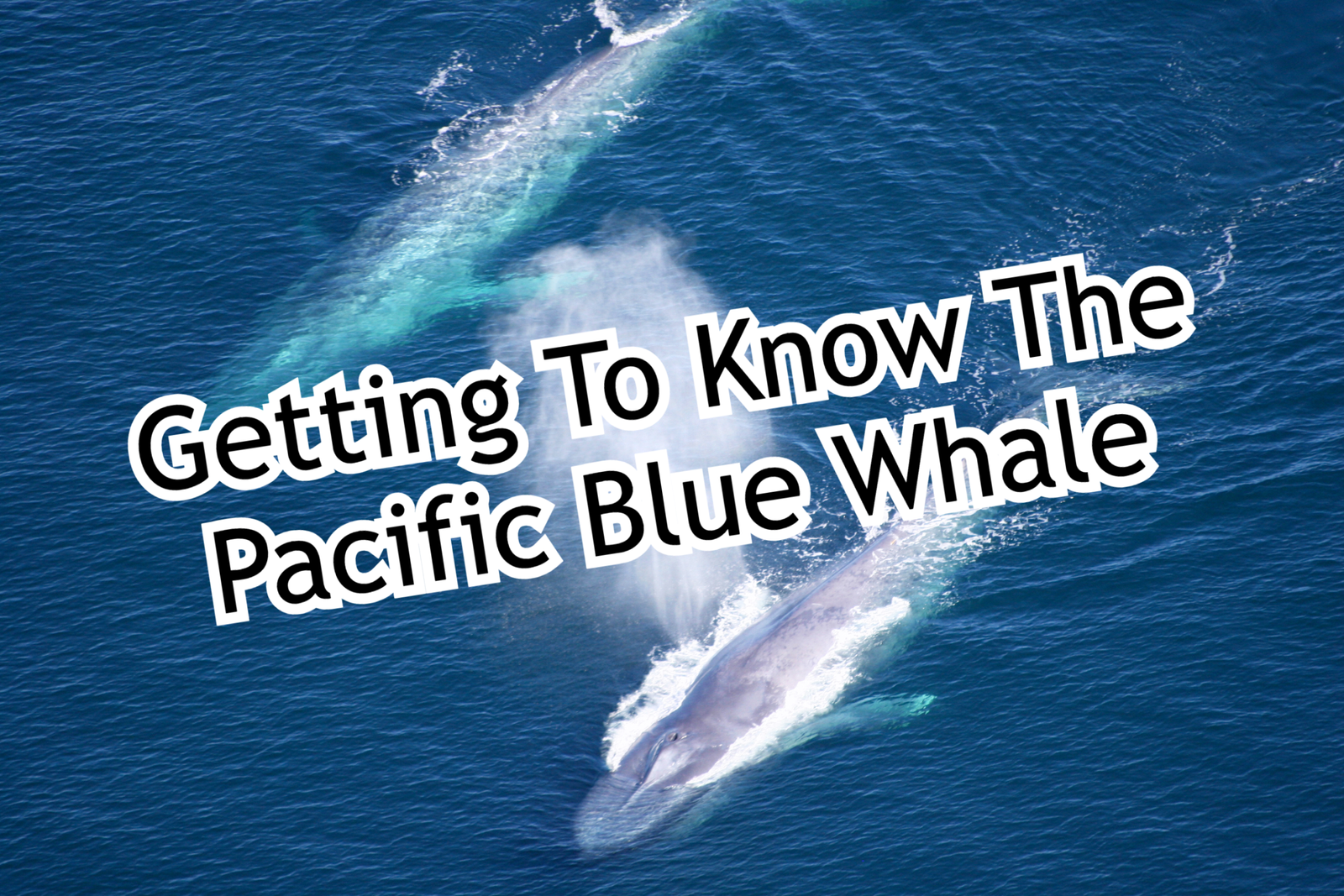
A True Ocean Titan
Pacific blue whales can reach an astonishing 30 metres (100 feet) in length and weigh up to 180 tonnes. Their heart is the size of a small car, and their tongue can weigh as much as an elephant. Yet despite their immense size, blue whales survive almost entirely on tiny, shrimp‑like krill.
During feeding season, a single whale can devour up to four tonnes of krill a day using a technique called lunge feeding. The whale surges toward a dense swarm of krill, opens its enormous mouth, and engulfs a massive volume of water and prey before straining the water out through baleen plates.
Life in the Pacific
Pacific blue whales roam widely across the ocean, migrating between cold, nutrient‑rich feeding grounds and warm breeding areas. Along the Pacific coast of North America, they are most commonly seen in summer and fall, following krill blooms created by powerful upwelling currents.
Although they spend most of their lives far offshore, blue whales occasionally pass close to coastal waters — offering rare, unforgettable encounters for mariners and coastal communities.
Built for the Deep
Blue whales are remarkable divers, capable of plunging more than 500 metres in search of food and holding their breath for up to 20 minutes. Their long, streamlined bodies, powerful flukes, and thick blubber make them perfectly adapted for life in the open ocean.
Their voices are equally extraordinary. Blue whales produce some of the loudest, lowest‑frequency sounds of any animal on Earth — calls that can travel hundreds of kilometres underwater. Scientists believe these deep, resonant sounds help whales communicate, navigate, and locate feeding grounds across vast distances.
A Species Once Nearly Lost
Industrial whaling in the 20th century devastated blue whale populations. By the time commercial whaling was banned in the 1960s, their numbers had plummeted by more than 90 percent.
Today, Pacific blue whales are slowly recovering, but they remain endangered. Their population is estimated in the low thousands — still only a fraction of their historic abundance.
Modern Threats
Although whaling has ended, blue whales face new challenges. Ship strikes are a major threat, especially in busy shipping corridors. Entanglement in fishing gear, underwater noise, climate change, and shifting prey availability all pose risks.
Warming oceans may also affect krill populations, potentially altering where and when blue whales can feed. Scientists continue to study these changes to understand how the species will adapt in a rapidly changing ocean.
Why Blue Whales Matter
Blue whales play a vital role in ocean ecosystems. By feeding at depth and releasing nutrients near the surface, they help stimulate plankton growth — supporting the entire marine food web and contributing to carbon cycling.
Their presence signals a healthy ocean. Protecting blue whales means protecting the ecosystems that sustain countless other species, including humans.
A Rare Privilege
Seeing a Pacific blue whale in the wild is an experience that stays with you — the towering blow, the immense blue‑grey back rising from the water, the slow, powerful dive. These moments remind us of the ocean’s vastness and the extraordinary life it holds.
Learning about the Pacific blue whale is more than a lesson in biology. It’s a reminder of our connection to the ocean — and our responsibility to safeguard its greatest giants for generations to come.