
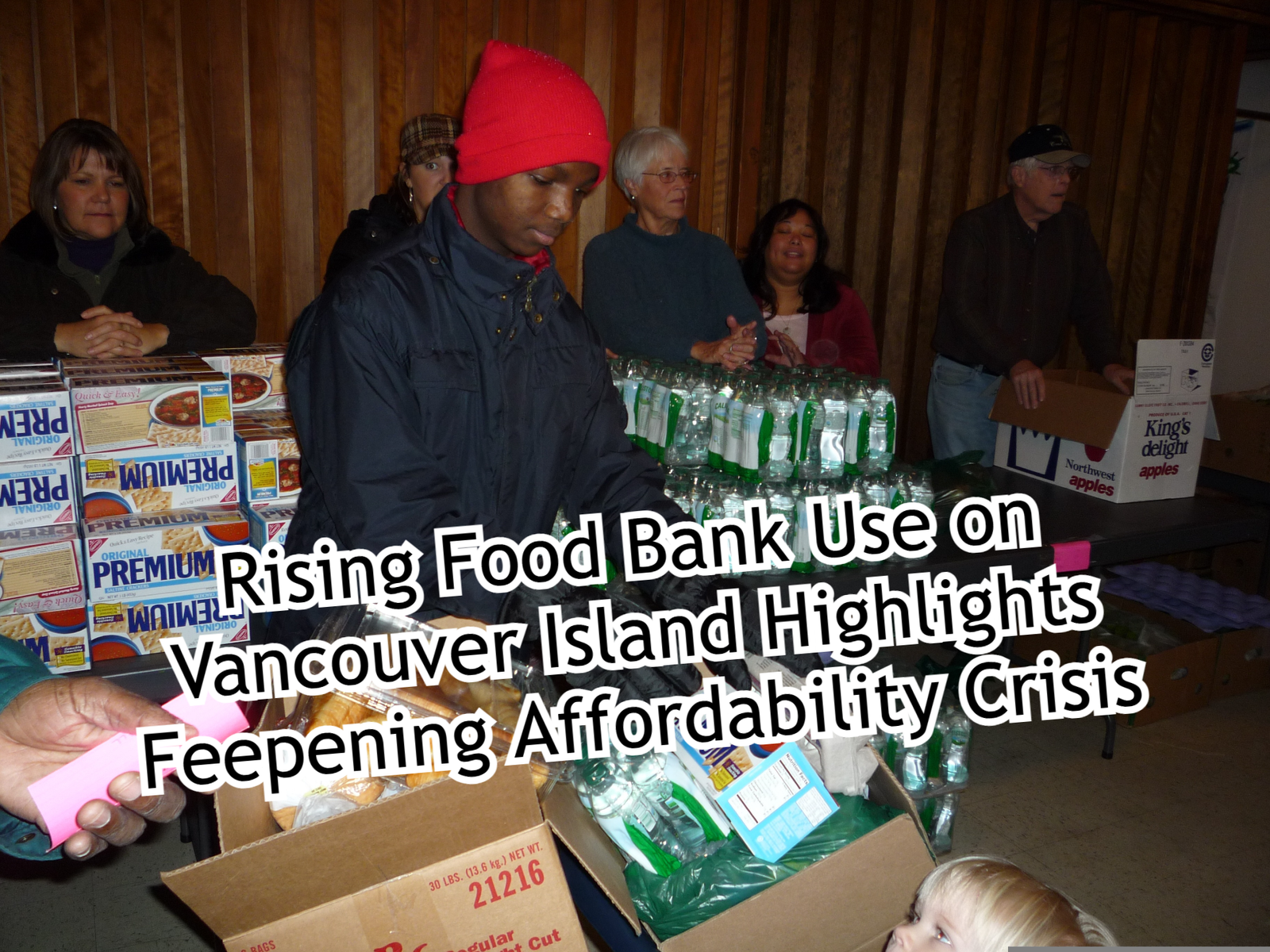
Food bank usage across British Columbia — including communities on Vancouver Island — is reaching record levels, as rising living costs and policy-driven economic pressures continue to strain household budgets in smaller communities like Sayward.
According to a 2025 report from Food Banks BC, visits to food banks across the province have increased by 79 per cent since 2019, with more than 113,000 people accessing services in a single month in 2025 — a 44 per cent jump compared to pre-pandemic levels.
The data paints a stark picture: nearly one in four British Columbians — about 1.3 million people — now experience some level of food insecurity.
Pressure growing in smaller communities
While much of the attention has focused on urban centres, the impact is increasingly visible in rural and resource-based communities like Sayward on northern Vancouver Island, where incomes are often lower and access to affordable groceries is more limited.
Food bank operators across B.C.’s northern and interior regions report some of the highest usage rates in the province, with demand outpacing available donations and supplies.
In smaller communities, food banks are often stretched even further, acting as primary support hubs rather than emergency services. Many report being forced to reduce portion sizes or limit how often clients can access food due to shortages.
Inflation and cost pressures driving demand
At the core of the surge is a sustained rise in the cost of basic necessities. Since 2021, prices for essentials such as food and housing have climbed more than 25 per cent, significantly outpacing wage growth.
Food costs alone have risen more than 30 per cent in B.C. since 2019, with households expected to spend hundreds more annually on groceries.
For many families in places like Sayward, where transportation costs and limited competition can further increase prices, the result is a growing gap between income and expenses — one that increasingly leads to food bank reliance.
Notably, employment is no longer a safeguard. A rising share of food bank users are working individuals whose incomes no longer keep pace with inflation.
The role of government policy
Experts and advocacy groups point to a combination of local, provincial, and federal policies contributing to the affordability crisis.
At the federal level, broad inflationary pressures tied to pandemic-era spending, interest rate hikes, and carbon pricing mechanisms have increased costs across supply chains, particularly in transportation and food production.
Provincially, critics argue that housing shortages and regulatory constraints have driven up shelter costs — the largest expense for most households — leaving less income available for food. Food bank data shows low-income households are now spending up to two-thirds of their income on housing alone.
At the local level, smaller municipalities like Sayward face additional challenges, including limited economic diversification and higher costs for goods transported over long distances.
Food Banks BC and partner organizations have emphasized that the crisis is not the result of individual choices, but systemic gaps in income supports and affordability policies.
A system under strain
Food banks themselves are increasingly unable to keep up. More than 80 per cent report that rising food costs are affecting their ability to procure supplies, while some have already begun turning people away due to lack of resources.
What was once considered a temporary safety net is becoming a long-term necessity for many households.
“This is no longer an emergency response — it’s becoming part of the system,” one report noted, warning that charitable food programs cannot compensate for broader economic and policy failures.
Looking ahead
As food bank usage continues to rise on Vancouver Island and across the province, the situation in communities like Sayward underscores a broader shift: affordability challenges are no longer confined to major cities or the unemployed.
Instead, they are increasingly affecting working families, seniors, and rural residents — raising questions about whether current policy approaches are adequately addressing the cost-of-living crisis, or contributing to it.