
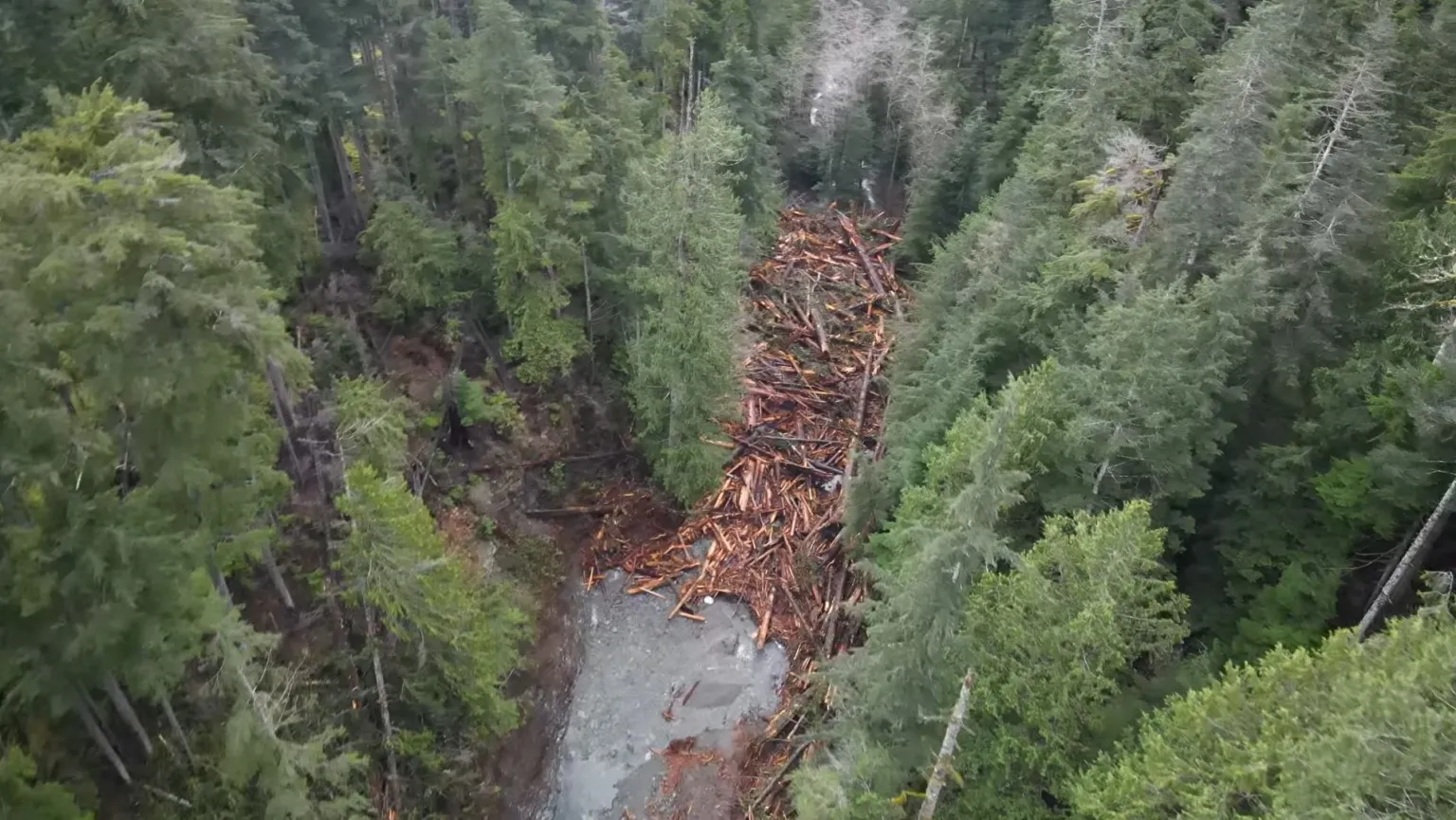
The Village of Sayward and the Strathcona Regional District (SRD) have initiated an in‑depth hazard assessment of the Newcastle Creek landslide amid ongoing concerns about long‑term impacts on the community’s drinking water system and nearby infrastructure.
The slide, which occurred in late October 2025 upstream of the community’s water intake, triggered emergency response actions and prompted continued water‑use restrictions due to elevated turbidity in the creek. Although Sayward’s water treatment plant, intake, and reservoir remain fully functional, operators and residents have had to remain cautious as rainfall continues to stir up sediment.
Funding from the Province of British Columbia—provided through the Ministry of Emergency Management and Climate Readiness (EMCR)—is supporting a technical investigation now underway. The study incorporates LiDAR drone surveys, slope stability assessments, and watershed modeling to evaluate the slide’s current condition, identify potential hazards, and forecast how the area may respond to future storms and runoff.
SRD officials say the assessment will determine whether the landslide is still active, the likelihood of further movement, and any risks it may pose to downstream infrastructure and water quality. The project is expected to conclude in early May 2026, with findings to be released publicly.
While local leaders appreciate the provincial funding for the study, they remain concerned about the Province’s stance on mitigation. Despite the landslide occurring on Crown land, provincial representatives have indicated they do not intend to directly fund or undertake mitigation work, even if the assessment identifies significant ongoing risks. Instead, the Village and SRD have been directed to apply for competitive grant programs should mitigation be required.
Sayward Mayor and SRD Board Chair Mark Baker argues that this approach places small rural communities at a disadvantage and has urged the Province to take greater responsibility for hazards on Crown land—especially when essential services like drinking water are at stake.
“Understanding the risk is only the first step,” Baker said. “If mitigation is needed, communities like Sayward need provincial partnership, not just reports and recommendations.”
Water conservation measures remain in place as a precaution. Residents are being asked to continue reducing non‑essential water use, particularly during and after heavy rainfall, when sediment levels in Newcastle Creek are most likely to spike.
Local officials emphasize that the hazard study will be crucial in determining next steps, whether that means ongoing monitoring, engineering interventions, or renewed discussions with the Province about long‑term mitigation responsibilities. For now, both the Village and the SRD say safeguarding Sayward’s water supply remains their foremost priority.