
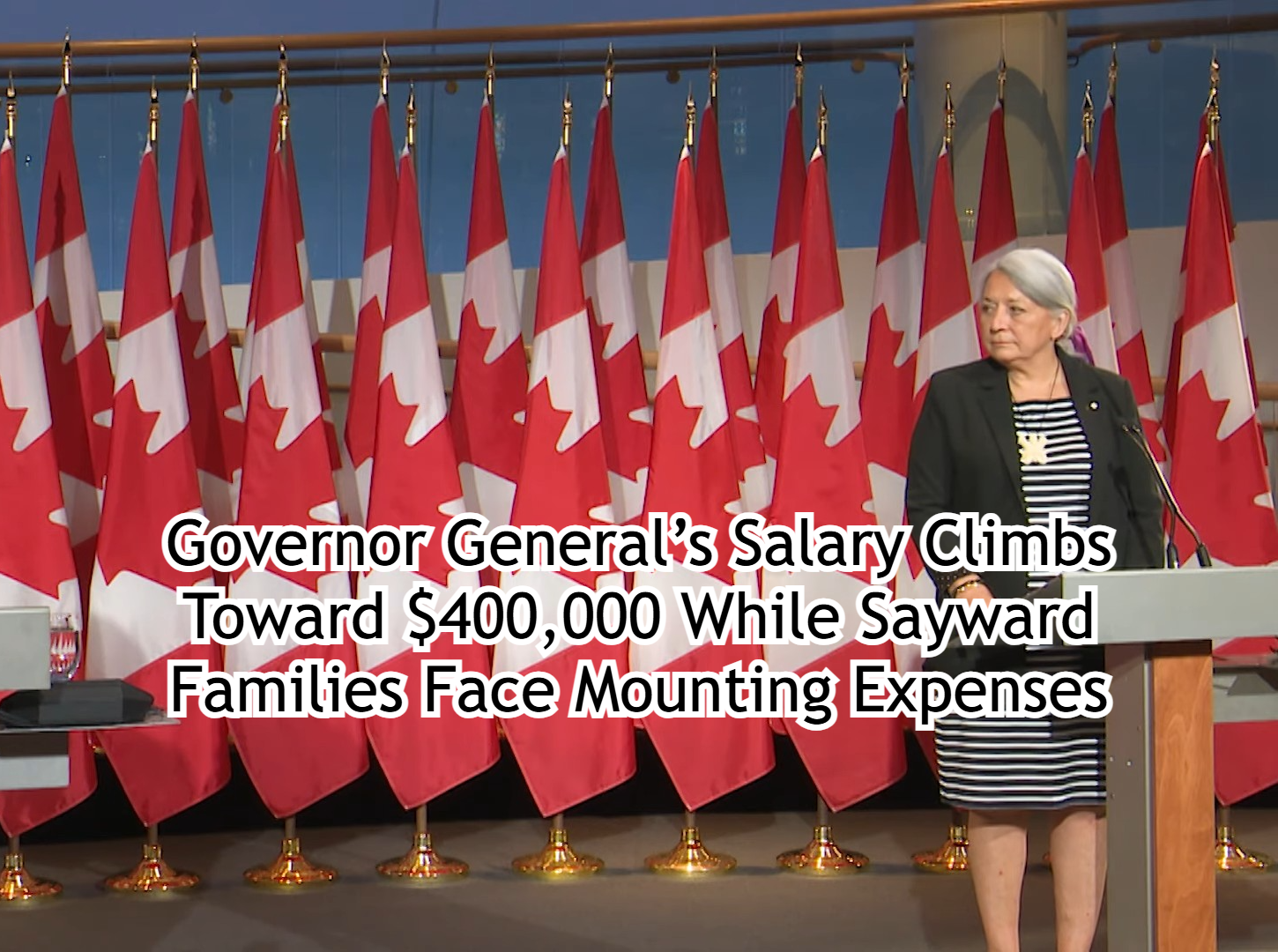
The Governor General of Canada is poised to earn nearly $400,000 this year after receiving another automatic pay increase — a development drawing criticism from taxpayer advocates and residents in small communities like Sayward, where families continue to struggle with rising living costs.
Federal law mandates annual automatic salary adjustments for the Governor General, causing the position’s pay to steadily climb even as Canadians face higher prices for groceries, fuel, housing, and utilities.
In Sayward and other rural Vancouver Island communities, affordability pressures are often more intense than in urban centres. Transportation and supply challenges drive up the cost of basic goods, while wages tend to be lower and employment more seasonal. Against this backdrop, automatic raises for top federal officials strike many as out of touch with the financial realities facing rural households.
Taxpayer advocates note that the Governor General’s salary is several times higher than the average Canadian income. They argue that such increases are difficult to justify when families are cutting back on essentials and local governments are struggling to maintain services with limited resources.
Beyond the salary itself, the Governor General’s office includes a range of taxpayer‑funded benefits — from an official residence to extensive travel and additional allowances. Critics say these costs add to the burden on taxpayers, including those in small communities who may see little direct benefit from federal spending.
Long‑term expenses are also a concern. Former Governors General receive generous pensions and ongoing expense accounts, regardless of how long they served. Taxpayer groups argue that these commitments represent significant, decades‑long costs.
In Sayward, where many residents rely on fixed incomes or small local businesses, questions are growing about why senior federal officials continue to receive automatic raises while calls for fiscal restraint are often directed at municipalities and taxpayers. Some argue that public‑sector compensation should better reflect broader economic conditions, especially during periods of high inflation and affordability challenges.
Advocates are calling for reforms to end automatic pay increases for senior federal roles and to require greater transparency and accountability around compensation. They say that if governments expect Canadians to tighten their belts, the same expectations should apply to those in the highest offices.
Without changes, critics warn that widening pay gaps between federal officials and everyday Canadians will continue to fuel frustration — particularly in rural communities like Sayward, where rising costs and limited services already stretch household budgets.