
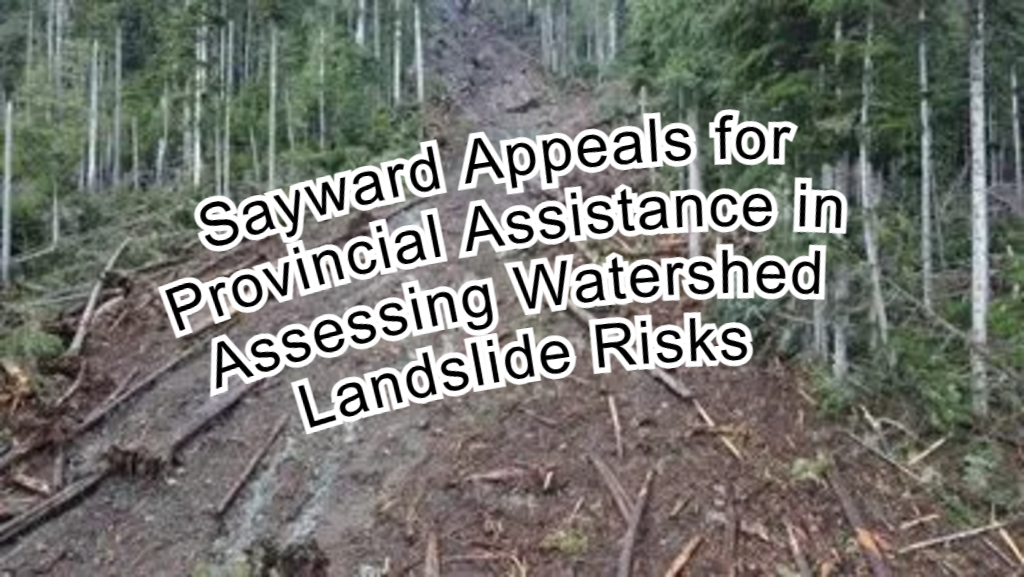
Local officials in the Village of Sayward and the Strathcona Regional District are asking the provincial government for support to assess landslide risks in the Newcastle Creek watershed, the community’s main source of drinking water.
A landslide in late October has continued to affect water quality, causing spikes in turbidity after heavy rainfall. While Sayward’s treatment system remains fully operational and meets safety standards, officials say the long‑term impacts of the slide are still uncertain.
To better understand the risks, the Village and regional district are requesting technical and financial assistance to conduct a comprehensive geotechnical and environmental study. The assessment would examine slope stability, sediment movement, and overall watershed health to determine whether future landslides could threaten water quality or infrastructure.
If approved, the study would likely use advanced tools such as LiDAR mapping, which can detect subtle terrain changes and pinpoint areas vulnerable to instability. Officials say this data would be critical for identifying mitigation measures and ensuring the watershed’s resilience.
Since the slide, municipal staff and emergency personnel have closely monitored conditions and managed water operations. Residents have been asked to conserve water during periods of high turbidity, and local leaders have praised the community’s cooperation.
Although service has not been interrupted, the incident underscores the challenges small communities face when natural events threaten essential infrastructure. Sayward officials stress that provincial support is vital to properly identify and address risks before they escalate.
They have pledged to keep residents updated as the situation evolves, emphasizing that public safety and the reliability of the water supply remain top priorities.