
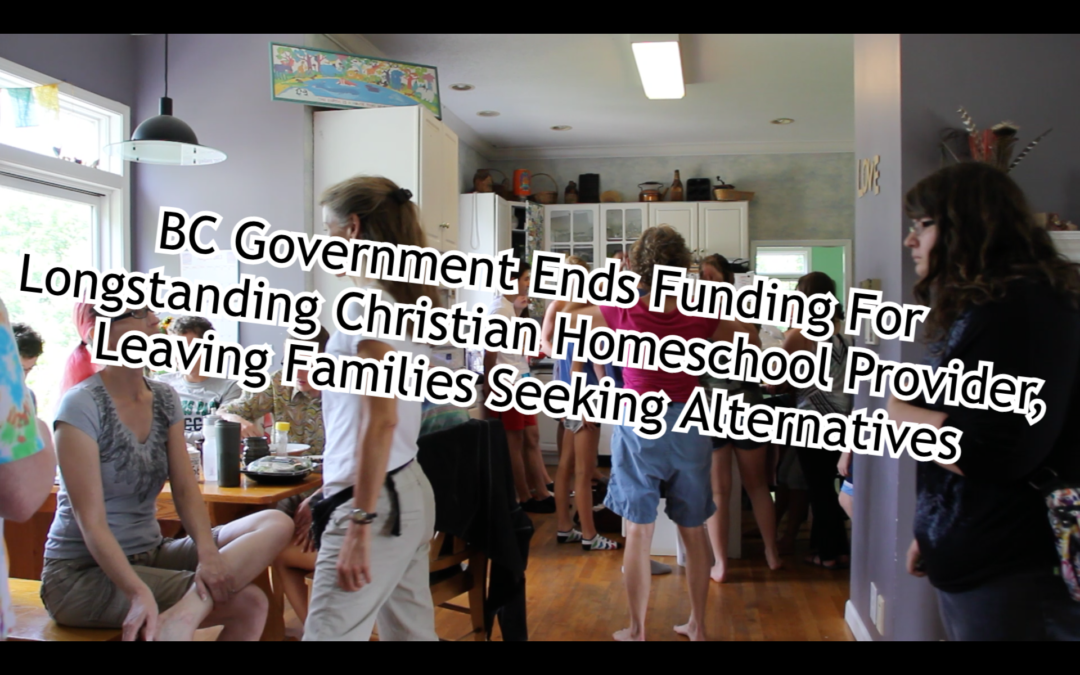
The government of British Columbia New Democratic Party has cancelled provincial funding for a long‑established Christian homeschooling program, a decision that has left many families across British Columbia scrambling to find alternative educational options for their children.
Effective June 30, 2026, the Ministry of Education will strip Group 1 certification from Christian Homelearners eStreams (CHeS), an independent online school that has operated since 2002 and has been a choice for parents seeking faith‑based homeschooling support. This change will effectively require CHeS to cease operations as a provincially recognized school unless its certification is restored or appeal efforts succeed.
According to the school’s board, families were notified of the decision last week and told that the ministry will not renew the program’s funding. Board members have encouraged parents to begin the process of identifying and enrolling in alternative schooling before the deadline.
Families express uncertainty and disruption
For many parents, the announcement was sudden and disruptive. CHeS served families seeking individualized instruction that aligned with their Christian values and offered tailored support that some say was particularly effective for students with diverse learning needs.
“This couldn’t come at a worse time,” said parent and education assistant Lee‑Ann Bates, describing the timing as difficult because many families had already re‑enrolled children for the upcoming school year through the program. Bates highlighted the stress and uncertainty this change creates for families, particularly those with vulnerable or special needs students who depended on the continuity and structure the program provided.
Bates also framed the decision as contradictory to the provincial government’s stated emphasis on equity and support for families, arguing that removing this option undermines the needs of parents who chose an alternative model that worked well for their children.
Political response and broader debate
The cancellation has drawn criticism from opposition figures in the province. In a statement to Rebel News, Lynne Block, education critic for the British Columbia Conservative Party, called the defunding “deeply concerning,” arguing that it will displace hundreds of students from a learning environment that served their unique needs and provided a cost‑effective alternative to the public system.
Block noted that funding for CHeS had been significantly lower than typical per‑student allocations in the public school system while still offering access to certified teacher support, and urged the government to reconsider its decision in order to preserve a choice that has benefited families and alleviated pressure on public education resources.
Government stance and unanswered questions
As of publication, the Ministry of Education, including Lisa Beare, the minister responsible for education, has not publicly responded with a detailed explanation of the rationale behind the funding withdrawal or whether similar independent schools may face comparable decisions in the future.
The lack of official comment has contributed to concern among affected families, some of whom are exploring appeal avenues while also preparing to transition their children to alternative schooling before the end of the current academic year.
Implications for homeschooling families
The sudden loss of provincial certification for CHeS underscores ongoing tensions in British Columbia around educational choice, government funding priorities, and the role of independent and faith‑based schooling within the broader education system.
Homeschooling families, particularly those who rely on structured online programs with certified teacher support, may face challenges in identifying comparable alternatives before the next school year begins. The situation has also prompted broader questions about how policy changes are communicated and implemented, and the degree to which families are consulted before eligibility for provincial funding is revoked.
As affected families navigate the transition and potential appeals continue, the controversy is likely to contribute to ongoing discussions about educational options, parental choice, and funding policies within the province.