
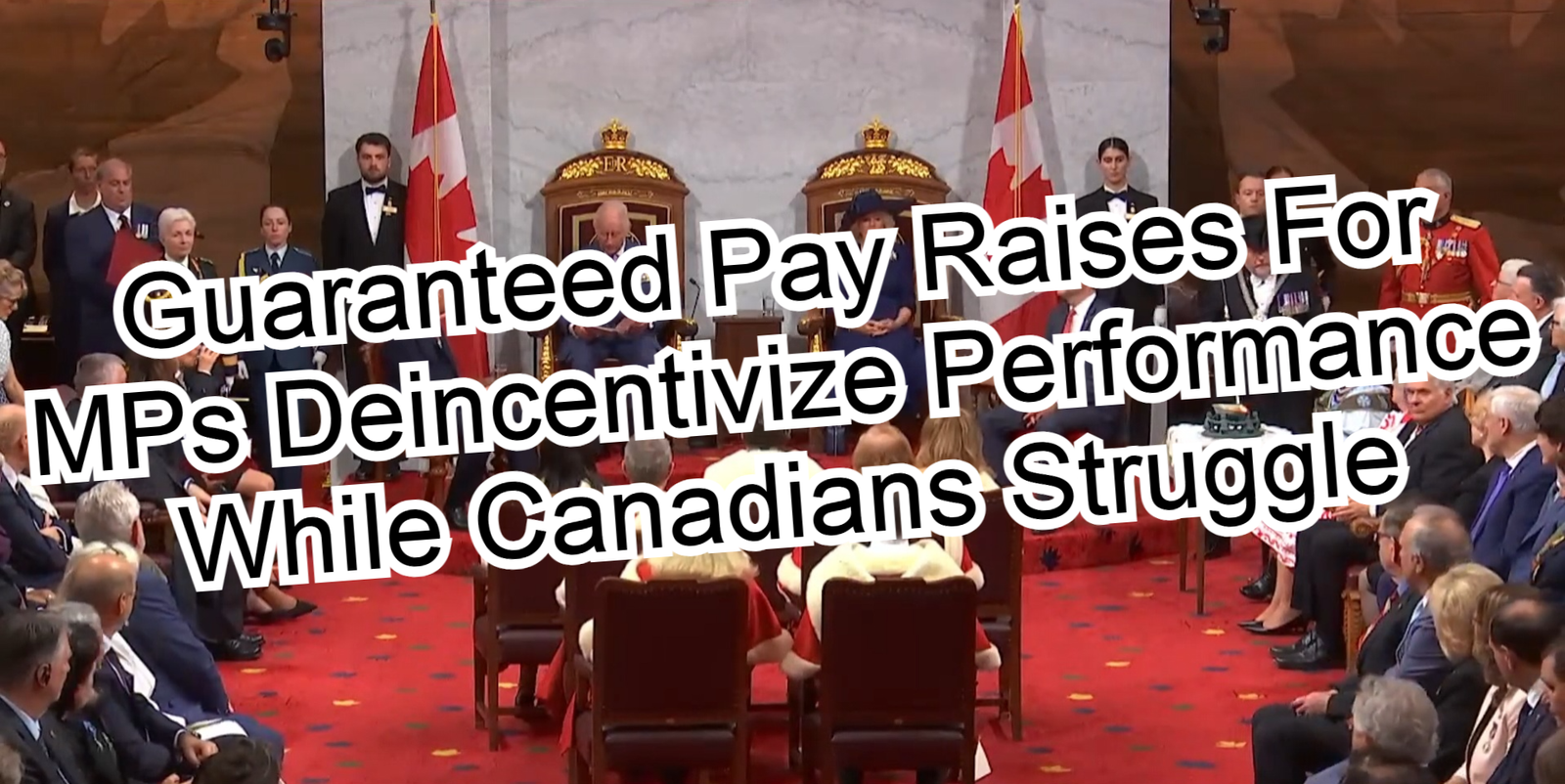
Canada’s members of Parliament have now received automatic pay increases for 14 consecutive years — a trend that critics argue undermines accountability and public trust in elected officials as economic pressures mount for ordinary Canadians.
According to reporting from the Canadian Taxpayers Federation, MPs were granted another scheduled salary bump in early April, with most parliamentarians seeing increases between roughly $7,900 and $15,800 this year alone. This brings Canada’s base MP salary well over six figures, a level that has sparked fresh debate about how political compensation should be structured and whether it reflects actual performance.
Automatic increases, no performance requirement
Under current rules, MPs’ salaries are indexed annually and adjusted based on wage trends in the private sector. This mechanism was designed to prevent politicians from having to negotiate their own pay every year, but critics argue it has instead insulated lawmakers from accountability.
“In what other job are you guaranteed a pay raise every year for 14 years regardless of your performance?” asked Franco Terrazzano, federal director of the taxpayer watchdog group, underscoring a broader criticism that guaranteed raises disengage MPs from the consequences of their decisions.
Opponents of the practice contend that tying MPs’ pay increases solely to an automatic formula creates a disconnect between legislators and the real‑world economic realities faced by most Canadians. While many Canadians have seen wages stagnate and the cost of living rise, MPs continue to receive steady compensation increases without any direct performance benchmarks.
Public frustration amid economic strain
The controversy comes against the backdrop of ongoing affordability challenges in Canada, including high housing costs, inflationary pressures, and wage stagnation in many sectors. For many residents, the optics of politicians receiving annual raises while households struggle to keep up with rising costs feel tone‑deaf at best and insensitive at worst.
Polls conducted by non‑partisan groups show that a significant majority of Canadians oppose recent salary increases for MPs, with around 86 % of respondents saying they are against such raises — a sentiment particularly strong among older and rural demographics.
Critics argue that this widespread public opposition highlights a growing perception that MPs are detached from the day‑to‑day economic challenges faced by their constituents, further eroding trust in political institutions.
Proposals for reform
Those challenging the current system have put forward several proposals aimed at aligning MPs’ compensation more closely with public expectations and economic realities. One suggestion is to tie future increases to metrics that reflect the financial circumstances of ordinary Canadians, such as median income growth rather than broad private‑sector wage data.
Another proposal, floated by commentators on national media, is to cap MPs’ pay at or near the median income of their own ridings, an idea proponents say would foster greater empathy and accountability among elected officials.
Some critics have offered more symbolic (if controversial) alternatives; one commentator even referenced Singapore’s now‑rare corporal punishment measures as an example of tying consequences to behaviour, though such comparisons highlight the hyperbolic nature of the debate rather than offering practical policy advice.
Voices within Parliament
The debate has even reached inside Parliament. A handful of MPs — most notably Conservative MP Mike Dawson — have publicly refused their automatic pay bump, citing concerns about perception and economic fairness. Dawson described accepting an automatic raise as “distasteful” amid ongoing financial strain on Canadians, and his stance has reignited discussion about whether the current compensation framework is appropriate.
However, such decisions remain voluntary exceptions rather than a systemic change, and many legislators are still accepting their raises as prescribed under law.
Balancing fair compensation and accountability
Proponents of the current pay structure argue that competitive salaries are necessary to attract qualified candidates to public office and to ensure that MPs are not financially disadvantaged by serving in Parliament. They note that political careers require significant time, sacrifice, and public scrutiny — and that lower pay could limit who is able to serve. Critics, though, counter that the purpose of government service is to represent the public, not to pursue personal financial gain.
The challenge, then, is balancing fair compensation with meaningful incentives that encourage accountability and responsiveness to the public interest rather than guaranteeing compensation regardless of outcomes.
A broader reflection of political dissatisfaction
The controversy over automatic salary increases reflects broader public frustration with political leadership and institutions. Many Canadians feel that lawmakers are increasingly insulated from the economic realities faced by everyday families — a sentiment echoed in public opinion polls and ongoing debates about wages, representation, and governance.
As discussions about MP compensation continue, the issue raises fundamental questions about how Canada values public service, how it measures political performance, and whether current systems align with citizens’ expectations of accountability and fairness.
In the end, critics argue, simply granting automatic raises every year — without clear ties to performance or constituent well‑being — does little to inspire confidence that MPs are truly serving the public they were elected to represent.