
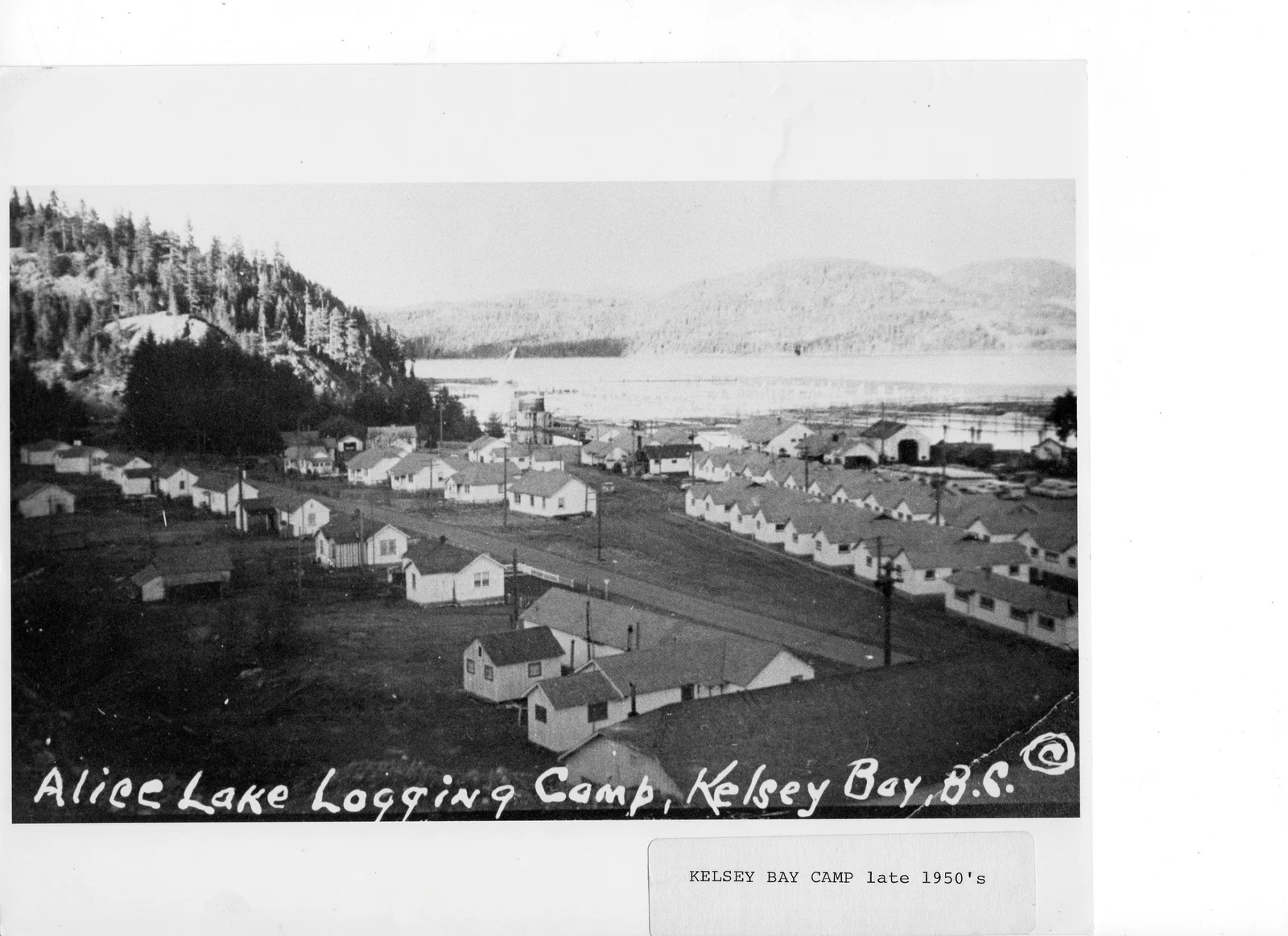
Life at Alice Lake Logging Camp: Kelsey Bay in the 1950s
Tucked into the dense forests near Kelsey Bay, the Alice Lake logging camp was part of a rugged, industrious world that defined the Sayward Valley in the 1950s. Surrounded by towering evergreens and fed by the resource-rich landscape of northern Vancouver Island, the camp stood as a hub of hard work, isolation, and tight-knit community life.
A Remote Industrial Outpost
In the postwar years, logging operations in the Sayward region were booming. Companies pushed deeper into the forest, establishing camps like Alice Lake to house workers close to active cutting areas. Roads were still limited, and while trucks were becoming more common, many operations still relied on a mix of rail lines, rough haul roads, and water transport to move logs.
Kelsey Bay served as a key coastal link. Logs harvested inland were transported down to booming grounds along the shoreline, where they were sorted and prepared for towing to mills further south.
The Camp Itself
Alice Lake camp was more than just a worksite—it was a small, self-contained village.
A typical layout included:
-
Bunkhouses filled with loggers, fallers, and equipment operators
-
A cookhouse, often the heart of camp life, serving large, hearty meals
-
Workshops and maintenance sheds to keep machinery running
-
A foreman’s office and a small first-aid station
Conditions were basic but functional. Buildings were usually constructed of wood, built quickly and designed to be practical rather than comfortable. Yet for many workers, the camp became a second home.
Work in the Woods
Logging in the 1950s was physically demanding and often dangerous. Crews at Alice Lake would have been engaged in:
-
Falling massive trees using chainsaws, which were increasingly replacing crosscut saws
-
Limbing and bucking logs into transportable lengths
-
Yarding, using cables and winches to haul logs to collection points
-
Loading logs onto trucks or rail cars for transport
Steam power had largely given way to diesel equipment by this time, but the work remained intense. Mud, rain, and steep terrain were constant challenges in the coastal environment.
The Rhythm of Camp Life
Life at Alice Lake followed a steady rhythm shaped by long workdays and limited outside contact.
Workers typically:
-
Rose early for breakfast before heading out to the cutblocks
-
Worked long shifts in all weather conditions
-
Returned to camp for dinner, rest, and social time
Evenings in the bunkhouse might include card games, storytelling, or simply catching up on sleep. With no internet, limited radio, and infrequent trips to town, entertainment was simple and community-driven.
Despite the harsh conditions, many loggers remembered camp life fondly. Strong bonds formed among crews who depended on each other for safety and support.
A Changing Industry
The 1950s marked a period of transition in British Columbia’s logging industry. Mechanization was increasing, and truck logging was gradually replacing older rail systems.
Camps like Alice Lake were part of that shift—still remote and labor-intensive, but beginning to incorporate newer technologies and more efficient transport methods.
Over time, improved road access reduced the need for isolated camps. Workers could commute from towns rather than live full-time in the bush, leading to the gradual decline of places like Alice Lake.
Echoes of the Past
Today, little may remain of the Alice Lake logging camp itself. Nature has reclaimed much of the landscape, and the structures that once housed dozens of workers have largely disappeared.
But traces endure:
-
Faint road grades winding through the forest
-
Rusting fragments of machinery
-
Local stories passed down through generations
These remnants offer a glimpse into a time when the forest was not just scenery, but a workplace—and when camps like Alice Lake were at the center of life in the Sayward Valley.
Remembering Alice Lake
The story of Alice Lake logging camp is one of resilience and community. It reflects a broader chapter in the history of coastal British Columbia, where remote camps powered an industry that helped build the province.
Though the buildings are gone, the legacy of those who lived and worked there remains embedded in the landscape—and in the history of places like Kelsey Bay and the Sayward Valley.