
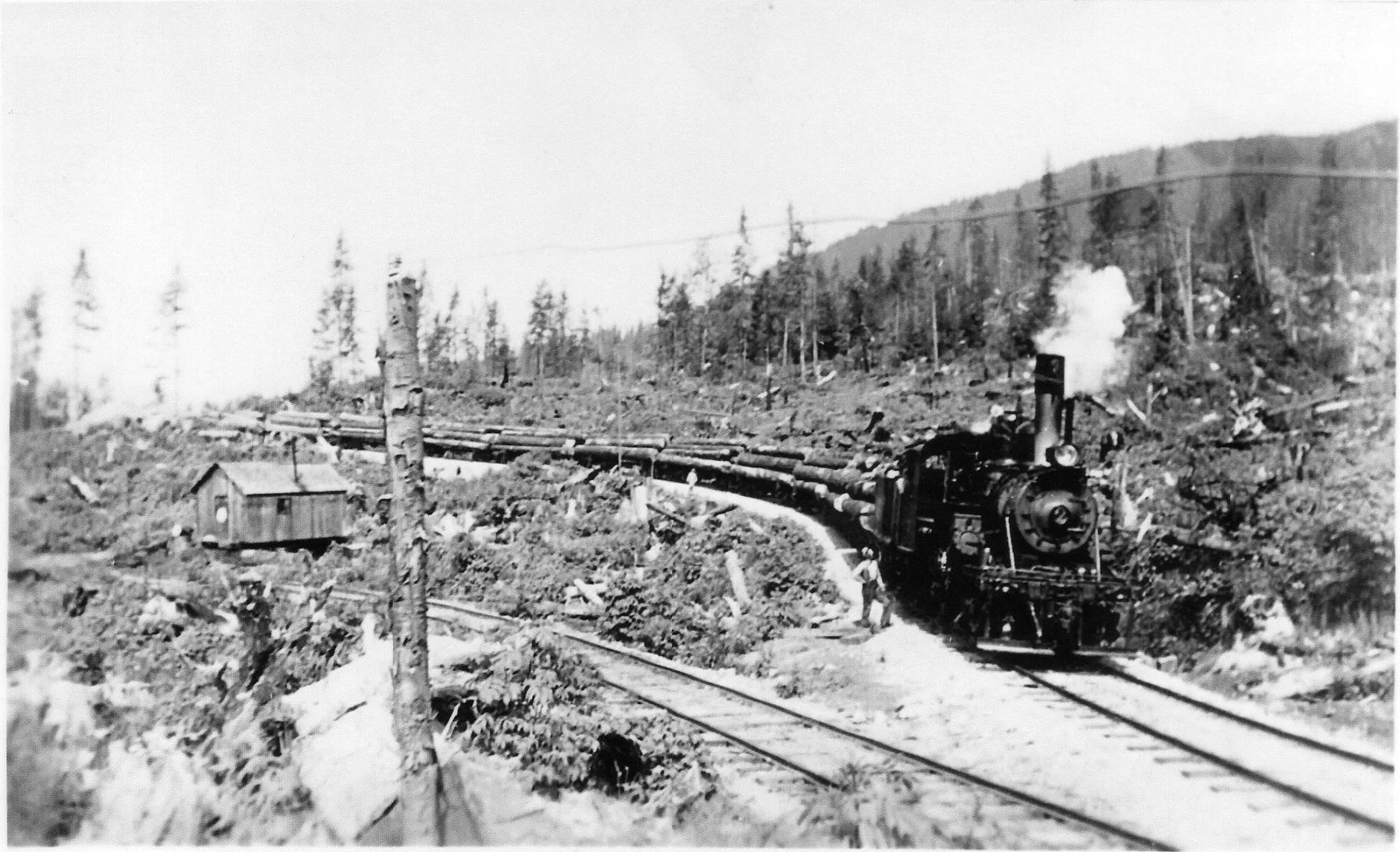
Rail Logging in the Sayward Valley: Life and Industry in the 1930s
In the 1930s, the forests of the Sayward Valley echoed with the sound of steam whistles, iron wheels and falling timber. Long before modern logging trucks and highways, railways were the backbone of the coastal logging industry—and nowhere was that more evident than in this rugged stretch of northern Vancouver Island.
The Rise of Rail Logging on Vancouver Island
By the early 20th century, companies operating in Vancouver Island had one major challenge: how to move massive old-growth logs out of dense, remote forests. The answer was rail.
Logging railways—often temporary, rough-built lines—were pushed deep into the bush. Steel tracks snaked through valleys, over creeks, and around steep grades, allowing steam locomotives to haul enormous logs to coastal booming grounds.
In the Sayward Valley, this system became essential. The terrain was steep, heavily forested, and often inaccessible by road, especially in the 1930s when infrastructure was limited.
Steam, Steel, and Cedar Giants
At the heart of the operation were small but powerful steam locomotives, many of them built specifically for logging. These engines hauled flatcars loaded with Douglas fir, western red cedar, and hemlock—trees that had stood for centuries.
The logs themselves were staggering in size. Some measured several feet in diameter and required specialized equipment just to load. Crews used spar trees, cables, and steam-powered winches to drag timber from where it fell to the rail line.
From there, trains carried the logs out of the valley toward coastal hubs, where they were sorted, bundled, and floated to mills.
A Moving Industry
One unique aspect of rail logging was its mobility. Unlike permanent railways, logging lines were constantly shifting.
As an area was cut over, crews would:
- Pull up rails and ties
- Move them further into untouched forest
- Rebuild the line to access new timber
Entire camps moved with the work. What existed one year might be gone the next, leaving behind only traces—old grades, rusting المعدات, and the occasional artifact.
Life in the Logging Camps
The men who worked these operations lived in remote camps scattered throughout the valley. Life was physically demanding and often dangerous.
A typical camp included:
- Bunkhouses packed with workers
- A cookhouse serving hearty, high-calorie meals
- Blacksmith shops and repair sheds
- Rudimentary medical facilities
Days were long, and the work—felling trees, handling cables, operating machinery—came with constant risk. Yet these camps also had a strong sense of camaraderie. In isolated conditions, workers relied heavily on one another.
The Role of Companies and Expansion
Large logging firms, including operations tied to Comox Logging & Railway Company, played a major role in developing rail infrastructure in the region. Their investments helped expand access to timber and connect remote valleys like Sayward to coastal shipping routes.
These companies didn’t just harvest timber—they built entire industrial ecosystems in the forest.
Decline of Rail Logging
By the mid-20th century, rail logging began to fade. Improvements in road-building and the introduction of powerful logging trucks made rail less practical.
Roads were more flexible, required less setup, and could reach areas without the need to lay track. Gradually, the rails were pulled up, and the locomotives fell silent.
What Remains Today
Today, the Sayward Valley still holds quiet reminders of its rail logging past:
- Overgrown rail grades cutting through the forest
- Old trestle foundations near creeks
- Scattered iron relics hidden beneath moss and ferns
A Legacy Carved in Wood and Steel
Rail logging in the Sayward Valley wasn’t just an industry—it was a way of life that shaped the region’s identity. It connected remote lumber to global markets, powered local economies, and left a lasting imprint on the landscape.
Though the tracks are gone, the story remains—etched into the forests, and carried forward by those who continue to document and remember this remarkable era.