
New mass-marking initiative aims to protect wild salmon and improve fishery management
The Government of Canada is expanding a major salmon conservation initiative that could have long-term benefits for coastal communities, commercial fisheries, and recreational anglers across British Columbia, including North Island regions.
On April 8, Fisheries and Oceans Canada announced it will expand mass marking of hatchery-origin Pacific Chinook salmon in southern B.C. as part of ongoing efforts to rebuild and protect wild salmon populations.
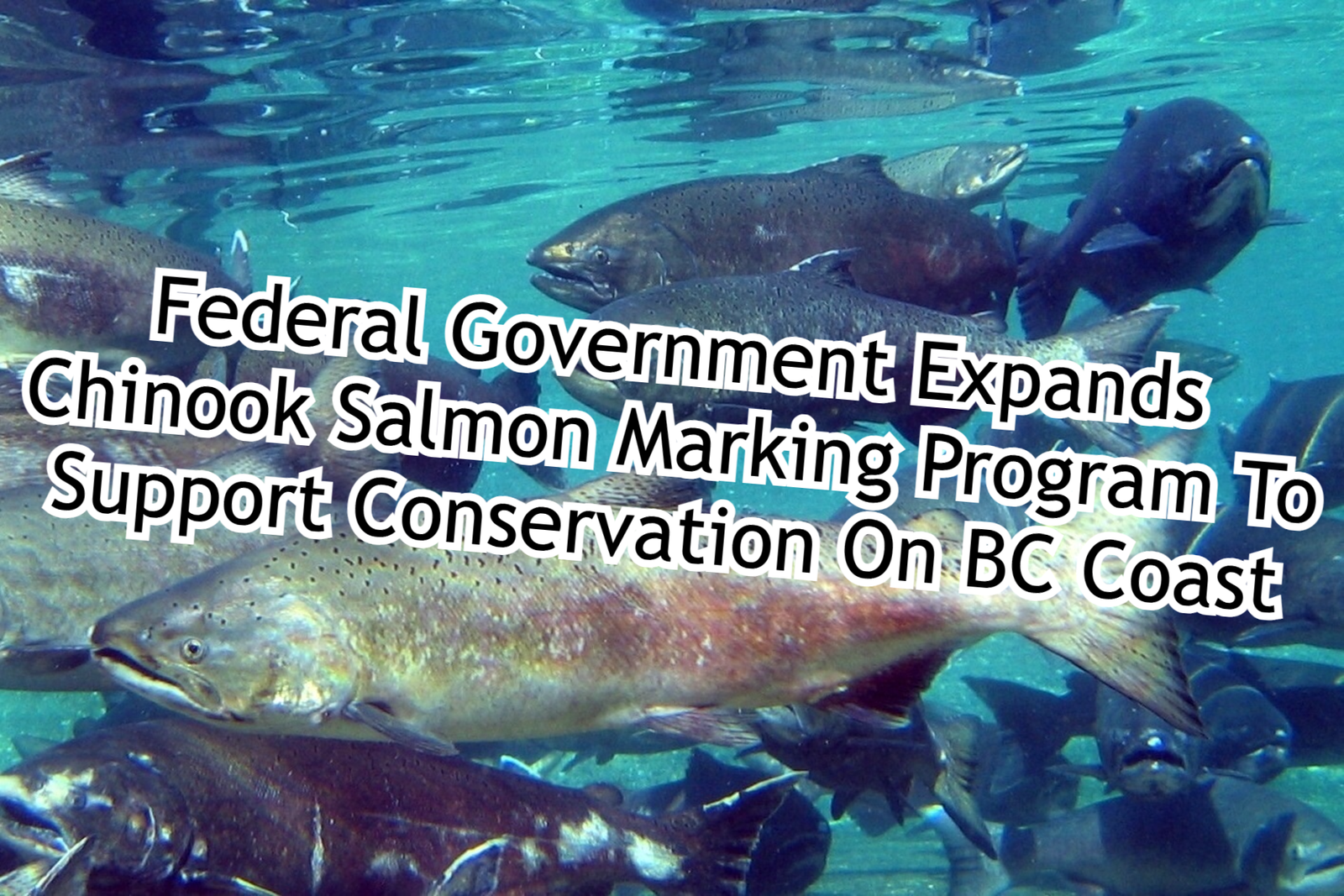
The initiative involves marking hatchery-raised Chinook salmon by removing the small adipose fin, allowing scientists, fisheries managers, and harvesters to easily distinguish hatchery fish from wild stocks. The process does not affect fish survival and helps improve monitoring, hatchery management, and conservation efforts.
Supporting wild salmon recovery
Pacific salmon play a critical role in British Columbia’s coastal ecosystems and communities, particularly in regions like Vancouver Island where fishing, tourism, and Indigenous food systems depend on healthy salmon runs.
According to the federal government, expanding mass marking will provide better data on salmon populations and allow for more selective fisheries that target hatchery fish while protecting vulnerable wild Chinook stocks. The program also helps reduce interbreeding between hatchery and wild salmon, supporting genetic diversity and long-term sustainability.
Currently, about 40 per cent of hatchery Chinook in southern B.C. are marked. The government aims to increase that number to about 90 per cent by 2027, with the long-term goal of marking all Chinook produced in federal hatcheries in southern British Columbia.
Investment through Pacific Salmon Strategy Initiative
The expansion is part of the federal Pacific Salmon Strategy Initiative, which includes more than $400 million in funding to support scientific research, monitoring, and improved hatchery practices.
Officials say increased marking capacity and specialized equipment will allow Fisheries and Oceans Canada to better track salmon populations and strengthen conservation efforts across the region.
Federal Fisheries Minister Joanne Thompson said the program will help provide a clearer scientific picture of salmon populations and improve management decisions to support long-term recovery of wild salmon.
Local relevance for coastal communities
For communities along Vancouver Island and the North Island, including Sayward and surrounding coastal areas, the initiative could help improve fishery sustainability and protect salmon stocks that are central to local economies, recreation, and cultural traditions.
Better identification of hatchery fish may also support more targeted fishing opportunities in the future while helping protect struggling wild runs.
The government says it will continue working with community hatcheries and coastal partners to expand marking programs where feasible and supported by science, with the goal of strengthening salmon conservation for future generations.