
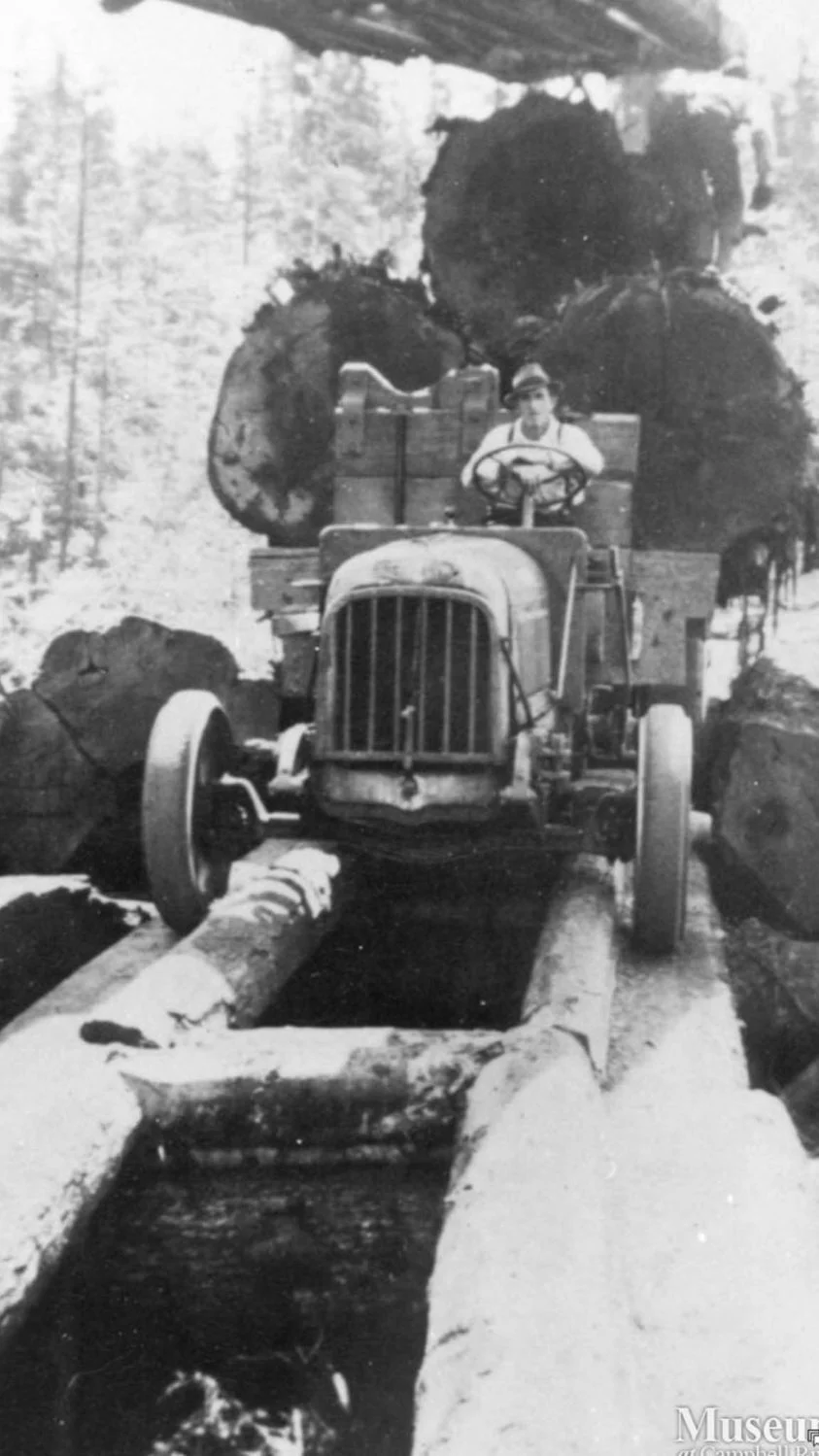
In the mid-20th century, the forests of the Sayward Valley were shaped not only by falling trees and saws, but by the steady rumble of heavy-duty logging trucks. Among the most iconic machines of the era were the rugged Federal trucks, built to endure some of the harshest working conditions in North America.
These trucks played a key role in transforming remote cut blocks into productive logging operations across northern Vancouver Island.
Built for the Bush
Federal trucks—produced by the American company Federal Motor Truck Company—were known for their durability rather than comfort. In the logging camps and rough road networks of the Sayward region, that toughness mattered more than anything else.
These trucks typically featured:
- Heavy steel frames built to withstand extreme loads
- Powerful diesel engines suited for steep coastal terrain
- Simple mechanical systems that could be repaired in the field
- Large tires designed for mud, gravel, and uneven ground
They were not fast or refined—but they were dependable in conditions where failure could shut down an entire logging operation.
Logging in Transition: The Rise of Truck Haulage
By the 1940s and 1950s, logging in coastal British Columbia was shifting away from rail-based systems and toward road-based transport. In areas like Sayward Valley, this transition changed everything.
Instead of relying solely on rail spurs or booming grounds, companies began building rough logging roads deep into the forest. Once trees were felled and processed into logs, Federal trucks would haul them out to sorting areas or directly to water transport points along the coast.
This shift made operations:
- More flexible in moving between cutblocks
- Less dependent on fixed rail infrastructure
- Faster to expand into new areas of forest
Life on the Road
Driving a Federal logging truck in the Sayward Valley was not for the faint of heart.
Roads were often:
- Steep and narrow
- Muddy in winter and dusty in summer
- Built temporarily and frequently rerouted
Drivers had to navigate:
- Tight switchbacks carved into hillsides
- Unstable gravel grades
- Heavy loads that could exceed many tons
A breakdown in the middle of a cutblock road could mean long delays, requiring field repairs under difficult conditions. Many drivers developed deep mechanical knowledge simply to keep their rigs running.
The Human Side of Logging Transport
While the trucks themselves were impressive machines, they were part of a larger human system—one that included fallers, rigging crews, mechanics, and camp workers.
In places like Sayward Valley, logging truck drivers often worked long hours, sometimes starting before dawn and returning after dark. Despite the demanding conditions, there was a strong sense of pride in the work.
Drivers were known for:
- Skilled handling of heavy loads on dangerous terrain
- Quick roadside repairs with limited tools
- Close coordination with loading crews in the cutblocks
The job required not just strength, but patience and precision.
Decline and Replacement
By the late 1950s and into the 1960s, logging technology continued to evolve. More modern truck designs, improved road engineering, and larger diesel equipment gradually replaced older Federal models.
Companies increasingly turned to:
- Purpose-built off-highway logging trucks
- Improved suspension and braking systems
- More powerful engines with greater reliability
As a result, many Federal trucks were retired, scrapped, or repurposed in smaller operations. Their era in large-scale coastal logging slowly came to an end.
Legacy in the Forest
Today, the Federal logging trucks of Sayward Valley are mostly gone, but their impact remains visible in the landscape they helped shape.
Their legacy lives on in:
- Old logging road networks still etched into the forest
- Historical records and photographs from coastal camps
- Stories passed down by loggers who worked those rugged routes
These machines helped open up vast areas of timber and played a key role in building the forest industry that defined much of Vancouver Island’s mid-century economy.
Remembering the Iron Workhorses
Old Federal trucks were never glamorous, but they were essential. In the steep valleys and dense forests of Sayward, they represented a critical link between remote cutblocks and the wider world.
Their story is one of endurance—of machines and people working together in one of Canada’s most challenging industrial environments.