
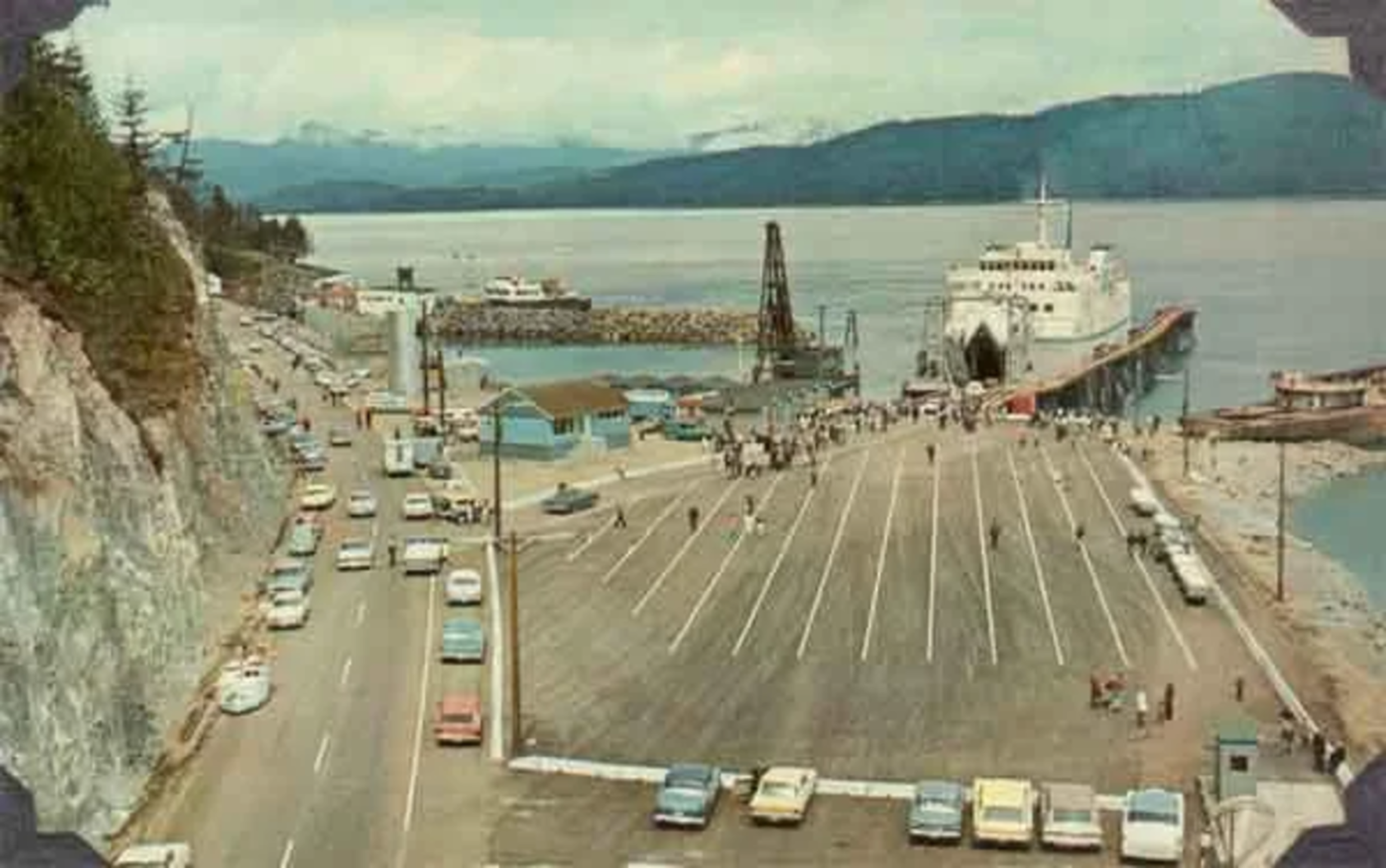
The Queen of Prince Rupert at Kelsey Bay in the 1970s: A Northern Gateway Era
In the 1970s, the quiet coastal terminal at Kelsey Bay was part of a much larger maritime network connecting remote communities along British Columbia’s rugged coastline. One of the most important vessels serving this northern route was the MV Queen of Prince Rupert, a ship that helped link isolated coastal towns with the rest of Vancouver Island and beyond.
For residents of Sayward and surrounding logging communities, the arrival of the ferry was more than transportation—it was a lifeline.
A Ferry Built for the North
The Queen of Prince Rupert was introduced in 1965 by BC Ferries as part of its northern service expansion. Designed specifically for longer coastal routes, she was built to handle rougher seas, larger distances, and fewer stops than the more urban ferry runs farther south.
Her design reflected her mission:
Large vehicle decks for trucks and logging traffic
Passenger lounges for long coastal journeys
Sturdy hull construction for open-water conditions
Capacity for both freight and community travel
She was not just a commuter ferry—she was a northern service vessel connecting isolated economies and communities.
Kelsey Bay in the 1970s: A Working Port
By the time the Queen of Prince Rupert was regularly calling at Kelsey Bay, the terminal was closely tied to the forestry industry of the Sayward Valley.
The port was busy with:
Logging trucks hauling timber from inland cutblocks
Boom boats managing floating log sorts
Coastal freight traffic supporting remote operations
The ferry terminal served both passengers and industrial cargo, reflecting the mixed-use nature of northern BC transportation at the time.
Life on Board the Ferry
For passengers boarding at Kelsey Bay, the experience aboard the Queen of Prince Rupert was shaped by distance and weather. Trips along the northern coast were longer and more exposed than the busy southern routes.
On board, travellers would typically find:
Cafeteria-style dining serving hot meals
Observation lounges with large windows for coastal views
Vehicle decks filled with logging trucks, campers, and supply vehicles
Crew members experienced in navigating challenging waters
The journey itself often became part of the experience—calm stretches of forested coastline interrupted by open water crossings and unpredictable weather.
A Link to Remote Communities
The ferry was especially important for communities that had limited road access or relied heavily on marine transport. For residents of Sayward and surrounding areas, Kelsey Bay provided a critical connection to:
Courtenay and Campbell River to the south
Northern coastal settlements via connecting routes
Supply chains for goods, mail, and equipment
Medical and administrative travel to larger centres
In many ways, the ferry system functioned as an extension of the highway network—only on water.
The Industrial Side of the Route
Unlike modern passenger-focused ferry routes, the Kelsey Bay service in the 1970s still carried a strong industrial component.
The Queen of Prince Rupert frequently transported:
Loaded logging trucks
Construction equipment
Fuel and supply shipments
Workers travelling between remote job sites
This blend of passenger and industrial traffic reflected the economic reality of northern Vancouver Island at the time, where forestry and resource extraction shaped daily life.
Weather, Water, and Reliability
Operating along the northern coast was not always predictable. The ferry had to contend with:
Sudden storms in coastal channels
Fog reducing visibility near shorelines
Strong tidal currents around inlets and bays
Seasonal weather changes that could delay schedules
Despite these challenges, the vessel earned a reputation for reliability, helping maintain consistent service even in difficult conditions.
A Changing Transportation Era
By the late 1970s and into the 1980s, ferry operations in northern BC began to evolve. Changes in road infrastructure, shifting industrial patterns, and service restructuring gradually reduced the role of some northern routes.
Over time, Kelsey Bay’s prominence as a ferry stop diminished as transportation networks centralized elsewhere. The Queen of Prince Rupert herself would later be reassigned and eventually retired from BC Ferries service.
Legacy at Kelsey Bay
Today, the ferry no longer docks at Kelsey Bay, but its presence remains part of local memory. For those who lived and worked in the area during the 1970s, the arrival of the ship symbolized connection—to jobs, supplies, and the wider world beyond the Sayward Valley.
Her legacy is tied to:
The industrial history of coastal logging communities
The development of northern ferry routes in British Columbia
The everyday lives of workers and families in remote regions
Remembering the Northern Route
The Queen of Prince Rupert was more than a ferry—it was a moving bridge between isolated coastal communities and the rest of the province. At Kelsey Bay, she represented a time when transportation, industry, and community life were deeply intertwined along British Columbia’s rugged shoreline.
Her visits to Sayward’s coast remain part of the region’s maritime and industrial story—a reminder of an era when the sea was the highway, and ferries were essential to daily life.