
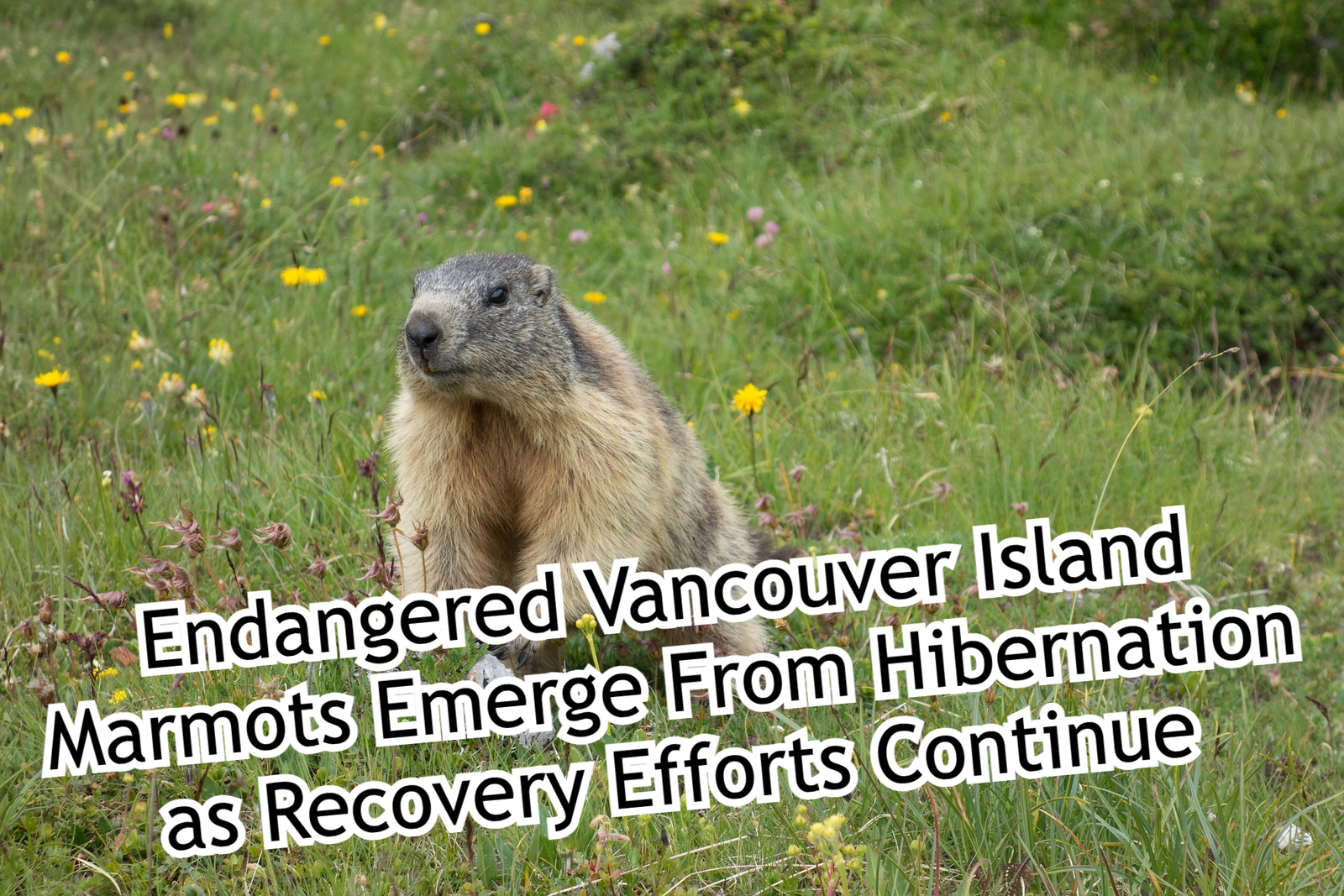
Conservationists are celebrating an encouraging sign of spring after the first wild Vancouver Island marmots of 2026 were spotted emerging from hibernation in alpine regions of Vancouver Island.
The sightings mark the beginning of the species’ active season after spending roughly seven months underground in hibernation. Wildlife officials say the annual emergence is an important milestone for one of Canada’s most endangered mammals and provides an early indication of how wild populations have survived the winter months.
According to the Marmot Recovery Foundation, approximately 427 Vancouver Island marmots are now living across 35 wild colonies on the Island, representing a remarkable conservation success story for a species that once teetered on the brink of extinction. By 2003, fewer than 30 wild marmots remained, prompting an intensive captive breeding and reintroduction program involving conservation organizations, zoos, governments, and private landowners.
Found nowhere else in the world, the Vancouver Island marmot is endemic to the Island’s mountainous alpine and subalpine regions. The chocolate-brown rodents spend much of their lives in meadows and avalanche chutes at higher elevations, where they rely on open terrain to spot predators such as wolves, cougars, and golden eagles.
The spring emergence is a particularly vulnerable time for marmots. After months without eating, the animals must rely on stored fat reserves while their digestive systems gradually return to normal. Wildlife experts note that survival during the first weeks after hibernation can be critical, especially following harsh winters or years with limited food availability.
Researchers will now monitor colonies throughout the summer breeding season. Vancouver Island marmots typically mate shortly after emerging from hibernation, with pups born about a month later and making their first appearances above ground in early summer.
While the species remains endangered, conservationists say the continued growth of wild populations demonstrates the effectiveness of long-term recovery efforts. New colonies have been established across parts of Vancouver Island, and wildlife managers remain optimistic that ongoing breeding, monitoring, and habitat protection programs will help secure the future of this uniquely Vancouver Island species.