
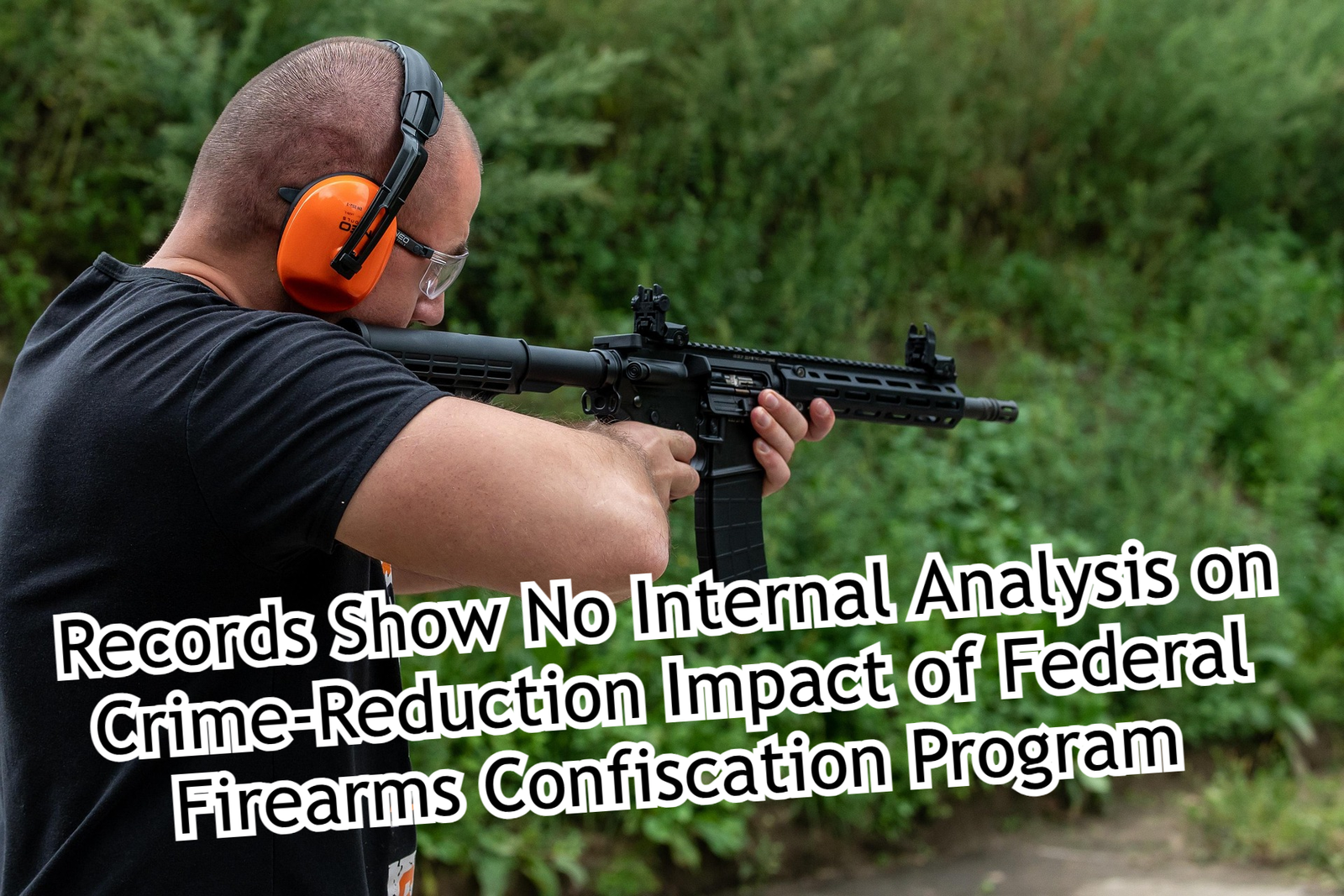
Newly released access-to-information records have intensified debate over Ottawa’s firearms confiscation program after revealing that Public Safety Canada was unable to provide internal analysis assessing whether the initiative will reduce crime or improve public safety.
The records were obtained through an Access to Information and Privacy (ATIP) request submitted by the Canadian Taxpayers Federation (CTF). The request sought departmental analysis regarding the effectiveness of the federal “assault-style firearms” compensation and confiscation program, specifically its anticipated impact on crime rates and public safety outcomes.
According to the response provided by Public Safety Canada, no records matching the request were found within the department.
The disclosure comes as the federal government continues moving forward with its firearms confiscation initiative, which was first announced following the prohibition of thousands of firearm models in 2020. Budget 2025 allocated an additional $742 million toward implementation of the program, bringing total federal spending commitments into the hundreds of millions of dollars.
Critics of the program argue that the lack of publicly available internal analysis raises questions about the evidence used to support the policy. The Canadian Taxpayers Federation says taxpayers deserve proof that the program will achieve its stated public-safety objectives before additional funds are committed.
Cost estimates for the initiative vary widely. While the federal government has not released a final projected cost, some independent analysts estimate the total price tag—including compensation payments, collection, transportation, storage, destruction, administration, and enforcement—could reach several billion dollars.
Researchers at the Fraser Institute have compared the program to Canada’s former long-gun registry, which became controversial after costs significantly exceeded original projections. Some estimates place the potential cost of the current confiscation program between $2.6 billion and $6.7 billion, depending on participation rates and implementation requirements.
The debate also extends to law enforcement. Several police organizations and policing representatives have expressed concerns about the program’s effectiveness as a crime-reduction measure. Critics argue that resources could be directed toward combating firearms smuggling, organized crime, repeat violent offenders, and illegal gun trafficking instead.
Supporters of the federal policy maintain that restricting access to certain firearms is an important component of a broader public-safety strategy. The government has argued that the measures are intended to reduce the availability of firearms deemed unsuitable for civilian ownership and lower the risk of future violence.
The issue remains politically divisive. Opponents note that licensed firearms owners are already subject to extensive background checks, safety training requirements, secure storage regulations, and continuous eligibility screening through the RCMP. They also point to data suggesting that many firearms used in criminal activity originate from illegal sources rather than from licensed owners.
As implementation of the confiscation program continues, questions surrounding its cost, effectiveness, and measurable impact on public safety are likely to remain central to the national debate over firearms policy in Canada.