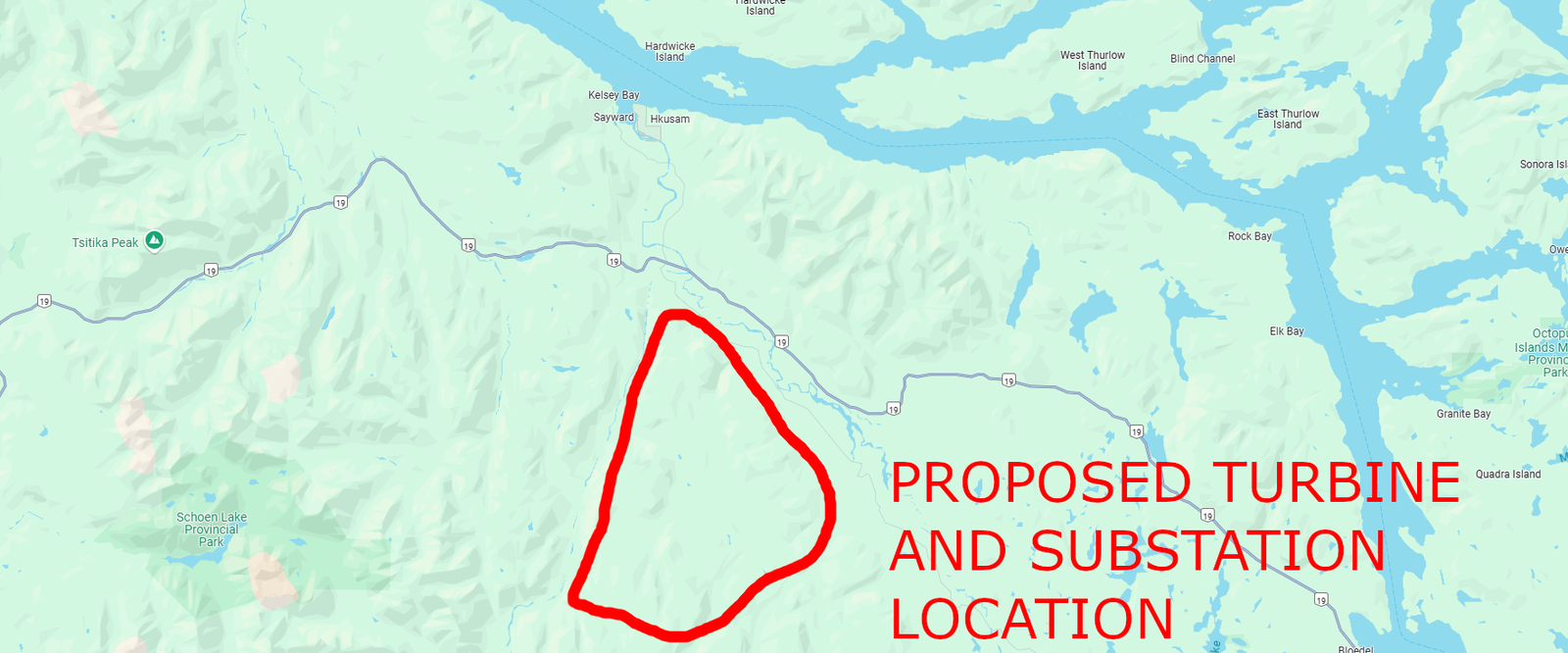
A proposed wind farm for the Strathcona Regional District is one of nine renewable energy projects that received approval earlier this week.
To expedite these projects, the province announced it is waiving environmental assessments (EA).
Energy and Climate Solutions Minister Adrian Dix announced this exemption at a press conference on December 9. He confirmed that the wind power projects, which will be co-owned by First Nations, will receive 30-year production contracts with BC Hydro.
“We urgently need these new energy generation projects to meet the growing demand for power and to accelerate our efforts to build a prosperous and inclusive clean economy,” Dix said. “We’re going to work together with BC Hydro, First Nations, and project proponents to get these projects built quickly, responsibly, and efficiently, and get those turbines spinning.”
Named the Brewster Wind Project, the plan includes a capacity of up to 200 megawatts with around 30 wind turbines. According to current provincial regulations, wind projects exceeding 50 megawatts or more than 15 turbines typically require an EA.
Megan Hunter from Capstone Infrastructure, the Toronto-based company behind the project, expressed surprise at the EA exemption but said it is too early to discuss changes in the construction timeline.
“B.C. has strong environmental protections, and we plan to complete robust consultation and engagement with Indigenous groups and the local community, as their input will improve the project,” Hunter stated in an email. “Wildlife, environmental, noise, and cultural impact studies will still be conducted.”
Chief Chris Roberts of Wei Wai Kum First Nation, partnering with Capstone, emphasized the nation’s commitment to sustainable development and environmental stewardship. He expressed confidence in Capstone’s capability as a seasoned developer, owner, and operator of renewable energy facilities.
“We understand there is an enhanced permitting process being developed to reduce duplication and inefficiencies in the current EA process,” Roberts wrote. “Our goal is to minimize and mitigate potential negative impacts on wildlife and the environment, regardless of the permitting process.”
The province reiterated its commitment to “robust environmental standards” in a December 9 media release, mentioning a “one window” permitting approach to streamline regulatory processes.
The decision to waive environmental assessments has been met with some surprise.
UBC professor emeritus Michael Healey highlighted the challenges associated with wind farms, such as potential harm to birds, significant land use, and noise concerns.
“I personally don’t think it’s wise to start any large industrial project without thorough environmental analysis, regardless of who is involved,” Healey wrote in an email. “Assuming that First Nations’ involvement means all environmental issues will be fully considered is misguided. The government often incentivizes Indigenous governments to accept projects they might otherwise reject.”
Dissatisfaction with the EA process among First Nations in B.C. has been growing for years. A significant portion of EA litigation in the province has been initiated by First Nations, encompassing broader concerns such as strategic planning, land use, and assessment procedures, according to a 2010 report by UVic’s Environmental Law Centre.
Tahsis Mayor Martin Davis, a regional district director and cave researcher, called the EA exemption decision “surprising.” He emphasized the need for some form of assessment from an economic standpoint.
When the wind project was proposed late in the summer, Davis highlighted the importance of consulting caving and paleontology experts to assess the area. He noted that some ridges in the area contain limestone, which would need to be avoided to ensure the turbines remain stable.
“From an economic perspective, placing wind turbines on limestone could lead to structural failures,” Davis told the Mirror.
Davis also mentioned that caves in the area could serve as critical habitats for bats.