What Happens When You Can’t Pay Your Property Taxes

For most homeowners in Sayward, paying property taxes is a routine annual responsibility. But when finances tighten, falling behind can quickly become overwhelming. Knowing how the process works in British Columbia—and how it applies specifically in the Village of Sayward—helps residents make informed choices before the situation becomes serious.

Property Taxes Are a Legal Obligation

In British Columbia, municipal property taxes are mandatory. They are secured against the property itself rather than the individual owner. As a result, unpaid taxes stay with the land, regardless of who owns it or whether the property is refinanced.

If taxes are not paid by the annual deadline (usually July 2), penalties are applied immediately. In Sayward, as in most BC municipalities, a 10% penalty is added to any outstanding balance—even if only a small amount is overdue.

Year One: Arrears and Penalties

During the first year of non-payment, taxes move into arrears. Interest may also accumulate depending on local policy. The homeowner still retains full ownership, but the debt continues to grow.

Partial payments are typically allowed and can reduce interest charges, though they do not reverse penalties already applied.

Year Two and Beyond: The Property Tax Sale

If taxes remain unpaid for three consecutive years, the property becomes eligible for a tax sale. In BC, tax sales take place annually on the last Monday of September.

At a tax sale:

  • The municipality auctions the property to recover unpaid taxes, interest, and associated costs.

  • The opening bid equals the amount owed—not the property’s market value.

  • Properties may sell for significantly less than their assessed worth.

Importantly, ownership does not transfer immediately at the sale.

The One-Year Redemption Period

After the tax sale, the original owner enters a one-year redemption period. During this time, the homeowner can reclaim the property by paying:

  • All outstanding taxes

  • Interest

  • Penalties

  • Legal and administrative fees

If the full amount is paid within the year, the sale is cancelled and ownership remains with the homeowner.

If the Property Is Not Redeemed

If the homeowner does not redeem the property within the one-year period:

  • Ownership is legally transferred to the tax sale purchaser.

  • The former owner permanently loses the property.

  • No compensation is provided for any remaining equity.

This means a home worth hundreds of thousands of dollars can be lost over a relatively small tax debt.

Can the Municipality Take Your Home Directly?

BC municipalities cannot simply seize a property for unpaid taxes. They must follow the tax sale process. However, the end result—loss of the home—can still occur if taxes remain unpaid long enough.

Options for Homeowners Facing Difficulty

Homeowners who are struggling should act early. Possible steps include:

  • Contacting the Village for clarification or to discuss payment timing

  • Exploring refinancing or short-term borrowing

  • Applying for the BC Property Tax Deferment Program (available to qualifying seniors, families with children, and persons with disabilities)

Delaying action significantly reduces available options.

A Serious but Preventable Outcome

BC’s property tax enforcement system is strict but predictable. Losing a home over unpaid taxes is uncommon, yet it does happen—often because homeowners misunderstand the process or wait too long to seek help.

For Sayward residents experiencing financial hardship, early communication and a clear understanding of the system can be the difference between a temporary setback and a permanent loss.

Sayward Taxpayers Alliance Logo

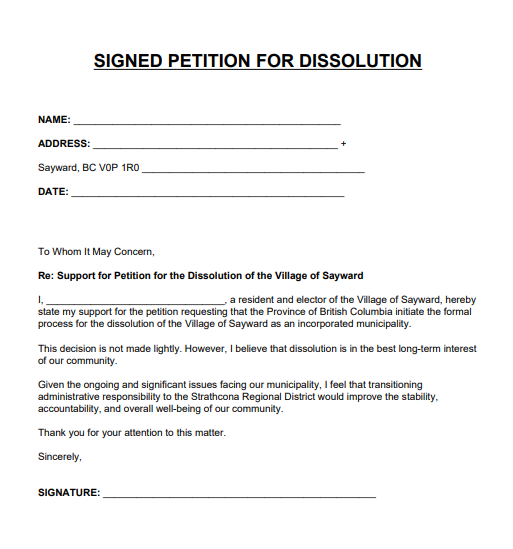
Signing the petition means your voice is heard in calling for: reduced administrative burden, governance improvements, respect of citizen concerns, fiscal responsibility and professionalism.

Petition

BC Residents Urge Province to Rein In Spending Instead of Raising Taxes or Increasing Debt

As the provincial government prepares to release its next budget, many residents in Sayward and other small communities are questioning how British Columbia is managing taxpayer dollars. Local taxpayers and fiscal advocates are urging Finance Minister Brenda Bailey to curb provincial spending rather than relying on higher taxes and increased borrowing.

Advocates note that provincial spending has grown rapidly in recent years and now exceeds the pace of B.C.’s economic growth. They argue this trajectory is unsustainable and places added pressure on families already dealing with rising costs for groceries, fuel, housing, and other essentials.

In practical terms, the province is projected to spend billions more this year than it did just a few years ago, even after adjusting for inflation. Meanwhile, economic growth has lagged behind, leaving less wealth to support expanding government budgets. Those monitoring the province’s finances say this imbalance is contributing to larger deficits and mounting debt — costs that ultimately fall on taxpayers through future tax hikes or reduced services.

For residents of Sayward, these broader fiscal concerns feel very real. Rural communities rely heavily on core public services such as health care, education, transportation, and emergency response. But when government debt grows, interest payments consume a larger share of the budget, leaving fewer resources for frontline services that communities depend on.

Critics of the current spending path are calling on the province to reassess its priorities and identify meaningful savings. They argue this could include reviewing the size of the provincial bureaucracy, cutting wasteful or low‑value spending, and focusing on essential services that directly support communities rather than expanding programs without clear justification.

Supporters of fiscal restraint say responsible budgeting today can help prevent steeper tax increases in the future and protect vital services for the next generation. As budget discussions continue in Victoria, residents in Sayward will be watching closely to see whether provincial leaders respond to calls for spending discipline — and whether the upcoming budget reflects the affordability concerns of rural British Columbians.

Governor General’s Salary Climbs Toward $400,000 While Sayward Families Face Mounting Expenses

The Governor General of Canada is poised to earn nearly $400,000 this year after receiving another automatic pay increase — a development drawing criticism from taxpayer advocates and residents in small communities like Sayward, where families continue to struggle with rising living costs.

Federal law mandates annual automatic salary adjustments for the Governor General, causing the position’s pay to steadily climb even as Canadians face higher prices for groceries, fuel, housing, and utilities.

In Sayward and other rural Vancouver Island communities, affordability pressures are often more intense than in urban centres. Transportation and supply challenges drive up the cost of basic goods, while wages tend to be lower and employment more seasonal. Against this backdrop, automatic raises for top federal officials strike many as out of touch with the financial realities facing rural households.

Taxpayer advocates note that the Governor General’s salary is several times higher than the average Canadian income. They argue that such increases are difficult to justify when families are cutting back on essentials and local governments are struggling to maintain services with limited resources.

Beyond the salary itself, the Governor General’s office includes a range of taxpayer‑funded benefits — from an official residence to extensive travel and additional allowances. Critics say these costs add to the burden on taxpayers, including those in small communities who may see little direct benefit from federal spending.

Long‑term expenses are also a concern. Former Governors General receive generous pensions and ongoing expense accounts, regardless of how long they served. Taxpayer groups argue that these commitments represent significant, decades‑long costs.

In Sayward, where many residents rely on fixed incomes or small local businesses, questions are growing about why senior federal officials continue to receive automatic raises while calls for fiscal restraint are often directed at municipalities and taxpayers. Some argue that public‑sector compensation should better reflect broader economic conditions, especially during periods of high inflation and affordability challenges.

Advocates are calling for reforms to end automatic pay increases for senior federal roles and to require greater transparency and accountability around compensation. They say that if governments expect Canadians to tighten their belts, the same expectations should apply to those in the highest offices.

Without changes, critics warn that widening pay gaps between federal officials and everyday Canadians will continue to fuel frustration — particularly in rural communities like Sayward, where rising costs and limited services already stretch household budgets.