Endangered Vancouver Island Marmots Emerge From Hibernation as Recovery Efforts Continue

Conservationists are celebrating an encouraging sign of spring after the first wild Vancouver Island marmots of 2026 were spotted emerging from hibernation in alpine regions of Vancouver Island.

The sightings mark the beginning of the species’ active season after spending roughly seven months underground in hibernation. Wildlife officials say the annual emergence is an important milestone for one of Canada’s most endangered mammals and provides an early indication of how wild populations have survived the winter months.

According to the Marmot Recovery Foundation, approximately 427 Vancouver Island marmots are now living across 35 wild colonies on the Island, representing a remarkable conservation success story for a species that once teetered on the brink of extinction. By 2003, fewer than 30 wild marmots remained, prompting an intensive captive breeding and reintroduction program involving conservation organizations, zoos, governments, and private landowners.

Found nowhere else in the world, the Vancouver Island marmot is endemic to the Island’s mountainous alpine and subalpine regions. The chocolate-brown rodents spend much of their lives in meadows and avalanche chutes at higher elevations, where they rely on open terrain to spot predators such as wolves, cougars, and golden eagles.

The spring emergence is a particularly vulnerable time for marmots. After months without eating, the animals must rely on stored fat reserves while their digestive systems gradually return to normal. Wildlife experts note that survival during the first weeks after hibernation can be critical, especially following harsh winters or years with limited food availability.

Researchers will now monitor colonies throughout the summer breeding season. Vancouver Island marmots typically mate shortly after emerging from hibernation, with pups born about a month later and making their first appearances above ground in early summer.

While the species remains endangered, conservationists say the continued growth of wild populations demonstrates the effectiveness of long-term recovery efforts. New colonies have been established across parts of Vancouver Island, and wildlife managers remain optimistic that ongoing breeding, monitoring, and habitat protection programs will help secure the future of this uniquely Vancouver Island species.

Life On The Edge Of Wilderness – A Pioneer’s First Year At Salmon River In The 1920s

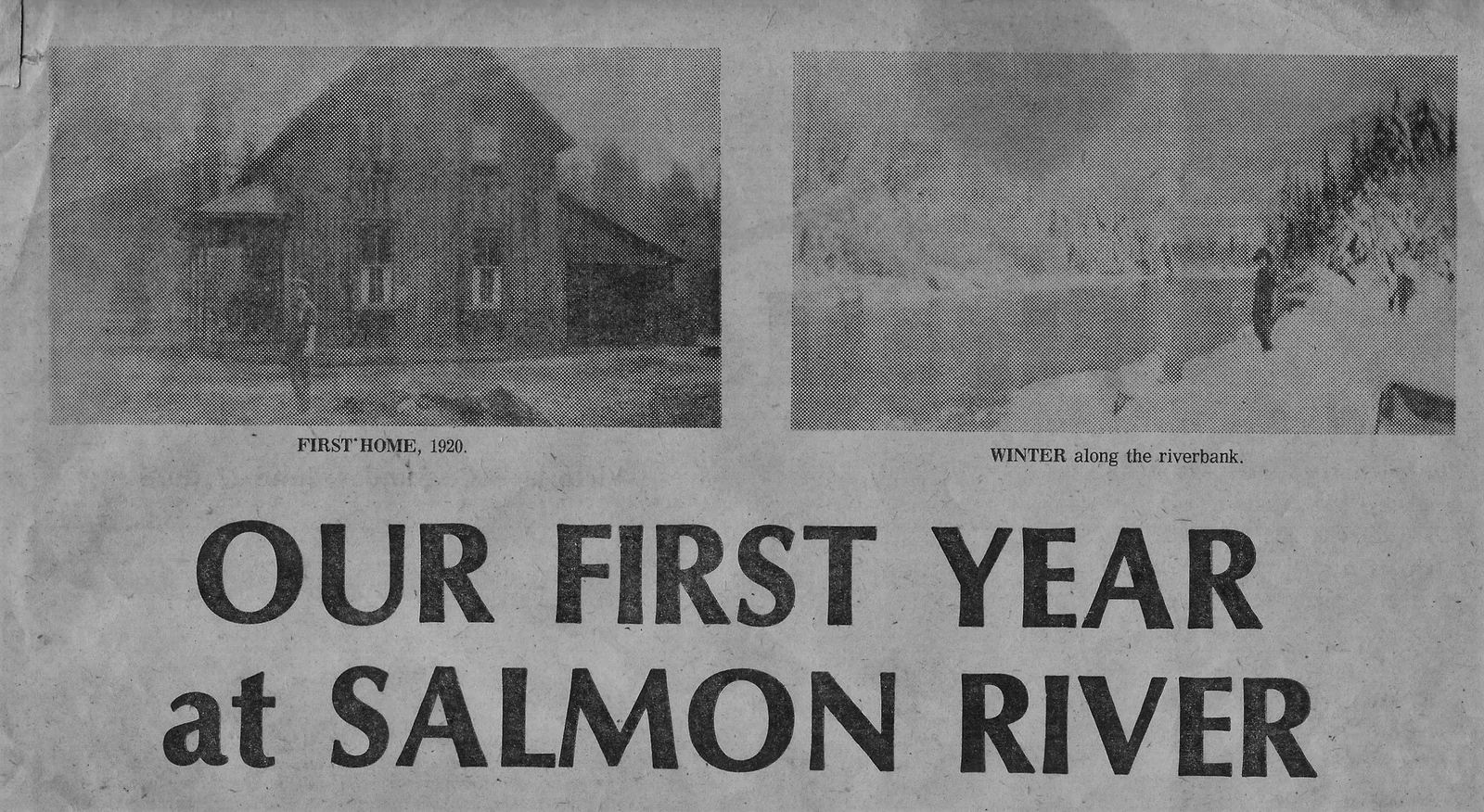
In the early 1920s, the remote banks of the Salmon River near present-day Sayward were not yet the quiet, scenic destination many recognize today. Instead, they were the frontier—rugged, isolated, and filled with both promise and hardship for the first wave of settlers trying to carve out a life in the dense forests of northern Vancouver Island.

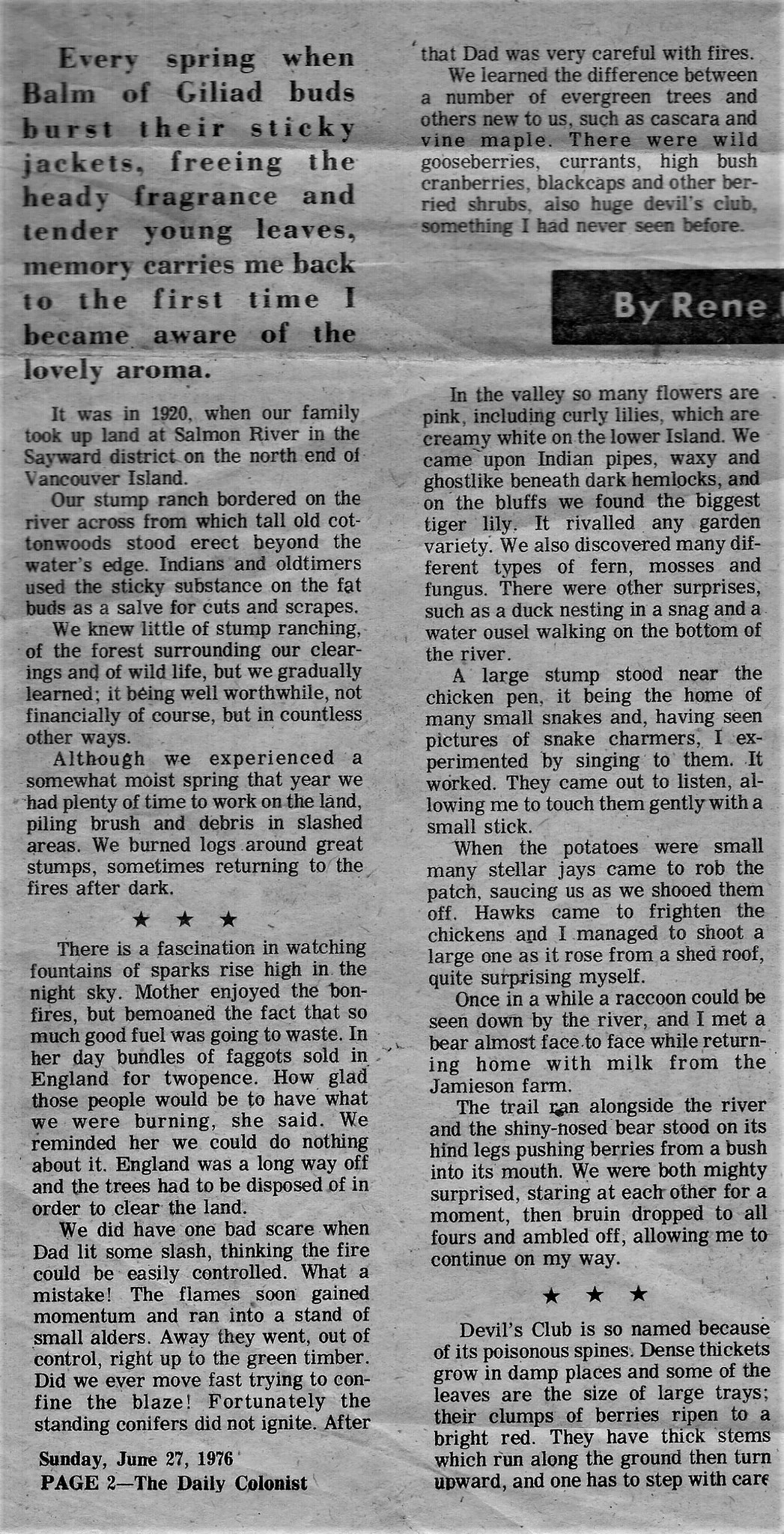
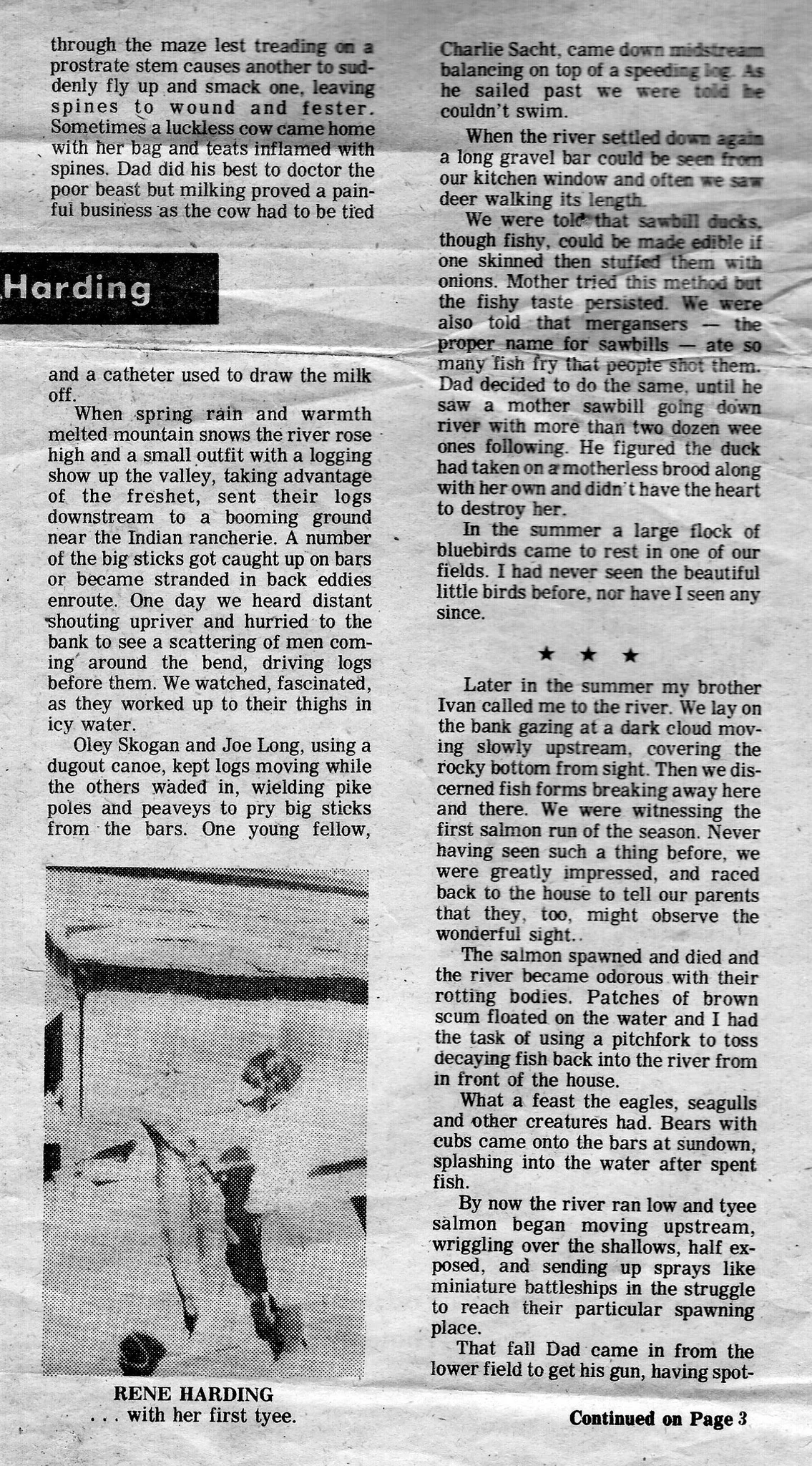
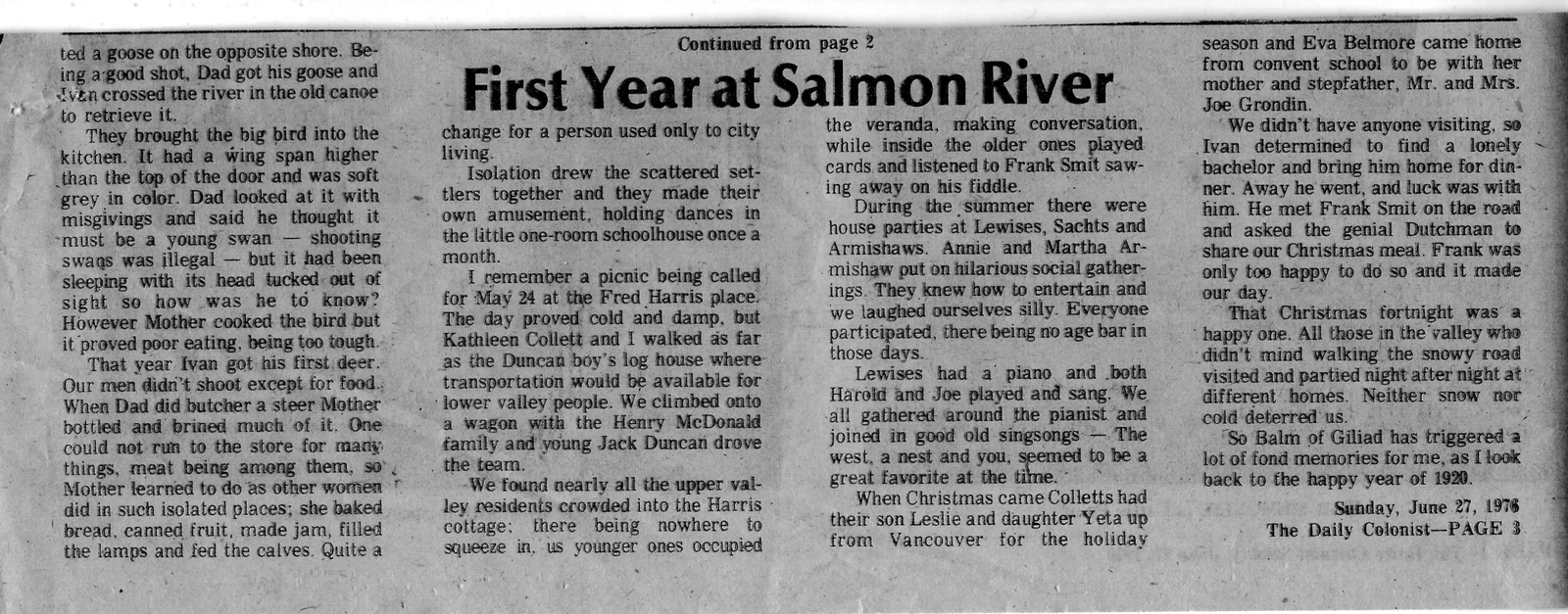
A newspaper account by Rene Harding, preserved by the Sayward Historical Society, offers a vivid glimpse into what that first year of settlement was really like.

A Land of Opportunity—and Challenge

The Salmon River Valley drew settlers with its fertile flats and towering timber. By the late 1800s and early 1900s, the region had already begun transitioning from a trading stop and Indigenous village site into a budding resource community fueled largely by logging and natural resource extraction.

But arriving in the 1920s meant stepping into a place where infrastructure was nearly nonexistent. Early pioneers had to build everything from scratch—homes, trails, and access routes—often using only hand tools and raw determination.

The Harding account describes a year defined by constant labour. Clearing land for farming was grueling work, with dense forest and heavy undergrowth slowing progress at every turn. Each acre gained was hard-won, and every structure built represented weeks of effort.

Isolation and Ingenuity

Life at Salmon River was marked by isolation. Transportation was limited, and connections to the outside world were infrequent. Supplies had to be carefully managed, and settlers relied heavily on one another for support.

Improvisation became a daily necessity. Families learned to adapt quickly—constructing shelters, sourcing food locally, and making do with what little they had. Hunting, fishing, and foraging were not hobbies, but essential survival skills.

Despite these hardships, there was a sense of optimism. The settlers believed in the long-term potential of the land, even when early conditions were harsh.

Weather, Work, and Resilience

The first year tested settlers in every season. Wet coastal weather, dense bush, and physical exhaustion created constant challenges. Yet the Harding account highlights a recurring theme: resilience.

Progress may have been slow, but it was steady. Gardens began to take shape, homes became more secure, and the beginnings of a community started to emerge.

This perseverance reflects a broader pattern seen across early Vancouver Island settlements—small, determined groups of people laying the groundwork for future generations.

Foundations of a Community

What makes this account especially compelling is how it captures a moment before Sayward became a structured community. At the time, the area was still evolving from its early identity as Port Kusam, a small settlement tied to trade, forestry, and river access.

The experiences described in that first year would ultimately contribute to the development of the Salmon River Valley and surrounding communities, helping shape the region’s identity as a forestry-driven hub in the decades that followed.

Remembering the Pioneers

Today, it’s easy to overlook the sheer effort required to establish communities in remote areas like Salmon River. Roads, services, and modern conveniences now connect the region—but they are built on the foundations laid by those early settlers.

Accounts like Rene Harding’s serve as a reminder of that legacy. They preserve not just the facts of history, but the lived experiences—the struggles, hopes, and determination—that defined life in the Sayward Valley a century ago.

Their story is one of endurance, adaptability, and belief in the land—qualities that continue to shape the community to this day.

B&S&W Logging In The 1950s And The Early Days of Larry McKinlay

In the rugged coastal forests of northern Vancouver Island, the 1950s marked a defining era for industrial logging—and few names were as central to that story as Bloedel, Stewart and Welch. Operating extensively in and around the Sayward region, B&S&W helped transform a remote landscape into a hub of resource extraction, innovation, and tight-knit community life.

Amid the roar of chainsaws and the thunder of falling timber, a generation of young men came of age in the bush. Among them was a young Larry McKinlay—one of many who would be shaped by the grit, danger, and camaraderie of coastal logging camps.

The Rise of Industrial Logging in Sayward

By the early 1950s, Bloedel, Stewart and Welch had established itself as a dominant force in British Columbia’s forestry sector. With vast timber licenses and access to old-growth forests, the company set up operations throughout the Sayward Valley and surrounding inlets.

Logging in this era was not for the faint of heart. Crews worked in steep, rain-soaked terrain, felling massive Douglas fir and cedar trees that had stood for centuries. Equipment was evolving—steam donkeys were giving way to diesel-powered yarders—but the work remained intensely physical and often dangerous.

Logs were hauled to booming grounds in coastal inlets like Kelsey Bay, then sorted and transported to mills. The scale of operations was immense, and B&S&W played a key role in feeding both domestic and international demand for lumber during the postwar boom.

Life in the Camps

For workers, logging camps were more than just job sites—they were entire communities. Isolated from towns, these camps provided bunkhouses, cookhouses, and a structured daily rhythm built around long shifts and hard labor.

Meals were hearty, the coffee was strong, and the bonds between workers ran deep. In an environment where every man relied on the others for safety, trust was everything.

It was into this world that young Larry McKinlay stepped.

A Young Logger’s Beginning

Like many local boys, Larry McKinlay was drawn into the logging industry at a young age. Opportunities in Sayward during the 1950s were closely tied to the forest, and logging offered both a livelihood and a rite of passage.

Starting out in entry-level roles—perhaps as a chokerman or swamper—Larry would have quickly learned the realities of bush work: the unpredictability of falling timber, the precision required to rig cables, and the constant awareness needed to stay alive.

But beyond the danger, there was also pride. Logging wasn’t just a job; it was a craft. Young workers like Larry were mentored by seasoned hands, absorbing knowledge that couldn’t be taught in classrooms.

Innovation Meets Tradition

The 1950s were also a time of transition in the logging industry. Companies like B&S&W were beginning to adopt new technologies that would eventually reshape forestry work—chainsaws replacing crosscut saws, improved transportation networks, and early mechanization.

Yet much of the work still relied on human strength and skill. This blend of old and new defined the era, and those who worked through it—like Larry McKinlay—experienced firsthand the shift from traditional to modern logging practices.

A Lasting Legacy

The impact of Bloedel, Stewart and Welch on Sayward cannot be overstated. The company’s operations brought jobs, infrastructure, and a sense of purpose to the region. Roads carved through dense forest would later open access for residents and tourists alike.

For individuals like Larry McKinlay, the experience of working in the bush during this formative period likely left a lasting imprint—one of resilience, resourcefulness, and connection to the land.

Remembering the Era

Today, it’s easy to forget just how demanding and foundational this work was. The forests around Sayward still stand as a testament to both nature’s scale and the human effort required to harvest it.

Looking back at the 1950s, we see more than just an industry—we see a way of life. One where companies like B&S&W drove economic growth, and where young men like Larry McKinlay found their footing in a world defined by towering trees and the relentless rhythm of the saw.

It’s a story of hard work, community, and the enduring legacy of logging on Vancouver Island.

The Forgotten Coastal Community Of Port Kusam Near Sayward BC

Hidden along the rugged coastline of northern Vancouver Island lies the historical site of Port Kusam, a little-known coastal community located near Sayward. Today, it is quiet and largely reclaimed by forest and shoreline, but in earlier decades it played a small yet meaningful role in the broader network of logging, marine transport, and settlement that shaped the region.

Though not widely documented compared to larger hubs like Kelsey Bay, Port Kusam remains part of the layered industrial and cultural history of the Sayward Valley.

A Remote Coastal Setting

Port Kusam sits in a landscape typical of the outer Sayward coast—steep forested slopes dropping sharply into sheltered inlets, with dense temperate rainforest meeting tidal waters. Like many small coastal locations on northern Vancouver Island, it was never a large settlement, but rather a place shaped by resource use and temporary occupation.

Its sheltered waters made it suitable for:

  • Small marine landings

  • Log handling and booming activities

  • Short-term work camps or industrial staging areas

In many ways, Port Kusam was less a town and more a working place tied to the land and sea.

Logging and Coastal Industry

The history of Port Kusam is closely tied to British Columbia’s coastal logging economy. As logging expanded through the Sayward region in the 20th century, remote inlets like Kusam were often used for:

  • Temporary logging camps

  • Log sorting and booming grounds

  • Transfer points for timber moving by barge or tug

Before extensive road networks reached every cutblock, the coast itself was a transportation system. Logs could be moved efficiently by water, making small protected inlets valuable operational sites.

Port Kusam fit naturally into this system.

Connection to Sayward’s Industrial Network

Port Kusam was part of a wider coastal-industrial landscape that included logging operations in the Sayward Valley and marine transport hubs like Kelsey Bay.

Timber harvested inland would often make its way:

  1. From forest cutblocks down rough logging roads

  2. To shoreline staging or booming areas

  3. Out to larger sorting or shipping points such as Kelsey Bay

In this system, small coastal sites like Port Kusam acted as supporting nodes—quiet but functional parts of a much larger industrial chain.

Life in a Temporary Landscape

Unlike permanent towns, places like Port Kusam rarely developed long-standing infrastructure or large residential populations. Instead, they were characterized by:

  • Temporary camps rather than established communities

  • Seasonal or project-based occupation

  • Minimal permanent buildings

  • Constant movement of workers and equipment

Life in such places was shaped by work schedules, weather conditions, and the demands of the logging industry rather than traditional civic life.

Nature Reclaims the Coast

As logging practices modernized and transportation shifted toward improved road systems and centralized marine facilities, many small coastal sites like Port Kusam gradually fell out of regular use.

Over time:

  • Temporary structures were removed or decayed

  • Industrial activity shifted elsewhere

  • Forest growth reclaimed old clearings and access points

Today, little remains on the surface to indicate the site’s former role, aside from subtle traces in the landscape and archival references.

A Quiet Part of a Larger Story

Although Port Kusam was never a major settlement, its history reflects a broader truth about coastal British Columbia: much of the region’s development was built on small, temporary, and often unnamed industrial sites.

Together with places like Sayward and Kelsey Bay, it formed part of a network that supported:

  • The coastal logging industry

  • Marine transport routes

  • Resource-based settlement patterns

These places were small individually, but collectively they shaped the economic and social history of the region.

Remembering Port Kusam

Today, Port Kusam stands as a quiet reminder of how deeply industry and geography were intertwined along the Sayward coast. It represents a time when the shoreline itself was an active workspace—where inlets, bays, and forest edges served as vital infrastructure for moving timber and sustaining communities.

Though largely forgotten in everyday conversation, its legacy remains embedded in the landscape of northern Vancouver Island—alongside the forests, waterways, and working histories that continue to define the region.

Before You Move A Rock – A Guide To Restoring Historical First Nations Clam Beds

New resource highlights importance of protecting clam gardens and intertidal ecosystems along the B.C. coast

A new coastal stewardship guide from the Nanwakolas Council is encouraging residents, boaters, and coastal communities across Vancouver Island and the North Island to think carefully before moving rocks or altering shoreline environments.

The document, Before You Move a Rock, focuses on protecting intertidal ecosystems and culturally significant clam garden areas that support marine life, traditional food systems, and coastal biodiversity. The guide explains that even small changes to beaches, shorelines, or rocky areas can disrupt sensitive habitats and damage long-established ecological systems.

Clam gardens — traditional Indigenous mariculture systems built along the coast — are a key focus of the resource. These areas have supported shellfish harvesting for generations and continue to play an important role in coastal food security and environmental stewardship.

The guide emphasizes that rocks and shoreline features are not just part of the landscape, but essential components of marine ecosystems that support clams, shellfish, fish habitat, and other coastal species. Moving or disturbing these areas without proper planning can lead to long-term environmental impacts.

For coastal communities such as Sayward and other North Island regions where residents frequently access beaches, shorelines, and marine areas, the message is straightforward: understand the environmental and cultural importance of intertidal zones before making any changes.

The document encourages collaboration between First Nations, local communities, researchers, and stewardship groups to ensure coastal restoration and development work is done responsibly. Indigenous knowledge and long-term stewardship practices are highlighted as essential in maintaining healthy ecosystems and protecting traditional harvesting areas.

Nanwakolas Council’s guidance is part of a broader effort to promote awareness and respectful use of coastal environments throughout British Columbia. By encouraging people to pause and consider the impacts of altering natural shorelines, the resource aims to help protect marine ecosystems and cultural heritage for future generations.

Residents and community groups interested in learning more about coastal stewardship and clam garden protection are encouraged to review the Before You Move a Rock document and consider how their activities along the shoreline can contribute to long-term environmental sustainability.

Access the entire PDF from the Nanwakolas Council website.