
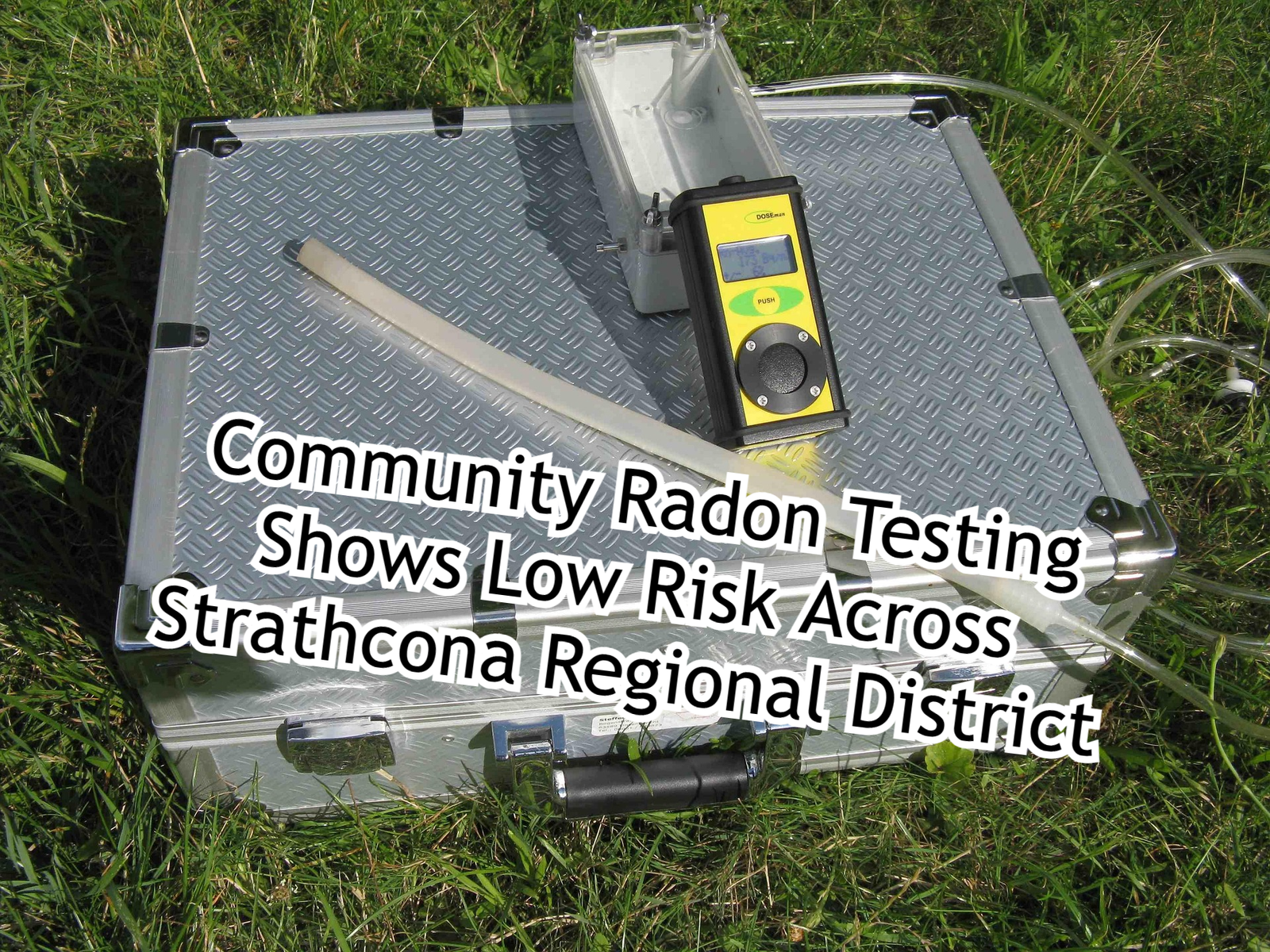
Results from a regional radon testing initiative in the Strathcona Regional District show that most participating homes recorded low indoor radon levels, a positive finding given the gas’s link to long‑term lung cancer risk. Even so, health officials are encouraging residents to continue testing regularly to ensure their homes remain safe.
During the winter of 2024–2025, the Strathcona Regional District partnered with the national Take Action on Radon campaign through the 100 Radon Test Kit Challenge. Volunteers from communities including Campbell River, Oyster River, Tahsis, and Zeballos placed long‑term test kits in their homes to measure radon concentrations over several months.
Of the 117 homes tested, 96 per cent recorded radon levels below 100 becquerels per cubic metre (Bq/m³), well under Health Canada’s guideline of 200 Bq/m³. A small number of homes showed elevated readings: about 2 per cent fell between 100 and 200 Bq/m³, and roughly 2 per cent exceeded the national guideline, with the highest result measuring around 214 Bq/m³.
Radon is an invisible, odourless radioactive gas produced by the natural decay of uranium in soil and rock. It can seep into buildings through cracks and gaps in foundations, accumulating indoors at levels that pose health risks over time. Health Canada identifies radon as the second leading cause of lung cancer after smoking, and the leading cause among non‑smokers.
While the Strathcona results are reassuring, officials emphasize that radon levels can vary widely from one building to the next — even between neighbouring homes. Soil conditions, weather patterns, and how tightly a home is sealed all influence indoor concentrations. Because of this variability, testing remains the only reliable way for homeowners to understand their exposure.
Local leaders are urging residents to maintain awareness and test their homes every three to five years, or after major renovations that affect a building’s structure or ventilation. Long‑term tests, typically conducted over the winter when homes are sealed and radon levels tend to be higher, provide the most accurate picture of average exposure.
For households that discover elevated levels, effective mitigation options are available. Certified radon professionals can install systems that vent the gas safely outdoors, often reducing concentrations significantly. Although costs vary, experts agree that mitigation can greatly reduce long‑term health risks.
Information on radon testing and how to obtain test kits is available through the Strathcona Regional District and Health Canada, and homeowners can find additional resources online to help protect their families from this often‑overlooked indoor hazard.