
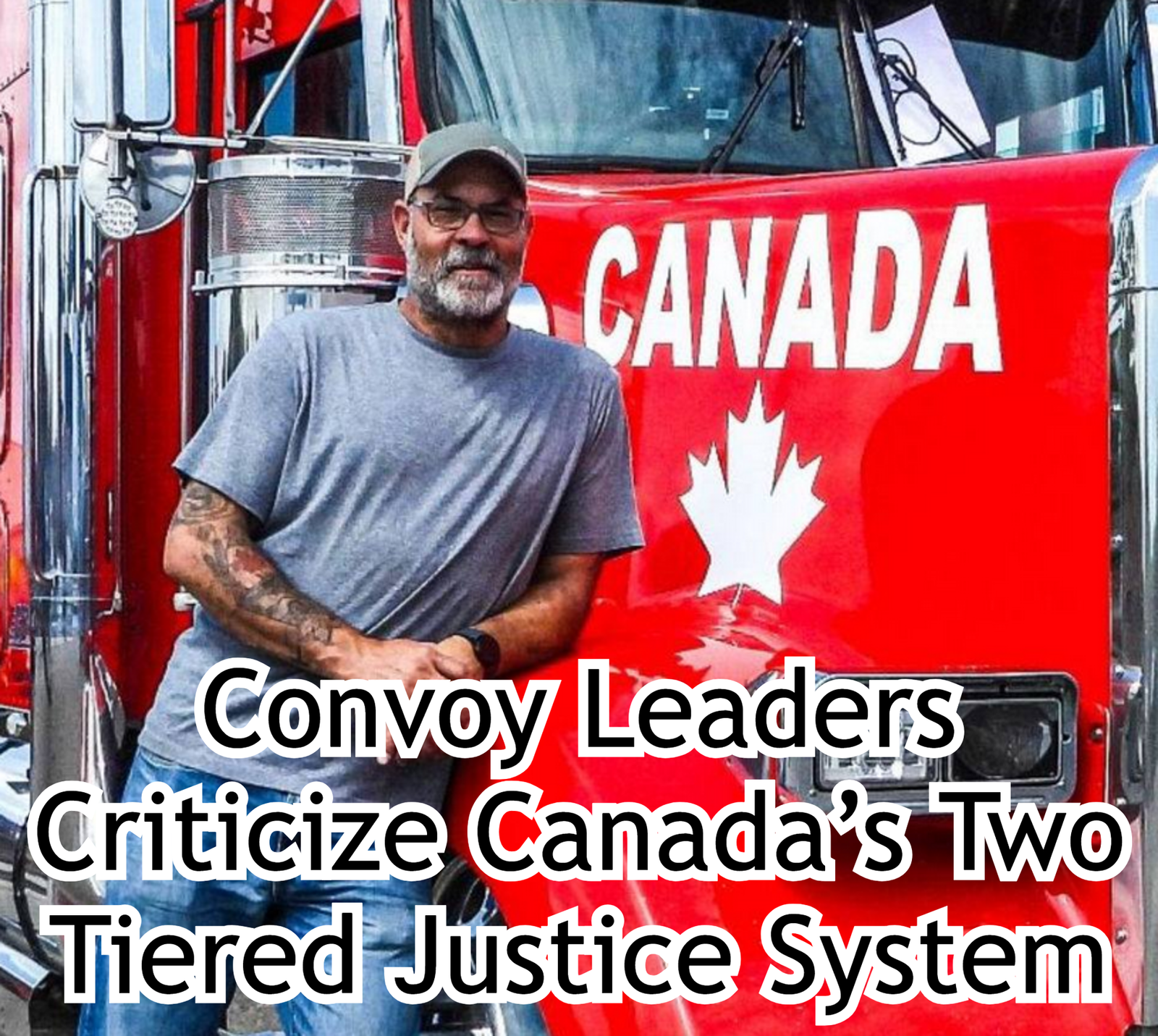
Chris Barber, a co-leader of the Freedom Convoy protests, is speaking out once again about what he describes as a growing divide in Canada’s justice system, arguing that recent legal and political developments reflect a troubling double standard that is contributing to the country’s decline.
Barber, who became a central figure during the 2022 convoy protests in Ottawa, has been vocal about what he sees as unequal treatment under the law, particularly in how governments and courts respond to political demonstrations and dissent. In recent remarks, he criticized federal leadership and policy decisions, claiming that the justice system is increasingly influenced by political considerations rather than consistent legal principles.
Concerns about fairness and equal treatment
At the heart of Barber’s criticism is the belief that Canada is moving toward a “two-tiered justice system,” where different groups face different consequences depending on their political views or affiliations. He argues that participants in the convoy movement were subjected to unusually harsh legal measures, including asset freezes, emergency powers, and prolonged court proceedings, while other protests and political actions have been treated differently.
Supporters of Barber and other convoy leaders say these actions set a dangerous precedent, suggesting that governments may be willing to use extraordinary legal tools against dissenting voices. They argue that such measures undermine public confidence in the justice system and weaken the principle that all Canadians should be treated equally under the law.
Critics of the convoy, however, maintain that the government’s response was necessary due to the scale and impact of the protests, particularly in Ottawa, where blockades disrupted businesses, residents, and cross-border trade. They argue that emergency measures were taken to restore order and ensure public safety, not to target political viewpoints.
Broader criticism of federal policies
Barber’s comments go beyond the convoy itself, extending to broader criticism of federal policies under the Liberal Party of Canada government. He has argued that economic pressures, regulatory policies, and what he describes as increasing government overreach are contributing to a steady erosion of national stability and prosperity.
According to Barber, rising costs of living, regulatory burdens on industries, and what he views as heavy-handed government intervention are making it more difficult for ordinary Canadians to succeed. He contends that these policies, combined with controversial legal decisions, are driving frustration and division across the country.
Supporters of the federal government counter that many of these policies are aimed at addressing complex challenges such as economic recovery, public health, climate change, and social equity, and that maintaining public order during major protests is a legitimate responsibility of government.
Ongoing legal and political debate
The legal proceedings involving convoy leaders have kept the issue in the public spotlight, with ongoing court cases and public commentary continuing to fuel debate about civil liberties, protest rights, and government authority in Canada.
Legal experts and civil liberties advocates have noted that the convoy response raised important questions about the use of emergency powers and financial enforcement tools. Some argue that the situation highlighted gaps in Canada’s legal framework, while others believe it demonstrated the government’s ability to respond effectively to large-scale disruptions.
Regardless of perspective, the debate has become part of a larger national conversation about how Canada balances public safety with individual freedoms and political expression.
A divided public conversation
Barber’s remarks reflect a broader divide in Canadian public opinion that has persisted since the convoy protests. For supporters, convoy leaders represent resistance to government overreach and a call for accountability. For critics, the movement disrupted communities and crossed legal boundaries that required firm action.
The disagreement underscores a deeper tension within Canadian society over the role of government, the limits of protest, and the interpretation of justice and fairness.
Looking ahead
As legal proceedings continue and political debates evolve, the controversy surrounding the convoy and Canada’s justice system is unlikely to fade quickly. Voices like Barber’s continue to resonate with a segment of Canadians who feel their concerns are not being heard, while others remain focused on maintaining order and protecting democratic institutions.
The ongoing discussion highlights a fundamental question facing the country: how to ensure that justice is applied consistently and fairly while preserving both public safety and the right to dissent.
For now, convoy leaders such as Chris Barber remain outspoken, framing their experience as a warning about the direction of Canada’s legal and political systems — a message that continues to spark debate across the country.