
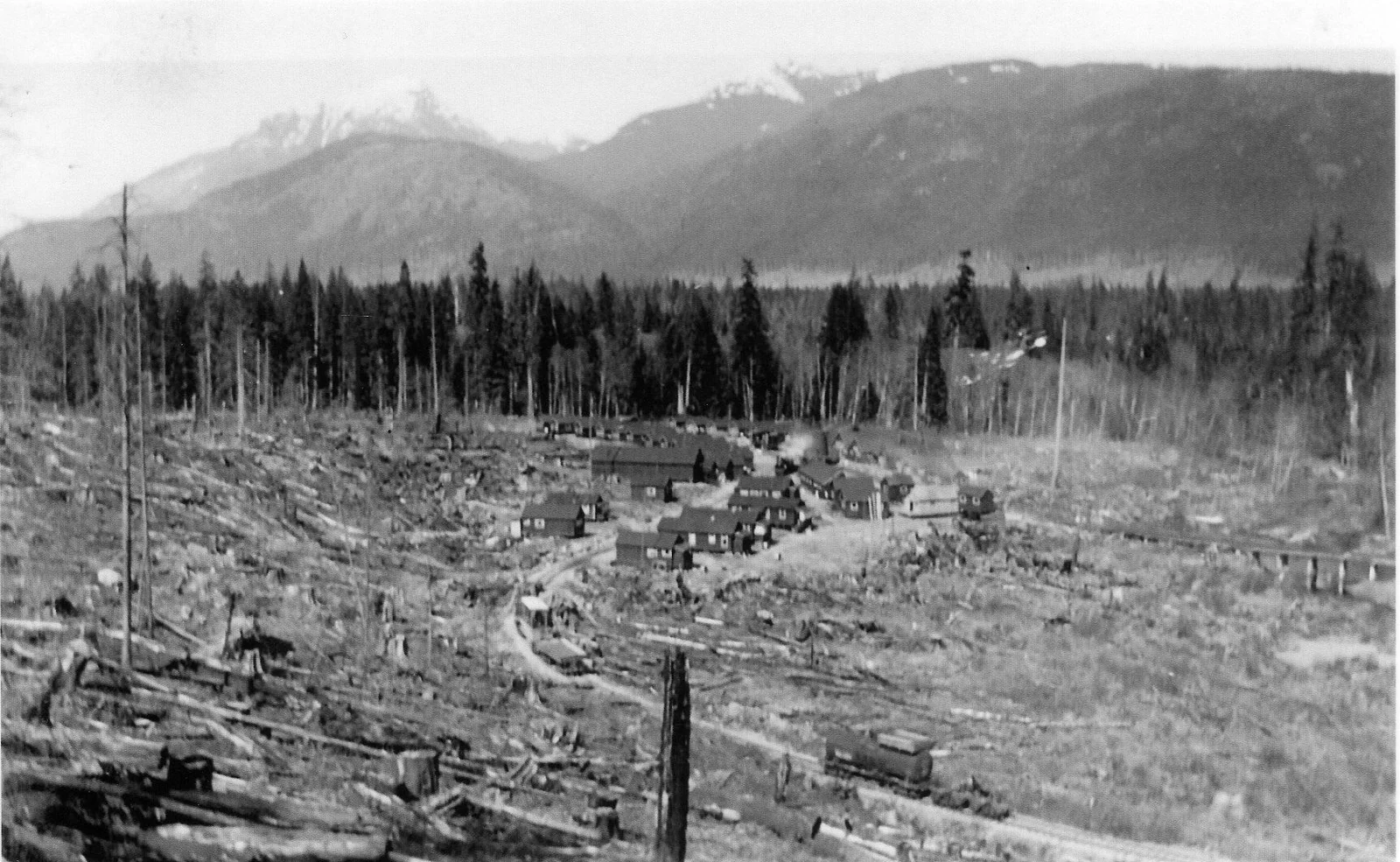
Tucked into the rugged landscape of northern Vancouver Island, Kelsey Bay Logging Camp 2 offers a fascinating glimpse into a time when the logging industry shaped both the land and the lives of those who worked it. The black-and-white image captures more than just a settlement—it reveals a story of resilience, industry, and community carved out of the wilderness.
A Camp Built from the Forest Itself
In the 1950s, logging camps like Camp 2 were often constructed quickly and efficiently using the very timber they harvested. Rows of modest wooden buildings—bunkhouses, cookhouses, and workshops—formed the backbone of daily life. These structures were practical rather than decorative, designed to withstand harsh weather and serve the essential needs of workers who spent long days in physically demanding conditions.
The surrounding landscape in the photo shows the aftermath of intensive logging: felled trees, scattered logs, and cleared land stretching toward the horizon. This was the raw reality of mid-century forestry—an industry driven by demand and powered by manpower, machinery, and determination.
The Rhythm of Camp Life
Life in Camp 2 followed a strict rhythm. Workers rose early, often before dawn, fueled by hearty meals prepared in the camp kitchen. Days were spent felling trees, operating equipment, or transporting logs, while evenings offered brief moments of rest and camaraderie.
Despite the tough conditions, these camps fostered a strong sense of community. Workers relied on one another not only for safety but also for companionship in an otherwise isolated environment. Stories, laughter, and shared experiences helped build bonds that often lasted long after the logging days were over.
Isolation and Connection
The image hints at the camp’s remoteness—dense forest and mountains encircle the settlement, emphasizing how cut off it was from urban centers. Access was typically limited to rough logging roads, rail lines, or coastal routes. Supplies had to be brought in, and communication with the outside world was minimal.
Yet, even in isolation, these camps were hubs of activity and productivity. They played a crucial role in fueling British Columbia’s booming forestry industry, contributing to economic growth and infrastructure development across the region.
A Changing Landscape
Looking back, scenes like this also invite reflection on environmental impact. The widespread clearing visible in the photograph contrasts sharply with modern forestry practices, which increasingly emphasize sustainability and conservation. The 1950s marked a period when efficiency often took precedence over environmental considerations—a perspective that has evolved significantly over time.
Preserving the Story
Today, images of places like Kelsey Bay Logging Camp 2 serve as valuable historical records. They document not only an industry but a way of life—one defined by hard work, ingenuity, and adaptation to a challenging environment.
This snapshot from the past reminds us how communities once thrived in remote corners of the world, built on the strength of shared purpose and the resources of the land around them.