
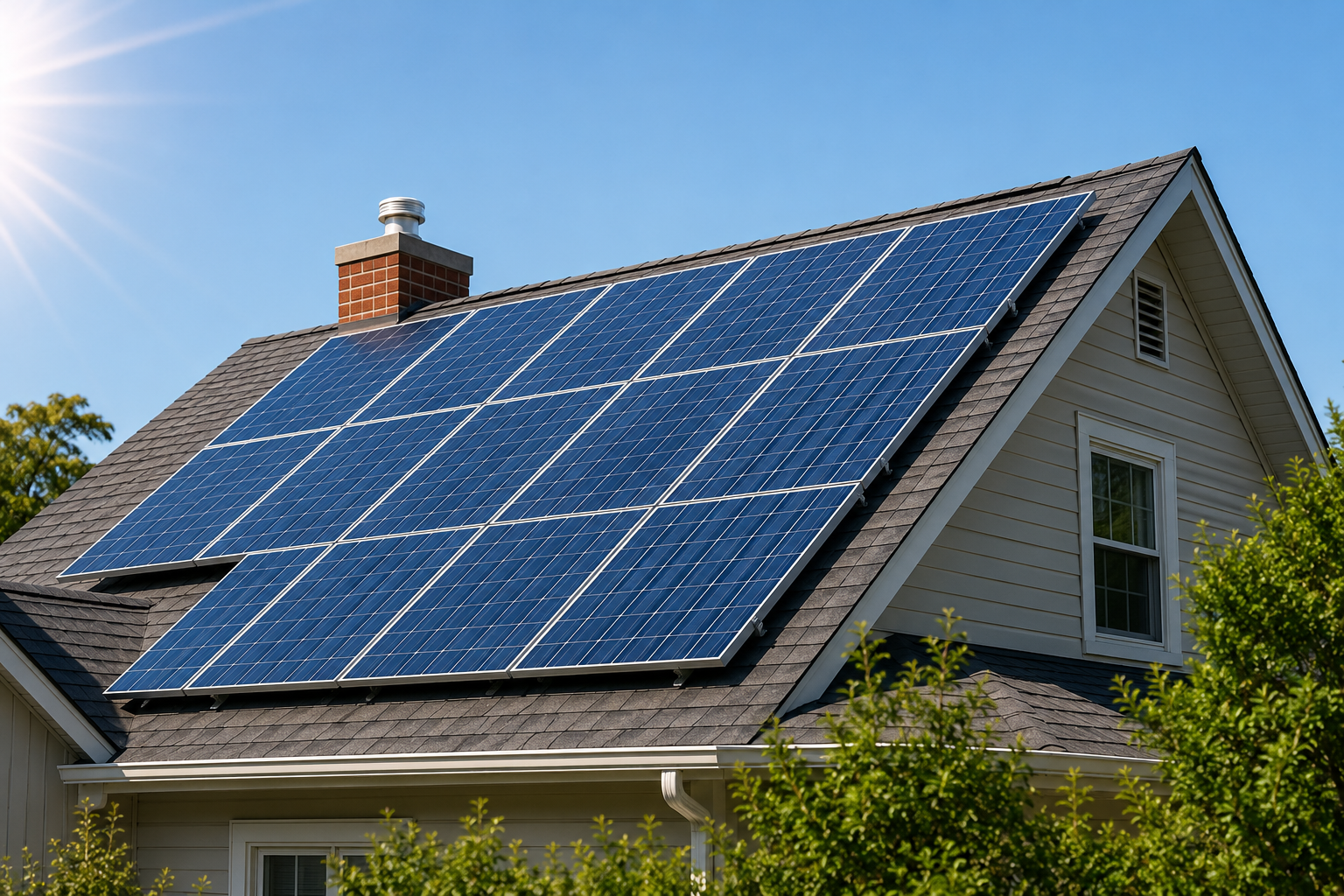
Natural Resources Canada memo estimates residential solar systems can take 10 to 30 years to recover their costs, depending on location and circumstances
A federal Natural Resources Canada memo is raising questions about the financial case for residential rooftop solar in much of the country, estimating that homeowners may need between 10 and 30 years to recover the cost of a solar installation.
The May 20 memorandum, prepared for Natural Resources Minister Tim Hodgson and obtained by Blacklock’s Reporter, concludes that the economic case for widespread residential rooftop photovoltaic systems remains limited in most Canadian jurisdictions compared with some international markets.
According to the document, residential systems can cost between approximately $10,000 and $45,000, including associated debt-servicing costs. The length of time required to recover that investment varies depending on electricity prices, installation costs, solar production and other local factors.
Economics vary across Canada
Natural Resources Canada attributes part of the challenge to the economics of the Canadian electricity market.
The department notes that residential solar can be less financially competitive in Canada than in countries such as Australia, where electricity prices are generally higher. Canadian homeowners also face comparatively high installation labour costs, according to the memorandum.
That combination can make the electricity generated by a rooftop system worth less relative to the cost of installing it.
The memo therefore characterizes rooftop solar as an option that is more accessible to homeowners who have the financial capacity to absorb significant upfront costs or take on financing.
Federal incentives helped, but adoption remained limited
Government subsidies can improve the economics of rooftop solar by reducing the homeowner’s initial investment.
The former Canada Greener Homes Grant provided up to $5,000 for eligible home improvements. The program is now closed to new applicants, with applications having ended in February 2024 and final documentation due by the end of 2025.
Natural Resources Canada’s latest program figures show that 38,500 households received grants for solar panels through the initiative. That put solar behind heat pumps, windows and doors, insulation and air sealing among the program’s most common retrofit categories.
The federal memo cited the relatively limited participation as part of the broader challenge facing residential solar.
Solar can provide benefits beyond the homeowner
The department’s assessment does not argue that rooftop solar has no value.
Officials noted that distributed generation could potentially reduce pressure on large-scale electricity infrastructure by producing power closer to where it is consumed.
However, the memorandum also cautioned that determining the value of those broader system benefits is highly dependent on local circumstances and is difficult to apply consistently across the country.
That distinction is important because the financial return experienced by an individual homeowner is not necessarily the same as the broader economic value of distributed electricity generation.
A history of subsidizing renewable energy
The rooftop-solar assessment also echoes conclusions from an earlier federal evaluation of the Renewable Energy Deployment Program.
A 2021 Natural Resources Canada evaluation examined the $1.5-billion program, which provided financial support for renewable-energy projects including wind, solar and geothermal generation.
The evaluation found that the supported projects generally would not have been profitable without the program’s funding. The program provided producers with a direct subsidy of one cent per kilowatt-hour of electricity generated.
The comparison illustrates a recurring issue in renewable-energy policy: projects can deliver environmental or energy-system benefits while still requiring financial support to make their economics attractive to investors or consumers.
The 30-year question
A 30-year payback period is particularly significant for homeowners considering solar as a financial investment.
A system that takes decades to recover its initial cost leaves homeowners exposed to changes in electricity prices, financing costs, equipment performance and maintenance requirements over the life of the installation.
That does not necessarily mean rooftop solar is uneconomic everywhere. The federal assessment itself points to substantial differences between jurisdictions, and the economics can change considerably depending on local electricity rates, solar conditions, installation costs and available incentives.
For some households, those factors can produce a substantially shorter payback period.
The central finding of the federal memorandum is narrower: Canada’s current economic conditions do not make widespread residential rooftop solar financially compelling in most jurisdictions without considering additional benefits or government support.
Solar remains part of Canada’s energy transition
Despite the financial concerns outlined in the memorandum, rooftop solar continues to be part of Canada’s broader effort to expand renewable electricity.
Natural Resources Canada’s final Greener Homes figures show that tens of thousands of Canadian households chose solar through the federal program, while provincial utilities continue to develop their own incentives.
For example, Hydro-Québec introduced a 2026 solar grant providing up to $1,000 per kilowatt installed and covering as much as 40 per cent of eligible costs. The utility said the incentive was intended to reduce current solar payback periods of roughly 25 to 30 years to approximately 10 to 12 years for eligible customers.
The result is a complicated picture for Canadian homeowners: solar technology is becoming increasingly common, but whether installing it makes financial sense remains highly dependent on where a homeowner lives, how much electricity they use, what the installation costs and what incentives are available.
For many Canadians, the question may therefore be less about whether rooftop solar works—and more about whether the numbers work for their particular home.
Source: Natural Resources Canada memorandum. The payback estimates are federal departmental assessments, not guarantees applicable to every household. The Canada Greener Homes figures are independently confirmed by Natural Resources Canada.