
Canadian Taxpayers Federation welcomes extension but calls on the government to make the fuel-tax cut permanent
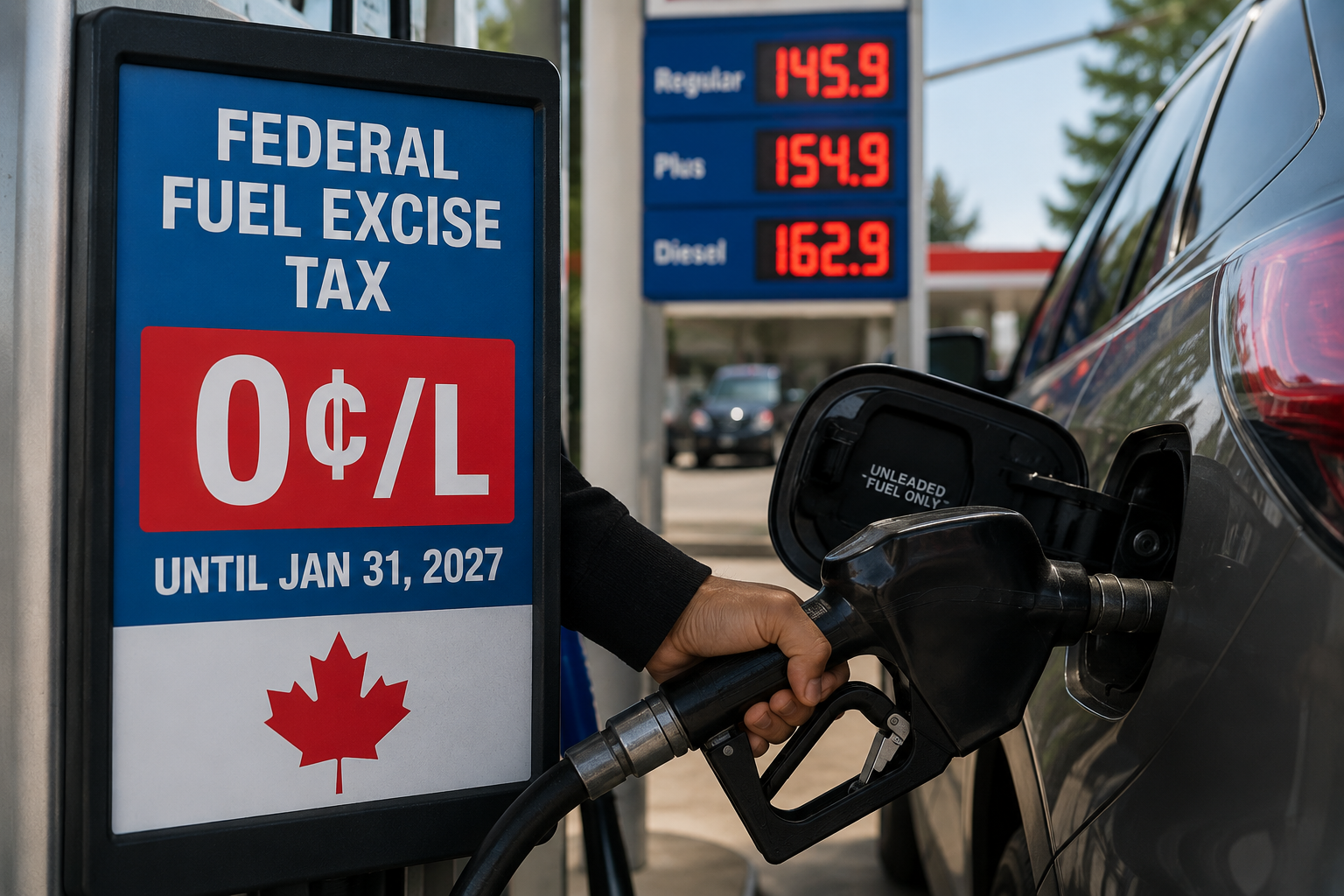
The federal government is extending its temporary suspension of the federal fuel excise tax on gasoline and diesel, keeping the full tax reduction in place through January 31, 2027.
The announcement comes as the government had been scheduled to restore the federal fuel excise tax on September 8. Under the extension, gasoline and diesel will continue to benefit from the temporary tax relief through January, followed by a phased return to the regular rates beginning in February.
The Canadian Taxpayers Federation (CTF) welcomed the extension but said Ottawa should go further and make the reduction permanent.
Gasoline tax remains at zero
The federal excise tax on gasoline is normally 10 cents per litre, while the federal excise tax on diesel is normally 4 cents per litre.
Those rates were reduced to zero beginning April 20, 2026, as part of the government’s response to elevated fuel prices and international energy-market disruptions.
The temporary suspension was originally scheduled to end September 7, with the full tax returning the following day.
The new proposal extends the zero-rate period through January 31, 2027. Beginning February 1, the government plans to restore half of the regular federal excise tax until March 31.
That means the federal rates would temporarily become:
- 5 cents per litre on gasoline
- 5.5 cents per litre on leaded aviation gasoline
- 2 cents per litre on diesel
- 2 cents per litre on other aviation fuel
The full rates are scheduled to return April 1, 2027.
Taxpayers federation calls for permanent cut
The Canadian Taxpayers Federation praised the extension, arguing that lower fuel taxes can benefit both drivers and businesses.
Franco Terrazzano, the organization’s federal director, said the CTF had been advocating for fuel-tax relief and that extending the measure would provide additional assistance to Canadians facing higher costs.
The organization is now calling on Prime Minister Mark Carney’s government to make the reduction permanent rather than allowing the tax to return to its previous level.
Kris Sims, the CTF’s Alberta director, similarly argued that Ottawa should reduce government spending to make permanent tax relief possible without increasing government debt.
Poll finds opposition to restoring the tax
The CTF said a Léger poll it commissioned found significant opposition to restoring the federal fuel tax at its previous level.
According to the organization, 63 per cent of Canadians surveyed opposed increasing the gas tax in September. Among respondents who had made a decision on the question, the opposition rate was 71 per cent.
The CTF said opposition was recorded across demographic groups, including different age groups, genders and provinces.
The poll was commissioned by the CTF, meaning its results should be considered in that context rather than as a government survey.
Ottawa says the measure is temporary
The federal government has presented the fuel-tax suspension as a temporary affordability measure.
When the original reduction was announced in April, Finance Canada said eliminating the federal excise tax would save motorists up to 10 cents per litre on gasoline and 4 cents per litre on diesel. The government estimated the initial suspension would provide more than $2.4 billion in tax relief during 2026.
The measure applies to the federal excise tax. It does not eliminate provincial fuel taxes or other charges that can affect the price motorists see at the pump.
The government also continues to apply sales taxes to fuel.
Different from the former carbon price
The fuel-tax suspension should also be distinguished from the federal consumer carbon price.
Ottawa permanently removed the federal consumer fuel charge from legislation earlier this year. That measure eliminated the federal consumer-facing carbon price, while the current gasoline and diesel excise-tax suspension is a separate measure.
The distinction matters because the two taxes have different purposes and operate through different parts of Canada’s tax system.
What happens next?
The government’s September 2026 legislative proposal would keep federal fuel excise taxes at zero through January and then restore them gradually.
The proposed timeline is:
April 20, 2026 – January 31, 2027:
Federal gasoline and diesel excise taxes remain at zero.
February 1 – March 31, 2027:
Half the normal excise-tax rates apply.
April 1, 2027:
Regular federal excise-tax rates are scheduled to return.
The Department of Finance’s legislation confirms that the extension is designed around this staged return.
For motorists, the immediate result is that the federal portion of fuel taxation will remain suspended beyond the original September deadline.
For the Canadian Taxpayers Federation, however, the extension doesn’t go far enough.
The organization argues that if Ottawa can temporarily eliminate the tax while maintaining government operations, it should look for permanent spending reductions that would allow Canadians to keep the tax savings.
The federal government, meanwhile, continues to characterize the measure as temporary relief.
The debate has therefore shifted from whether Canadians should receive a fuel-tax break to whether the reduction should become a permanent part of Canada’s tax system.
Sources: Canadian Taxpayers Federation and Department of Finance Canada. The CTF’s statements and polling claims are attributed to the organization, while the tax rates and implementation timeline have been cross-checked against the federal government’s legislative proposal.