Experience is the Best Teacher for Backcountry Winter Safety

Interest in backcountry skiing and snowboarding has been steadily increasing, with a noticeable surge during the pandemic, according to Jan Neuspiel, director of Island Alpine Guides in Cumberland.

Neuspiel, a veteran guide with over forty years of experience, co-founded Island Alpine Guides in 2006 with fellow Association of Canadian Mountain Guides certified guide, Cliff Umpleby. The school and guiding service offer a range of courses for Vancouver Islanders, including avalanche training, mountain weather forecasting, ski mountaineering, multi-pitch climbing, rock rescue, and more—all of which are experiencing greater demand.

In the 2013-2014 season, Island Alpine Guides’ avalanche training courses had 200 students, and by the 2022-2023 season, that number grew to 350, Neuspiel noted.

“We’re training more people in avalanche safety and backcountry skills than ever before,” he said.

However, as more individuals explore the backcountry, the risk of accidents also increases.

“The rise in course participation means more people are venturing into the backcountry,” Neuspiel explained. “Naturally, this results in a higher chance of incidents.”

Recent events underscore this concern. In the Mount Cain area, two backcountry rescues occurred in the past few weeks. On January 11, a 35-year-old man lost consciousness while skiing outside the boundaries in Mount Cain’s west bowl and required airlifting to the hospital. Then, on February 2, another man in his late 40s was partially buried in an avalanche in the same area. He was rescued and airlifted to Vancouver General Hospital.

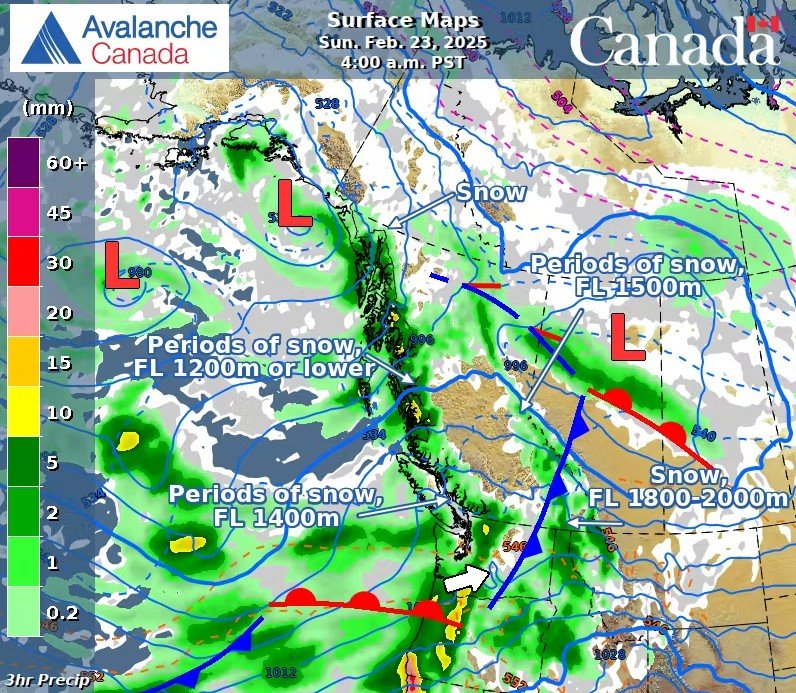
A prolonged dry spell has increased avalanche danger. In late January, Avalanche Canada, a nonprofit focused on avalanche safety and forecasting, issued a warning that upcoming winter weather would likely elevate avalanche risk due to unstable snow layers.

As more people take an interest in winter backcountry adventures, Neuspiel offers advice on how to get started safely.

Starting Out in the Winter Backcountry

For those new to backcountry skiing or snowboarding—which typically involves skiing out of bounds, plus uphill skiing or splitboarding—Neuspiel recommends starting with an Avalanche Skills Training 1 (AST1) course. This course is also valuable for snowshoers and snowmobilers.

The AST1 course teaches participants how to assess risk and understand avalanche terrain. Island Alpine Guides offers the course over two days, with one classroom session and one field session. The course covers snowpack understanding, route planning, and risk assessment. On the field day, students practice using avalanche transceivers and analyzing snow samples and terrain.

“Avalanche Canada has done a great job raising awareness that taking a basic entry-level avalanche course is essential,” Neuspiel said, adding that the AST1 course is a “logical starting point” for beginners.

Avalanche Canada also provides an online map with avalanche ratings for popular ski touring areas, including new regions on Vancouver Island.

While the AST1 course is a strong foundation for safety, it’s just the beginning. Additional mountain experience and advanced training are crucial for anyone who wants to tackle more challenging avalanche terrain.

Avalanche Canada also offers an online tutorial called Avy Savvy, which is an excellent resource for learning how to assess avalanche terrain.

Gaining Backcountry Experience

Neuspiel suggests three options for gaining backcountry experience after taking an avalanche course: trips with peers of similar experience, trips with more seasoned peers, or guided trips with professional instructors. Each has its advantages and limitations.

Trips with similarly inexperienced peers encourage shared decision-making and learning, though the terrain chosen may be more conservative. Trips with more experienced peers could lead to more exciting, riskier adventures, but less experienced participants should still voice their concerns. Guided trips allow for direct learning from certified professionals but come at a cost.

Ultimately, gaining hands-on experience in decision-making and terrain navigation is essential. “You can take more courses, but nothing compares to actually getting out there,” Neuspiel emphasized.

Backcountry on a Budget

Neuspiel suggests purchasing used gear from shops like Blue Toque Sports in Courtenay or online gear exchanges and Facebook groups such as the Vancouver Island Ski Touring Society or Vancouver Island Climbing and Mountaineering. Club trips, like those from the Alpine Club of Canada’s Vancouver Island section, offer another affordable option.

Pooling funds with friends to hire a guide can reduce the cost, and backcountry adventurers can also save money by skipping lift passes.

Assessing the Risks

Despite the inherent risks of backcountry travel, Neuspiel views his experiences with avalanches as valuable learning moments. “The risks are real, but they’re manageable with a systematic approach to learning and decision-making,” he said. “It’s not a mistake if you learn from it—it’s an opportunity to grow.”

Timeline On Wind Power Project Near Sayward To Be Accelerated

A proposed wind farm with 30 turbines is slated to be built northwest of Campbell River. This initiative is one of ten resource projects in British Columbia being fast-tracked to boost job creation in rural communities.

On February 4th, the provincial government announced that these ten projects, including the Brewster Wind Project, are expected to attract a total investment of $20 billion and generate about 8,000 jobs across the province.

Premier David Eby shared that these projects were selected after the government asked major business groups to propose quick-to-launch initiatives to create employment opportunities. Eby emphasized that these projects are “not dependent on the American market.”

“We’ve identified ten projects we can advance quickly, getting construction underway and people employed,” Eby stated.

The Brewster Wind Project, aiming for up to 200 megawatts of capacity from around 30 wind turbines, was proposed by Toronto-based Capstone Infrastructure as part of BC Hydro’s 2024 Call To Power.

In December, the provincial government revealed that wind farm projects will no longer need environmental assessments. Under current rules, wind projects that exceed 50 megawatts or have more than 15 turbines typically require such assessments.

Eby noted that the current list of projects represents only a “small fraction” of potential future initiatives. He mentioned that these projects are focused in “smaller, rural, and remote communities that will be most affected by these tariffs.”

While Eby did not specify exact timelines, he confirmed that new legislation would be introduced to support these projects.


See Related Stories: 

Second Green Energy Company Targets North Vancouver Island For Wind Farm Site

Island Wind Farm Firm Assures Quality Care Despite Absence of Formal Assessment

Proposal for 30 Turbine Wind Farm Northwest of Campbell River Unveiled

Fatal Highway Crash Near Woss Claims One Life, Leaves Two Others Seriously Injured

Sayward RCMP have confirmed that a man has died following a two-vehicle collision on Highway 19, south of Woss. The crash occurred near Highway 19 and Nimpkish Road, close to Mount Cain, on Friday night.

The deceased man was the driver of one of the vehicles involved, while two individuals in the other vehicle were transported to the hospital with serious injuries.

“British Columbia Highway Patrol (BCHP) technical investigators responded to the fatal crash, which led to the closure of Highway 19 near Woss for several hours,” stated Sayward RCMP.

Officers arrived at the scene just before 7 p.m. and found two vehicles involved. One driver was pronounced dead at the scene, while the other two individuals were airlifted to the hospital in serious condition.

The highway was shut down in both directions near Nimpkish Road for several hours, from Friday night into early Saturday morning.

“The closure allowed police to conduct their investigation and ensure the scene was safe. The highway was reopened at 2 a.m. after being closed for about eight hours,” the statement noted.

According to the RCMP, road conditions were not a factor in the crash, which remains under investigation. Sayward RCMP is working with the BC Coroners Service to determine the cause.

Second Green Energy Company Targets North Vancouver Island For Wind Farm Site

A second renewable energy company is considering the Strathcona Regional District for a wind energy project.

Boralex Inc., a Quebec-based firm, has applied to the provincial government to conduct a site investigation for the Sitka Wind Project, which aims to develop over 200 megawatts of capacity. The company plans to conduct feasibility studies at five locations south of Sayward, according to their investigative license application.

If the proposal is approved, Boralex plans to install up to three meteorological towers to collect wind data, conduct field surveys for topography and access, and begin environmental and archaeological assessments. This research will support their application for an environmental assessment and a future proposal for a BC Hydro Call for Power. The investigative phase of such projects typically lasts between two to five years.

Boralex claims that a wind project in this area would improve climate resiliency, combat climate change, and reduce the carbon footprint in service delivery – aligning with the Strathcona Regional District’s goals.

The proposed project is located within mule deer herd ranges and overlaps with a designated ungulate winter range. However, Boralex assures that their activities would involve minimal tree removal and ground disturbance, resulting in little impact on mule deer and their habitat. The company follows guidelines to minimize disturbance to wildlife by concentrating activities during times and in areas where wildlife is least likely to be disturbed.

Morgan Roy, Boralex’s public affairs advisor, mentioned that the company already operates two hydroelectric sites and one wind power site in B.C.

“With all of our projects, we work closely with the community to ensure that all stakeholders are informed and involved as we progress,” she said. “We want to stay connected with the communities of Seward and Campbell River and the surrounding areas to achieve social acceptance.”

Search And Rescue Finds 35 Year Old Skier Unconscious After Significant Fall On North Vancouver Island’s Mount Cain

After a 35-year-old skier was found seriously injured on a steep slope at Vancouver Island’s Mount Cain, search and rescue teams arrived by helicopter and collaborated with other emergency responders to ensure a safe extraction.

On Saturday, Comox Valley Search & Rescue (CVSAR) responded to Mount Cain, located northwest of Campbell River, when the skier “suffered a serious fall and was found unconscious,” according to a social media post by the group this weekend.

CVSAR President Darren Boss reported that the incident occurred on a slope with an approximate 30-degree angle.

The critical Class D Fixed Line (CDFL) rescue took place in the west bowl of the mountain, outside the ski boundaries. Here, “the dedicated patrol team at Mt. Cain acted swiftly, initiating rescue efforts and preparing for air assistance.”

Boss stated that no one witnessed the fall, and the skier was discovered “with a decreased level of consciousness,” prompting an initial response from Mt. Cain staff.

Facing a “time crunch,” SAR crews were flown to Mt. Cain by 49 North Helicopters after being picked up from Courtenay Airpark.

“He fell, caught an edge, I believe, and fell 70 to 100 feet on a ridge. He was not wearing a helmet and then went in and out of consciousness when he hit the bottom, suffering multiple injuries as well as a head injury,” CVSAR’s Rich Swanson told CHEK News on Sunday.

Swanson provided care to the victim on the mountainside.

“When we arrived, six individuals who were already on the scene had dug a bit of a shelf,” he added.

“It was between a 20- to 35-degree slope, but they did a good job digging in a little bench, which had him somewhat on a level area.”

By the time Comox Valley-based SAR teams arrived, the staff and a doctor already on the scene had partially stabilized the skier using a vacuum spine board.

The ski hill near Woss, which is primarily run by volunteers, is operated by the Mount Cain Alpine Park Society. According to the Regional District of Mount Waddington, “At Mount Cain, you’ll find deep powder, 21 runs, with 1499 vertical feet of terrain.”

The resort is typically open on weekends and holidays from early December to April, with the backcountry offering a “multitude of bowls and gladed areas…”

CVSAR noted that the mountain had “expertly prepared” landing zones for rescue helicopters — one for 49N, and another for an Ascent Air ambulance.

“Our team completed the packaging and transported the injured skier using an Aerial Rescue Platform in a CDFL operation to the Mt. Cain parking area, where BC Emergency Health Services (BCEHS) took over care,” the post read.

After the skier was handed over to paramedics, the helicopter returned to the slope to pick up Boss and the rest of the team before transporting them back to Courtenay Airpark.