Welcoming Party

By Rene Harding

We hadn’t been on the farm at Salmon River long when the scattered residents called a welcoming party for the new settlers, namely Colletts, and ourselves, the J. B. Howes family, and also for a bachelor not long returned from active service overseas. Colletts had been in the valley since December, 1919, four months before us. They were included in the official welcome even though they had attended a couple of once-a-month dances held in the schoolhouse.

We were informed that ladies brought refreshments and cups—putting in two extra for bachelors—and the affair was to be held on Saturday evening. We looked forward to meeting valley residents; up until now we hadn’t become acquainted with many.

Fridays were bath nights. Out came the wash boiler, the stove was stuffed with wood and towels draped over kitchen chairs, and a galvanized tub placed before the stove. We took turns in washing and there was the chore of packing water in pails. It was not very convenient, but it is amazing. Nothing seemed inconvenient but we were learning to cope.

On the Saturday evening of the party we packed our bags with the required articles, plus slippers, and waited for the Collett family to call for us. When they arrived Mother and I were advised to pin our skirts up above our gum boots as it would be a wet walk.

Off we started, carrying lanterns and bugs; a bug being a tin can with a hole punched on one side and fitted with a candle. A wire handle was added. Lard pails made excellent bugs as they had handles which could be attached. These home-made lanterns gave quite a good light.

We avoided the muddy and pot-holed road by following a forest trail running between it and the river. A footing spanned Springer Creek. Most of the upper settlers preferred to walk this trail instead of using the road.

The little one-room schoolhouse sat in a clearing where Woodlands Lodge now stands.

We were welcomed in and Mother and I were shown the women’s dressing area, a space behind a large pot-bellied heater where a big preserving kettle full of water was in preparation for coffee making. A bucket and dipper stood on a bench by the door in case one should require a drink before refreshment time.

Desks had been pushed against the walls to make a space for dancing and a couple of coal oil lamps cast their glow upon the happy faces of men, women and children, glad to get together for a social evening and to exchange news and gossip.

A small organ stood in one corner next to the teacher’s desk and Mother, who was musical, seemed interested in it but was told it didn’t work as mice had chewed the insides.

Music for the dance was provided by the Duncan boys with their Amberola gramophone. They packed it to and from the dances. It was a heavy iron-based model dated in the late 1800s and had a large flared horn supported by a metal rod.

Alternate music was supplied by Frank Schmidt with his fiddle. Frank was an amiable Dutchman nicknamed Flannel-Foot because of his shuffling walk.

Then there was Hank McDonald with his concertina. We were duly warned about a step-up in the floor level, caused when the building had been enlarged.

I watched, fascinated, as people kicked up their heels in square dances, waltz lemonades and brownies. Other dances were called but the first-mentioned were best on account of the floor. The children amused themselves on the sidelines.

Halfway through the evening the MC called on Louis Proulx to entertain with a step-dance. Louis, a swarthy French-Canadian, bounced onto the floor and when Frank struck up a jig on his fiddle, Louis’ feet fairly flew. Charlie Gentry, a trapper, was next on the floor. Charlie was slim and loose-jointed and his dancing ran to Buck-and-Wing. They received hearty applause.

An impromptu barbershop quartet came next with Gordie Lawson, Harold Lewis and Ernie Williams along with another man, all facing in, arms over shoulders as they warbled Listen to the Mocking Bird, The Old Oaken Bucket, and other songs I came to know through their subsequent performances. The younger men were noticeably too shy to join in.

We danced with both young and old, there being no segregation on account of age in those days.

There was Two-step John Wilson, so named because he knew no other dance. John’s leading arm would pump-handle all out of time with the music, which was rather awkward to get used to. John wore a navy blue suit with peg-topped pants and yellow pugnosed boots, antiquated even in those days.

I was intrigued by the bachelor just returned from overseas, Alex LeClair by name, another French-Canadian. He sat all night, no coat over a grey Stanfield undershirt and kept his hat on. He hardly uttered a word, which may have been just as well as I learned later his vocabulary would “curl the hair of a mule skinner.”

Now that people had met us they began calling in on their way up or down the valley, which was nice, especially for Mother. She appreciated the easy friendliness and began to adjust to this new way of living.

One Sunday word came that Rev. J. Antle of the Columbia Coast Mission would be holding a service in the schoolhouse. Mother and I decided to go along, but Dad and Ivan were too busy.

As we passed through Hughie Jamieson’s place we were joined by the school teacher, Miss Christie Smith, who boarded with them. Miss Smith was tall, very pleasant and well suited to country life. Everyone liked her, especially Frank Schmidt.

It had been raining, so Miss Smith took along a big black umbrella. As we came into the clearing near the schoolhouse Jamieson’s brindle steers were there. They were big fellows, and wild to boot. When we appeared they came charging full speed at us. There wasn’t a fence nor a stump to get behind. Mother and I were petrified, but Miss Smith, calm and collected, said: “Don’t run. Never run.”

She quickly aimed her umbrella at them, opening and closing it several times. That did the trick. The steers circled backward to the schoolhouse, tails up and hooves pounding.

Not many people came to the service but Rev. Antle preached a good sermon and all the while those wretched steers galloped around and around the building. Finally they took off down the valley.

Mother liked to sing, even without accompaniment as in this instance. She had a pretty voice. Rev. Antle chose the hymn Unto the Hills Around Do I Lift Up My Longing Eyes. As he announced its title he gazed thoughtfully out of the window at the Prince of Wales range of mountains, then remarked that it was his favorite hymn. I never hear that music without recalling Rev. Antle and our first church service at Salmon River.

The work of the Columbia Coast Mission had been somewhat curtailed during the First World War. Now Rev. Antle, the founder of that wonderful organization, planned to give services again to isolated communities along the inland waters off northern Vancouver Island.

The Columbia Coast Mission ran a hospital at Alert Bay and one at Rock Bay. What a blessing they were to settlers and loggers who otherwise had to go down to Vancouver for medical attention—or do without.

Later on Rev. Antle arranged for a doctor on board the MV Columbia, and when called on in an emergency, no matter how far away they might have been they always came. Those doctors and the crew will long be gratefully remembered.
Kelsey Bay Beach Logging Camp Circa 1937

Nestled along the rugged shoreline of Johnstone Strait, the historic Kelsey Bay Beach Logging Camp once served as one of the busiest industrial hubs in the Sayward Valley during Vancouver Island’s great logging era.

The photograph above, believed to date to approximately 1937, captures Kelsey Bay during a time when coastal logging operations dominated the economy of northern Vancouver Island. Before highways connected the region to the rest of the island, communities like Kelsey Bay existed primarily because of the forest industry.

At its peak, Kelsey Bay was much more than a small waterfront settlement. It was a thriving company town built around logging, rail transport, booming grounds, and marine shipping operations. Timber harvested deep within the Sayward Valley was transported by logging railway from inland camps to the waterfront at Kelsey Bay, where logs were sorted, stored, and loaded for shipment to coastal mills and export markets.

The image reveals several defining features of the early beach logging camp. Floating log booms crowd the sheltered water in the foreground while a wooden wharf and industrial structures extend into the bay. Small bunkhouses and work buildings line the shoreline beneath the steep forested mountains that tower behind the settlement.

Kelsey Bay’s location made it ideal for coastal logging operations. Protected waters allowed tugboats and barges to safely move enormous quantities of timber along the coast, while the surrounding valley contained vast stands of old-growth Douglas fir, cedar, and hemlock. Logging companies rapidly expanded operations throughout the region during the early 20th century, constructing rail lines, camps, cookhouses, machine shops, and marine infrastructure to support the booming industry.

Life at the beach camp revolved around hard labour and strict schedules. Workers maintained rail equipment, operated steam donkeys, sorted logs in the booming grounds, repaired machinery, and loaded timber onto ships. The camp itself was largely self-contained, with bunkhouses, kitchens, maintenance buildings, and offices supporting hundreds of workers connected to the operation.

The logging railroad was the lifeline of the operation. Trains hauled massive logs from remote inland camps around Alice Lake and the upper Sayward Valley down to the coast. The sight and sound of loaded logging trains descending toward Kelsey Bay became a familiar part of daily life for decades.

Over time, advancements in trucking, road building, and mechanized logging gradually replaced the old railway and beach camp systems. By the latter half of the 20th century, many of the original camp structures disappeared as the industry evolved and operations modernized.

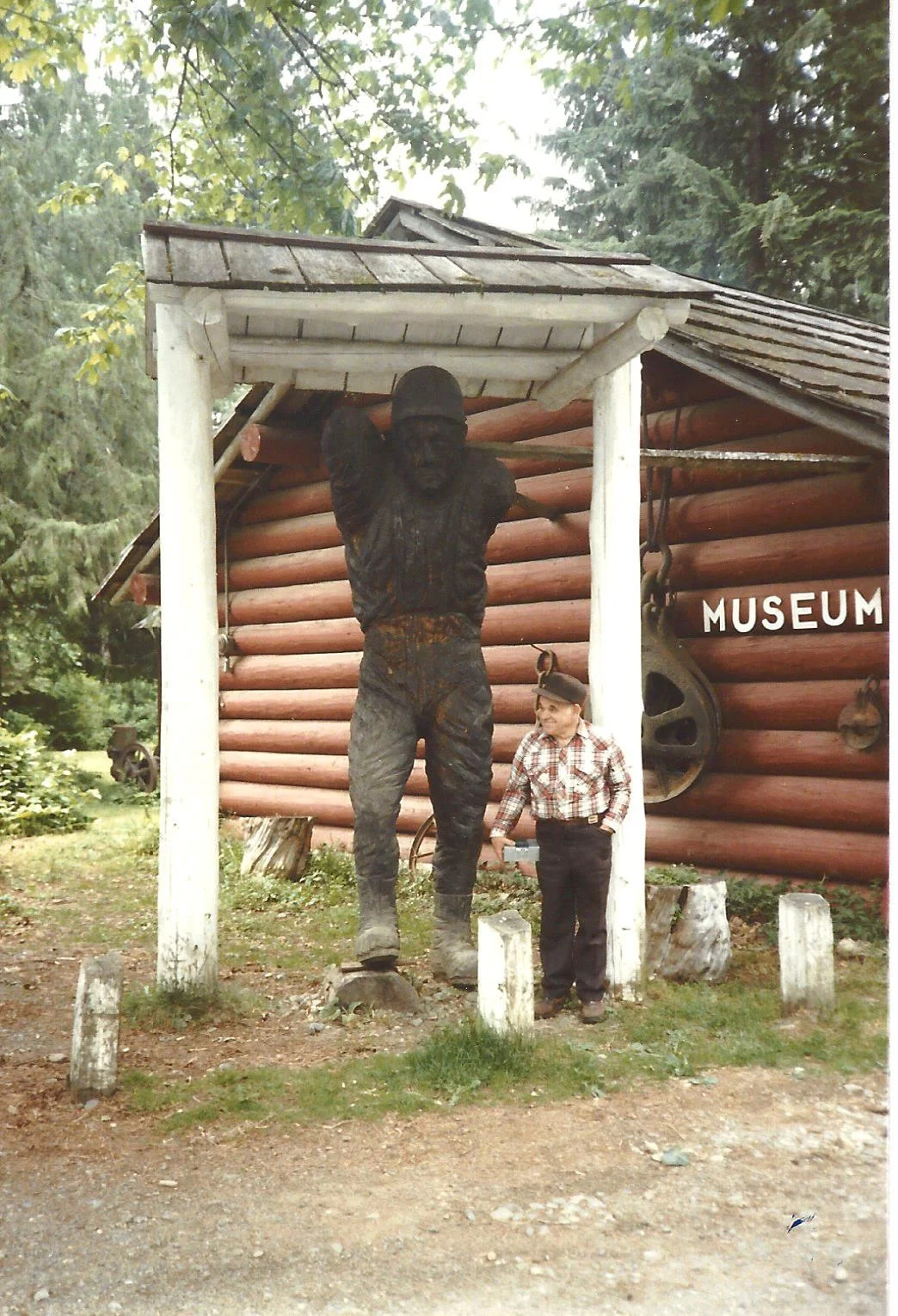
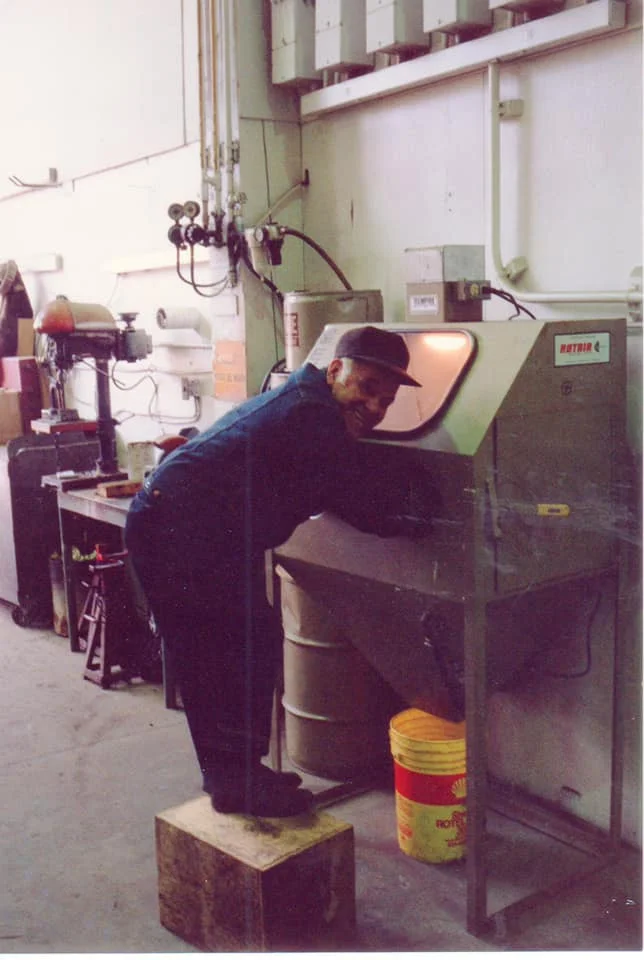
Shorty McKinlay – A Sayward Original

In small coastal communities, legends aren’t made in headlines—they’re built over coffee at the café, in the bush, on the docks, and around stories that get better every time they’re told. In the village of Sayward, one such figure still lives on in memory and local lore: “Shorty” McKinlay.

Nobody needed to ask who you meant when you said “Shorty.” In a place where everyone knows everyone, a nickname like that doesn’t just stick—it becomes a badge of identity. And like many nicknames on Vancouver Island, it likely had a story behind it that only got funnier (or more exaggerated) with time.

A Man of the Bush

To understand Shorty McKinlay, you have to understand Sayward in its working years. This was a community built on logging, fishing, and grit. The forests surrounding the valley weren’t just scenery—they were livelihoods.

Men like Shorty were part of that world. Whether he spent his days falling timber, running equipment, or working the rough edges of camp life, he would have been shaped by the same forces that defined generations of coastal workers: hard labor, unpredictable conditions, and a deep respect for the land.

Logging culture in mid-century Vancouver Island wasn’t polished—it was practical, tough, and often laced with humor. And that’s where personalities like Shorty stood out.

Larger Than Life

Ironically, nicknames like “Shorty” often belonged to men who were anything but small in presence. In communities like Sayward, reputation traveled fast, and being known usually meant you had a story—or a dozen—attached to your name.

Maybe it was his work ethic. Maybe it was his sense of humor. Maybe it was the way he handled himself in a tight spot. Whatever it was, Shorty McKinlay became one of those people others remembered, talked about, and pointed to as part of what made the town what it was.

These weren’t celebrities in the traditional sense—but in a place like Sayward, they didn’t need to be.

The Social Fabric of a Small Town

Beyond the work itself, life in Sayward revolved around community. Evenings might mean gathering at a local hall, sharing stories after a long shift, or catching up with neighbors who were often also coworkers.

People like Shorty were part of that fabric. They helped define the tone of the place—the jokes, the stories, the sense of belonging. In small towns, personality matters. It shapes how people remember their home.

Memory and Legacy

There may not be official records or plaques dedicated to “Shorty” McKinlay, but that’s not how legacy works in places like this. It lives in stories passed down through families, in offhand mentions that spark laughter, and in the quiet recognition of a name that still means something decades later.

In many ways, figures like Shorty represent a broader truth about communities like Vancouver Island: their history isn’t just built by companies or milestones, but by individuals whose lives—ordinary on paper—were anything but in practice.

A Name That Sticks

Today, Sayward is quieter than it was during its peak logging years, but its character remains. And woven into that character are the people who helped shape it—people like “Shorty” McKinlay.

You might not find his name in history books, but in Sayward, that hardly matters.

Because sometimes, the most enduring legacies aren’t written down—they’re remembered.

B&S&W Logging In The 1950s And The Early Days of Larry McKinlay

In the rugged coastal forests of northern Vancouver Island, the 1950s marked a defining era for industrial logging—and few names were as central to that story as Bloedel, Stewart and Welch. Operating extensively in and around the Sayward region, B&S&W helped transform a remote landscape into a hub of resource extraction, innovation, and tight-knit community life.

Amid the roar of chainsaws and the thunder of falling timber, a generation of young men came of age in the bush. Among them was a young Larry McKinlay—one of many who would be shaped by the grit, danger, and camaraderie of coastal logging camps.

The Rise of Industrial Logging in Sayward

By the early 1950s, Bloedel, Stewart and Welch had established itself as a dominant force in British Columbia’s forestry sector. With vast timber licenses and access to old-growth forests, the company set up operations throughout the Sayward Valley and surrounding inlets.

Logging in this era was not for the faint of heart. Crews worked in steep, rain-soaked terrain, felling massive Douglas fir and cedar trees that had stood for centuries. Equipment was evolving—steam donkeys were giving way to diesel-powered yarders—but the work remained intensely physical and often dangerous.

Logs were hauled to booming grounds in coastal inlets like Kelsey Bay, then sorted and transported to mills. The scale of operations was immense, and B&S&W played a key role in feeding both domestic and international demand for lumber during the postwar boom.

Life in the Camps

For workers, logging camps were more than just job sites—they were entire communities. Isolated from towns, these camps provided bunkhouses, cookhouses, and a structured daily rhythm built around long shifts and hard labor.

Meals were hearty, the coffee was strong, and the bonds between workers ran deep. In an environment where every man relied on the others for safety, trust was everything.

It was into this world that young Larry McKinlay stepped.

A Young Logger’s Beginning

Like many local boys, Larry McKinlay was drawn into the logging industry at a young age. Opportunities in Sayward during the 1950s were closely tied to the forest, and logging offered both a livelihood and a rite of passage.

Starting out in entry-level roles—perhaps as a chokerman or swamper—Larry would have quickly learned the realities of bush work: the unpredictability of falling timber, the precision required to rig cables, and the constant awareness needed to stay alive.

But beyond the danger, there was also pride. Logging wasn’t just a job; it was a craft. Young workers like Larry were mentored by seasoned hands, absorbing knowledge that couldn’t be taught in classrooms.

Innovation Meets Tradition

The 1950s were also a time of transition in the logging industry. Companies like B&S&W were beginning to adopt new technologies that would eventually reshape forestry work—chainsaws replacing crosscut saws, improved transportation networks, and early mechanization.

Yet much of the work still relied on human strength and skill. This blend of old and new defined the era, and those who worked through it—like Larry McKinlay—experienced firsthand the shift from traditional to modern logging practices.

A Lasting Legacy

The impact of Bloedel, Stewart and Welch on Sayward cannot be overstated. The company’s operations brought jobs, infrastructure, and a sense of purpose to the region. Roads carved through dense forest would later open access for residents and tourists alike.

For individuals like Larry McKinlay, the experience of working in the bush during this formative period likely left a lasting imprint—one of resilience, resourcefulness, and connection to the land.

Remembering the Era

Today, it’s easy to forget just how demanding and foundational this work was. The forests around Sayward still stand as a testament to both nature’s scale and the human effort required to harvest it.

Looking back at the 1950s, we see more than just an industry—we see a way of life. One where companies like B&S&W drove economic growth, and where young men like Larry McKinlay found their footing in a world defined by towering trees and the relentless rhythm of the saw.

It’s a story of hard work, community, and the enduring legacy of logging on Vancouver Island.

The Forgotten Coastal Community Of Port Kusam Near Sayward BC

Hidden along the rugged coastline of northern Vancouver Island lies the historical site of Port Kusam, a little-known coastal community located near Sayward. Today, it is quiet and largely reclaimed by forest and shoreline, but in earlier decades it played a small yet meaningful role in the broader network of logging, marine transport, and settlement that shaped the region.

Though not widely documented compared to larger hubs like Kelsey Bay, Port Kusam remains part of the layered industrial and cultural history of the Sayward Valley.

A Remote Coastal Setting

Port Kusam sits in a landscape typical of the outer Sayward coast—steep forested slopes dropping sharply into sheltered inlets, with dense temperate rainforest meeting tidal waters. Like many small coastal locations on northern Vancouver Island, it was never a large settlement, but rather a place shaped by resource use and temporary occupation.

Its sheltered waters made it suitable for:

  • Small marine landings

  • Log handling and booming activities

  • Short-term work camps or industrial staging areas

In many ways, Port Kusam was less a town and more a working place tied to the land and sea.

Logging and Coastal Industry

The history of Port Kusam is closely tied to British Columbia’s coastal logging economy. As logging expanded through the Sayward region in the 20th century, remote inlets like Kusam were often used for:

  • Temporary logging camps

  • Log sorting and booming grounds

  • Transfer points for timber moving by barge or tug

Before extensive road networks reached every cutblock, the coast itself was a transportation system. Logs could be moved efficiently by water, making small protected inlets valuable operational sites.

Port Kusam fit naturally into this system.

Connection to Sayward’s Industrial Network

Port Kusam was part of a wider coastal-industrial landscape that included logging operations in the Sayward Valley and marine transport hubs like Kelsey Bay.

Timber harvested inland would often make its way:

  1. From forest cutblocks down rough logging roads

  2. To shoreline staging or booming areas

  3. Out to larger sorting or shipping points such as Kelsey Bay

In this system, small coastal sites like Port Kusam acted as supporting nodes—quiet but functional parts of a much larger industrial chain.

Life in a Temporary Landscape

Unlike permanent towns, places like Port Kusam rarely developed long-standing infrastructure or large residential populations. Instead, they were characterized by:

  • Temporary camps rather than established communities

  • Seasonal or project-based occupation

  • Minimal permanent buildings

  • Constant movement of workers and equipment

Life in such places was shaped by work schedules, weather conditions, and the demands of the logging industry rather than traditional civic life.

Nature Reclaims the Coast

As logging practices modernized and transportation shifted toward improved road systems and centralized marine facilities, many small coastal sites like Port Kusam gradually fell out of regular use.

Over time:

  • Temporary structures were removed or decayed

  • Industrial activity shifted elsewhere

  • Forest growth reclaimed old clearings and access points

Today, little remains on the surface to indicate the site’s former role, aside from subtle traces in the landscape and archival references.

A Quiet Part of a Larger Story

Although Port Kusam was never a major settlement, its history reflects a broader truth about coastal British Columbia: much of the region’s development was built on small, temporary, and often unnamed industrial sites.

Together with places like Sayward and Kelsey Bay, it formed part of a network that supported:

  • The coastal logging industry

  • Marine transport routes

  • Resource-based settlement patterns

These places were small individually, but collectively they shaped the economic and social history of the region.

Remembering Port Kusam

Today, Port Kusam stands as a quiet reminder of how deeply industry and geography were intertwined along the Sayward coast. It represents a time when the shoreline itself was an active workspace—where inlets, bays, and forest edges served as vital infrastructure for moving timber and sustaining communities.

Though largely forgotten in everyday conversation, its legacy remains embedded in the landscape of northern Vancouver Island—alongside the forests, waterways, and working histories that continue to define the region.