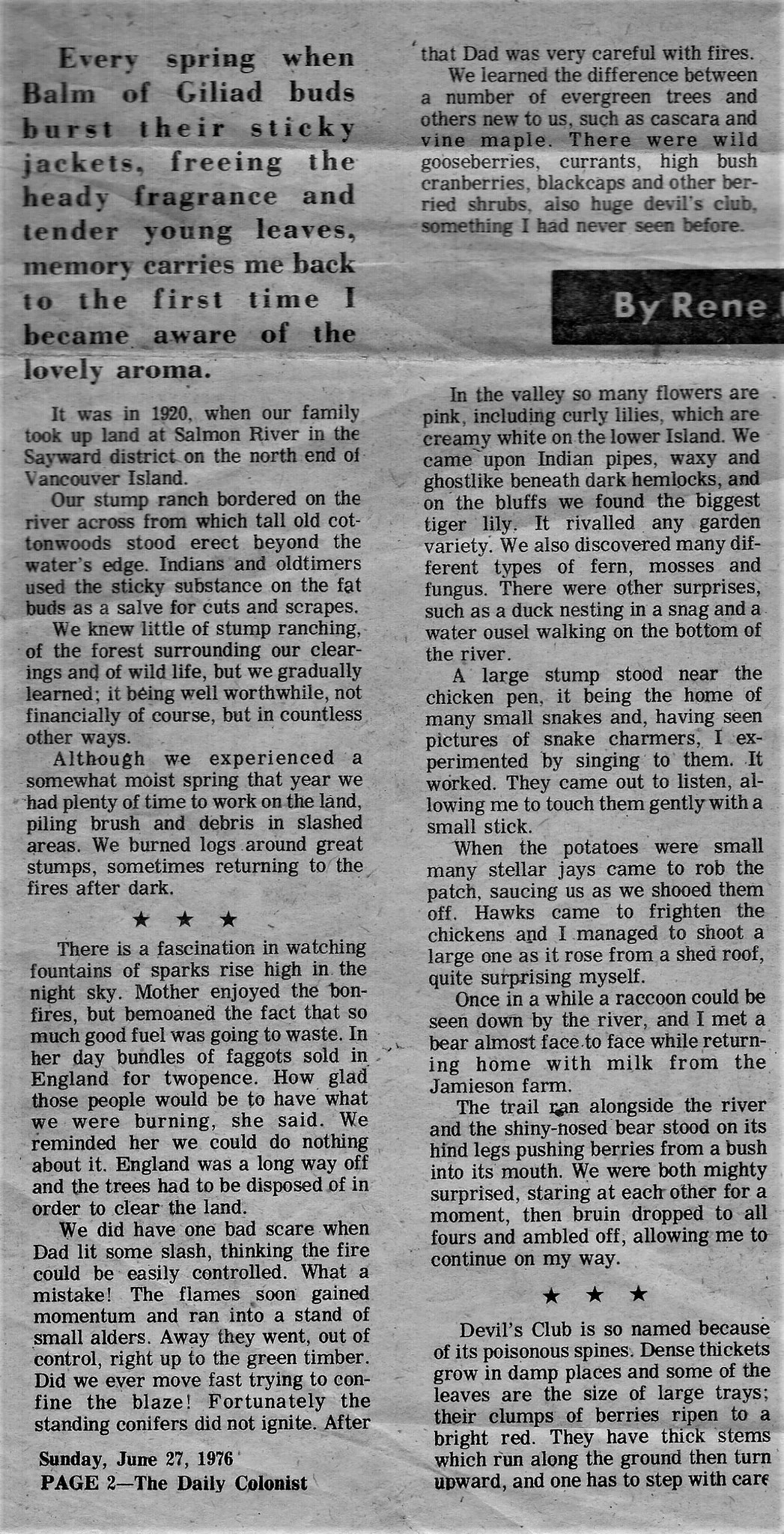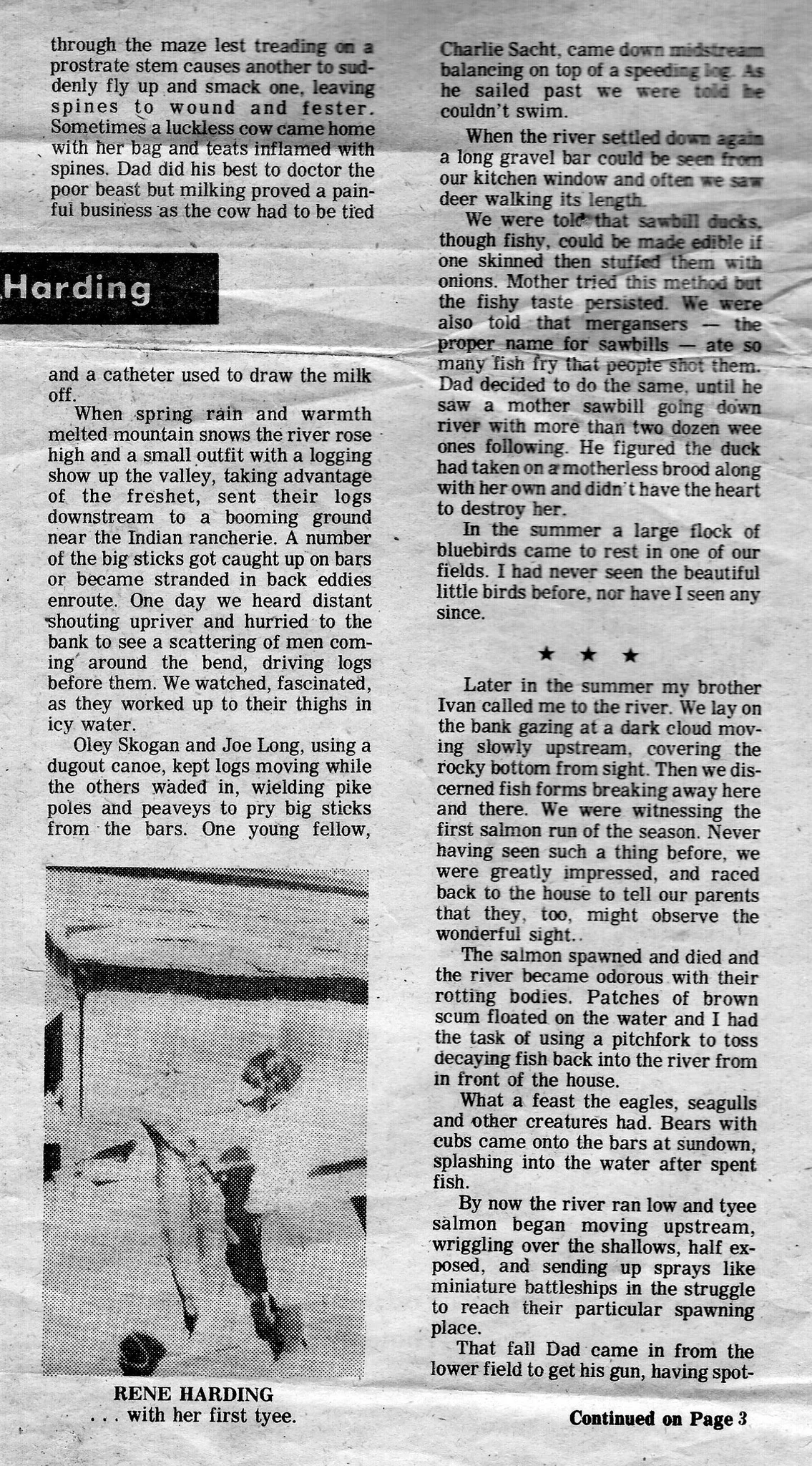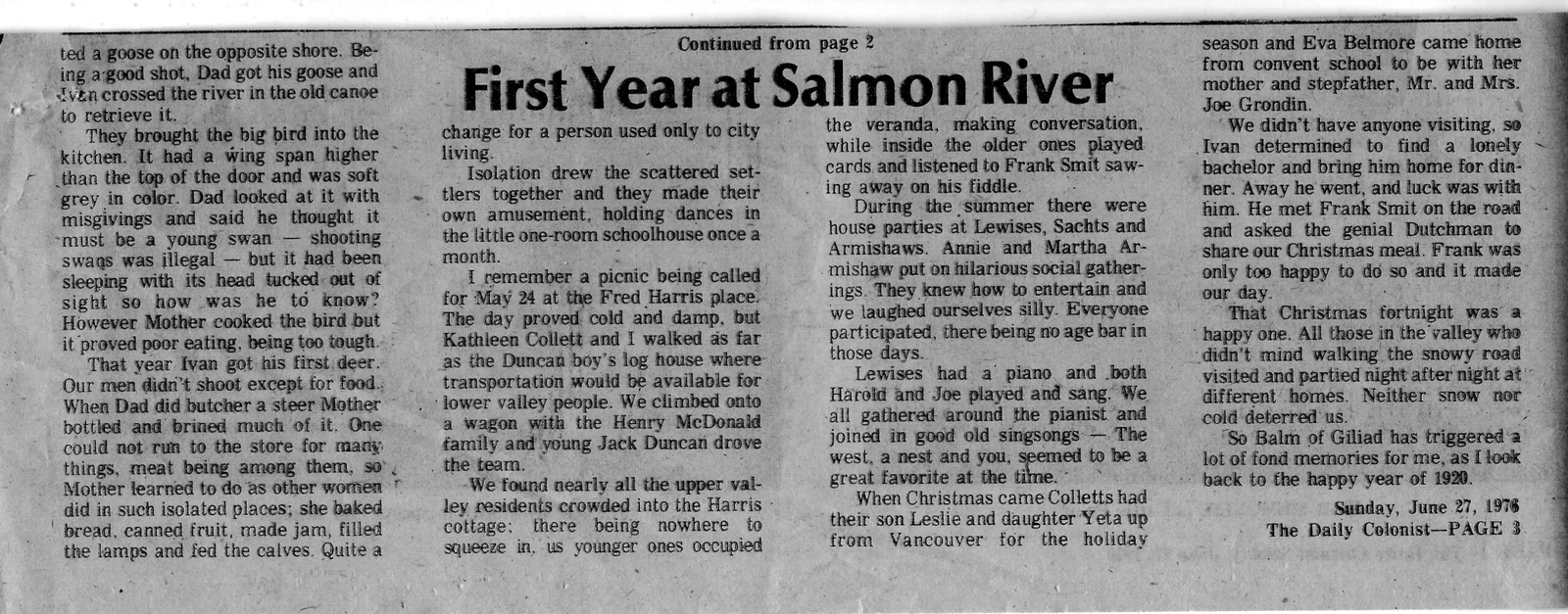
Life On The Edge Of Wilderness – A Pioneer’s First Year At Salmon River In The 1920s
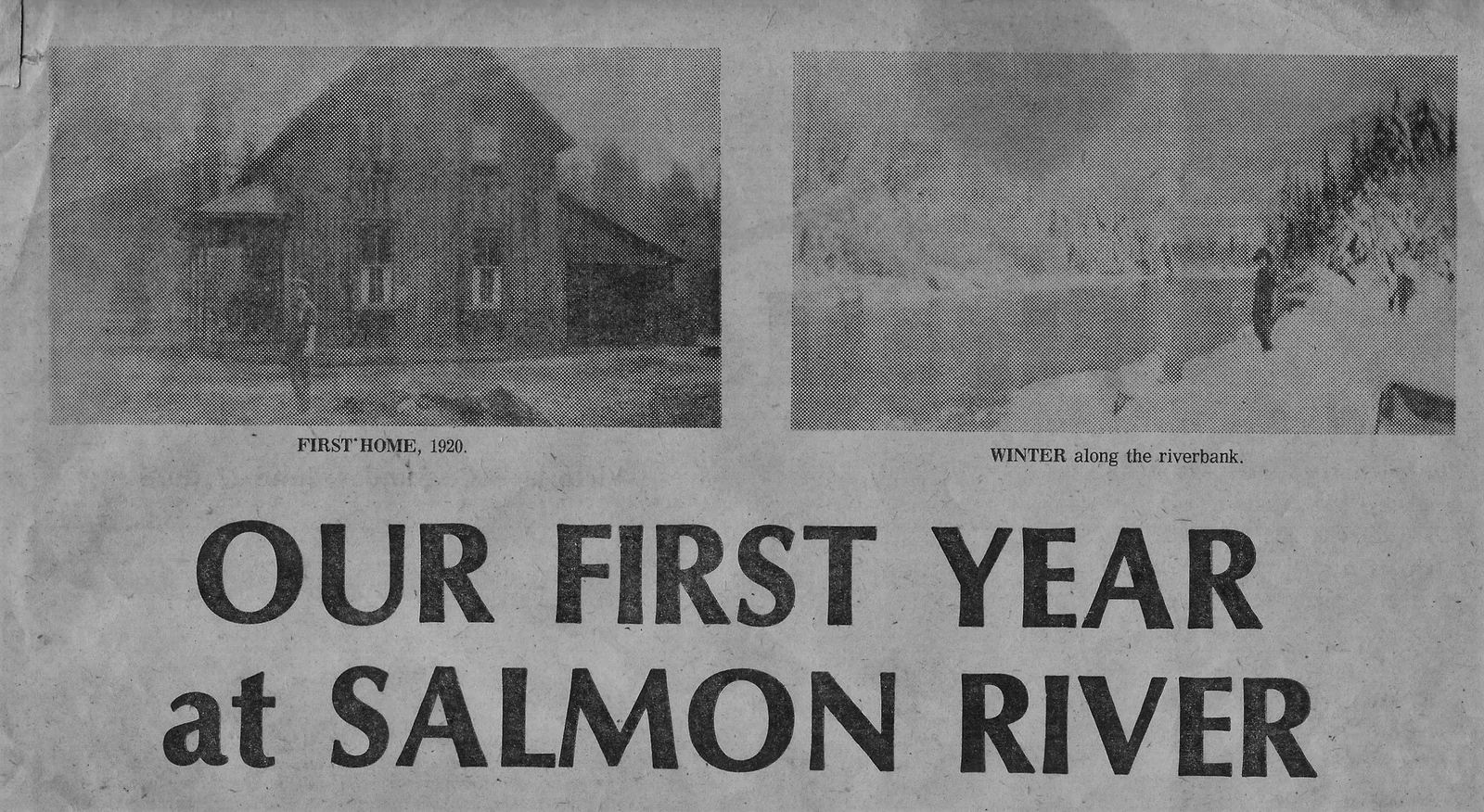
In the early 1920s, the remote banks of the Salmon River near present-day Sayward were not yet the quiet, scenic destination many recognize today. Instead, they were the frontier—rugged, isolated, and filled with both promise and hardship for the first wave of settlers trying to carve out a life in the dense forests of northern Vancouver Island.

A newspaper account by Rene Harding, preserved by the Sayward Historical Society, offers a vivid glimpse into what that first year of settlement was really like.

A Land of Opportunity—and Challenge

The Salmon River Valley drew settlers with its fertile flats and towering timber. By the late 1800s and early 1900s, the region had already begun transitioning from a trading stop and Indigenous village site into a budding resource community fueled largely by logging and natural resource extraction.

But arriving in the 1920s meant stepping into a place where infrastructure was nearly nonexistent. Early pioneers had to build everything from scratch—homes, trails, and access routes—often using only hand tools and raw determination.

The Harding account describes a year defined by constant labour. Clearing land for farming was grueling work, with dense forest and heavy undergrowth slowing progress at every turn. Each acre gained was hard-won, and every structure built represented weeks of effort.

Isolation and Ingenuity

Life at Salmon River was marked by isolation. Transportation was limited, and connections to the outside world were infrequent. Supplies had to be carefully managed, and settlers relied heavily on one another for support.

Improvisation became a daily necessity. Families learned to adapt quickly—constructing shelters, sourcing food locally, and making do with what little they had. Hunting, fishing, and foraging were not hobbies, but essential survival skills.

Despite these hardships, there was a sense of optimism. The settlers believed in the long-term potential of the land, even when early conditions were harsh.

Weather, Work, and Resilience

The first year tested settlers in every season. Wet coastal weather, dense bush, and physical exhaustion created constant challenges. Yet the Harding account highlights a recurring theme: resilience.

Progress may have been slow, but it was steady. Gardens began to take shape, homes became more secure, and the beginnings of a community started to emerge.

This perseverance reflects a broader pattern seen across early Vancouver Island settlements—small, determined groups of people laying the groundwork for future generations.

Foundations of a Community

What makes this account especially compelling is how it captures a moment before Sayward became a structured community. At the time, the area was still evolving from its early identity as Port Kusam, a small settlement tied to trade, forestry, and river access.

The experiences described in that first year would ultimately contribute to the development of the Salmon River Valley and surrounding communities, helping shape the region’s identity as a forestry-driven hub in the decades that followed.

Remembering the Pioneers

Today, it’s easy to overlook the sheer effort required to establish communities in remote areas like Salmon River. Roads, services, and modern conveniences now connect the region—but they are built on the foundations laid by those early settlers.

Accounts like Rene Harding’s serve as a reminder of that legacy. They preserve not just the facts of history, but the lived experiences—the struggles, hopes, and determination—that defined life in the Sayward Valley a century ago.

Their story is one of endurance, adaptability, and belief in the land—qualities that continue to shape the community to this day.


The Link & Pin Logging & Pioneer Museum of Sayward, BC – A Lost Window into Coastal Logging History

For many years, the small community of Sayward was home to a unique local heritage attraction known as the Link & Pin Logging & Pioneer Museum. Though it is now closed, the museum played an important role in preserving the memory of coastal logging life on northern Vancouver Island.

Tucked into a region long shaped by forestry, the museum offered visitors a rare chance to step into the world of early logging camps, pioneer settlement, and the machines that built the local economy.

A Museum Born from Logging Country

The museum was established by local logger and collector Glen Duncan, who brought together a wide range of logging artifacts and pioneer-era objects from the surrounding region. Its origins were deeply rooted in the working history of the area—this was not a museum built from abstract curation, but from lived experience.

According to historical records, the museum initially focused heavily on logging equipment due to Duncan’s own background in the industry, later expanding into broader local history and pioneer life.

This evolution reflected a common pattern in small community museums across British Columbia: starting with industry, then growing into a wider preservation of everyday life.

Why “Link & Pin”?

The name “Link & Pin” refers to one of the earliest coupling systems used in rail transportation—particularly in logging railways.

Before modern automatic couplers, railcars were connected manually using:

  • A heavy iron link

  • A vertical pin dropped into place

It was dangerous work, requiring workers to step between moving railcars. In logging regions like Sayward, where rail systems once threaded through forested valleys, the term became symbolic of the early industrial era.

The museum’s name therefore captured something essential: the connection between rail, logging, and the people who risked their safety to move timber out of the forest.

What the Museum Contained

Though modest in size, the Link & Pin Museum held an impressive collection for a rural heritage site. Visitors could find:

  • Early logging tools and hand equipment

  • Steam-era machinery, including a steam donkey engine

  • Pioneer household artifacts

  • Lamps, photographs, and personal collections tied to local families

Some artifacts were rare examples of coastal logging technology, helping illustrate how timber was once harvested and moved before modern mechanization fully took over.

One description of similar collections in the region notes items such as steam donkeys and specialized logging tools that were essential to early coastal operations.

Reflecting Sayward’s Logging Identity

The museum was closely tied to the identity of Sayward itself. Logging has long been the economic backbone of the region, from early rail logging operations to later truck-based hauling systems and booming grounds at nearby Kelsey Bay.

In that sense, the museum functioned as more than a tourist stop—it was a local archive of working life.

It helped preserve the memory of:

  • Logging camps scattered through the valley

  • Rail and road-based timber transport

  • The transition from steam to diesel power

  • Pioneer settlement history alongside industrial growth

A Broader Shift in Small Museums

Like many small heritage museums in British Columbia, the Link & Pin Museum eventually became less active over time. This reflects a broader trend:

  • Aging volunteer base

  • Changing tourism patterns

  • Centralization of regional museums

  • Preservation challenges for artifact-heavy collections

As a result, many locally important collections have been absorbed into archives, moved, or quietly stored away.

Legacy in the Landscape

Even though the museum itself is no longer operating, its purpose still lives on in Sayward’s surrounding landscape.

Today, the region still holds:

  • Old logging road networks carved into the forest

  • Abandoned industrial sites and cutblock remnants

  • Historical signage and artifacts preserved by local historians

  • Ongoing storytelling by groups like the Sayward Historical Society

These fragments continue to tell the story the museum once housed under one roof.

Remembering the Link Between Past and Present

The Link & Pin Logging & Pioneer Museum may no longer be open, but its importance remains clear. It represented a time when local history was preserved by the very people who lived it—loggers, pioneers, and families tied directly to the land and industry.

In a place like Sayward, where the forest has always shaped human life, the museum served as a bridge between generations—linking past and present, much like the railway couplings it was named after.