Settlers For Salmon River – Carving A Life From The Wilderness
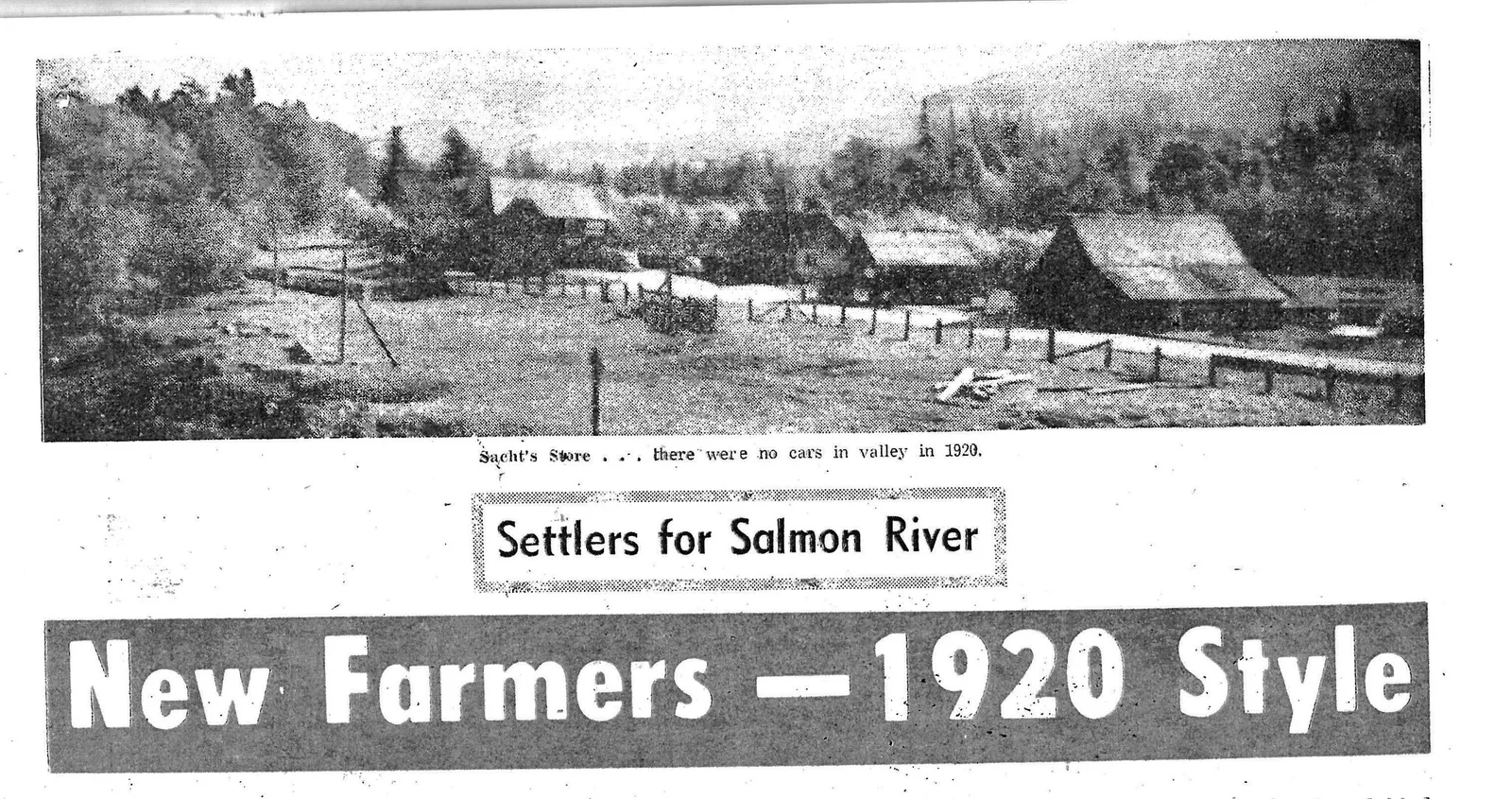
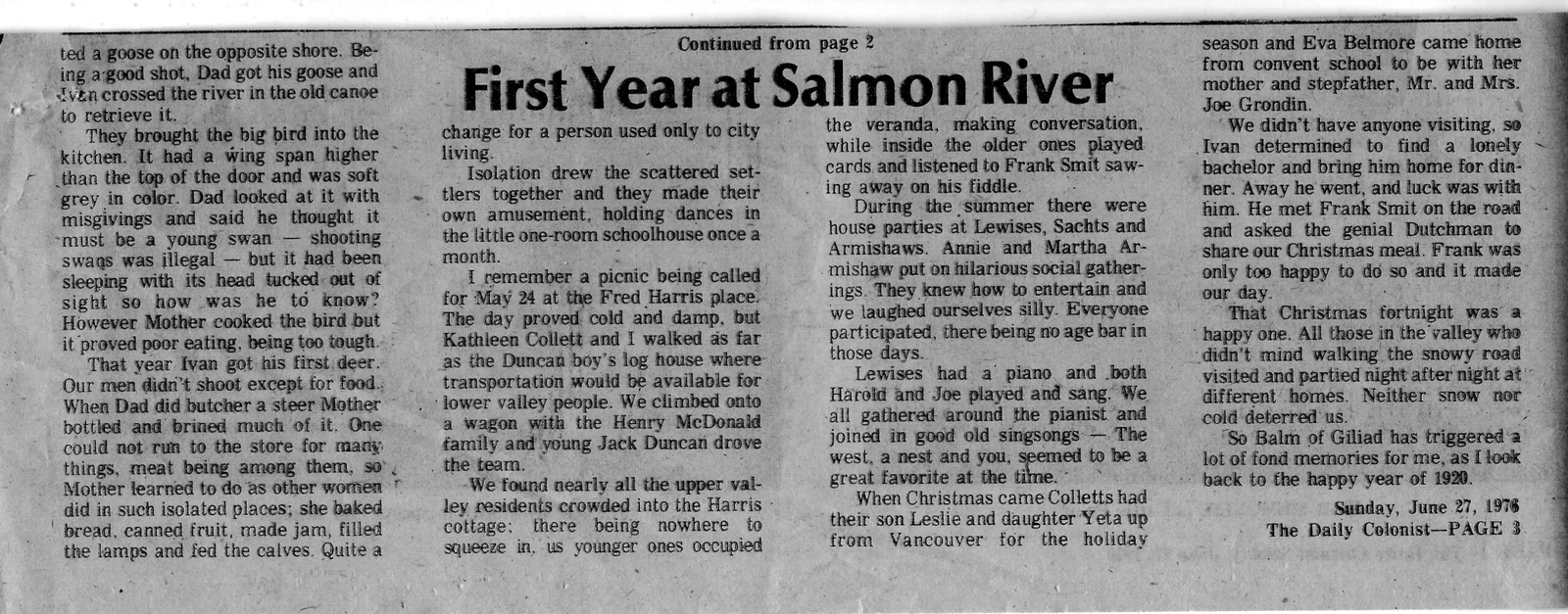
In the early 1920s, the Salmon River Valley was still very much a frontier—remote, rugged, and full of promise. The photographs from this era capture more than just landscapes and homesteads; they reveal the determination of the settlers who chose to build a life in one of northern Vancouver Island’s most isolated regions.

Arriving at what was then a sparsely developed outpost, these early pioneers found themselves surrounded by dense forest, powerful rivers, and limited access to the outside world. The community that would become Sayward had only recently taken shape, evolving from its origins as Port Kusam at the mouth of the Salmon River . For newcomers, the journey in was often as challenging as the life that followed—travel by boat, rough trails, and unpredictable weather were part of daily reality.

The images show modest homesteads carved out of thick timber. Clearing land was the first and most demanding task. Towering Douglas fir and cedar had to be felled by hand, stumps burned or pulled, and the soil slowly coaxed into productivity. It was backbreaking work, but it laid the foundation for farms that would sustain families and support a growing settlement.

Yet these settlers were not entering an empty land. The Salmon River area had long been home to the K’ómoks First Nation, whose presence and deep connection to the land predated European settlement by generations . By the time many settlers arrived, the nearby village had been abandoned, but its history remained an important and often overlooked part of the region’s story .

Life for settlers demanded resilience and cooperation. The photos hint at a close-knit community where neighbours relied on one another for survival—sharing tools, labour, and knowledge. Supplies were scarce, and isolation meant that self-sufficiency wasn’t just valued, it was essential. Gardens, livestock, fishing, and logging all played a role in daily life.

Logging, in particular, would soon become a defining industry in the valley. What began as small-scale clearing for farms gradually expanded into larger forestry operations that shaped the economic future of the region . The same forests that posed an initial barrier would become a source of livelihood for generations to come.

There is a quiet strength in these images—families standing beside rough-hewn buildings, fields still dotted with stumps, and tools that speak to long days of labour. They tell a story not just of hardship, but of optimism. These settlers believed in the land and in their ability to make a home there.

Today, as we look back on these moments from a century ago, it’s easy to forget just how much effort it took to establish a community in such a place. The Salmon River settlers were not just residents—they were builders of a future, laying the groundwork for the Sayward Valley we know today.

Their legacy lives on in the landscape, the stories, and the enduring spirit of the region.
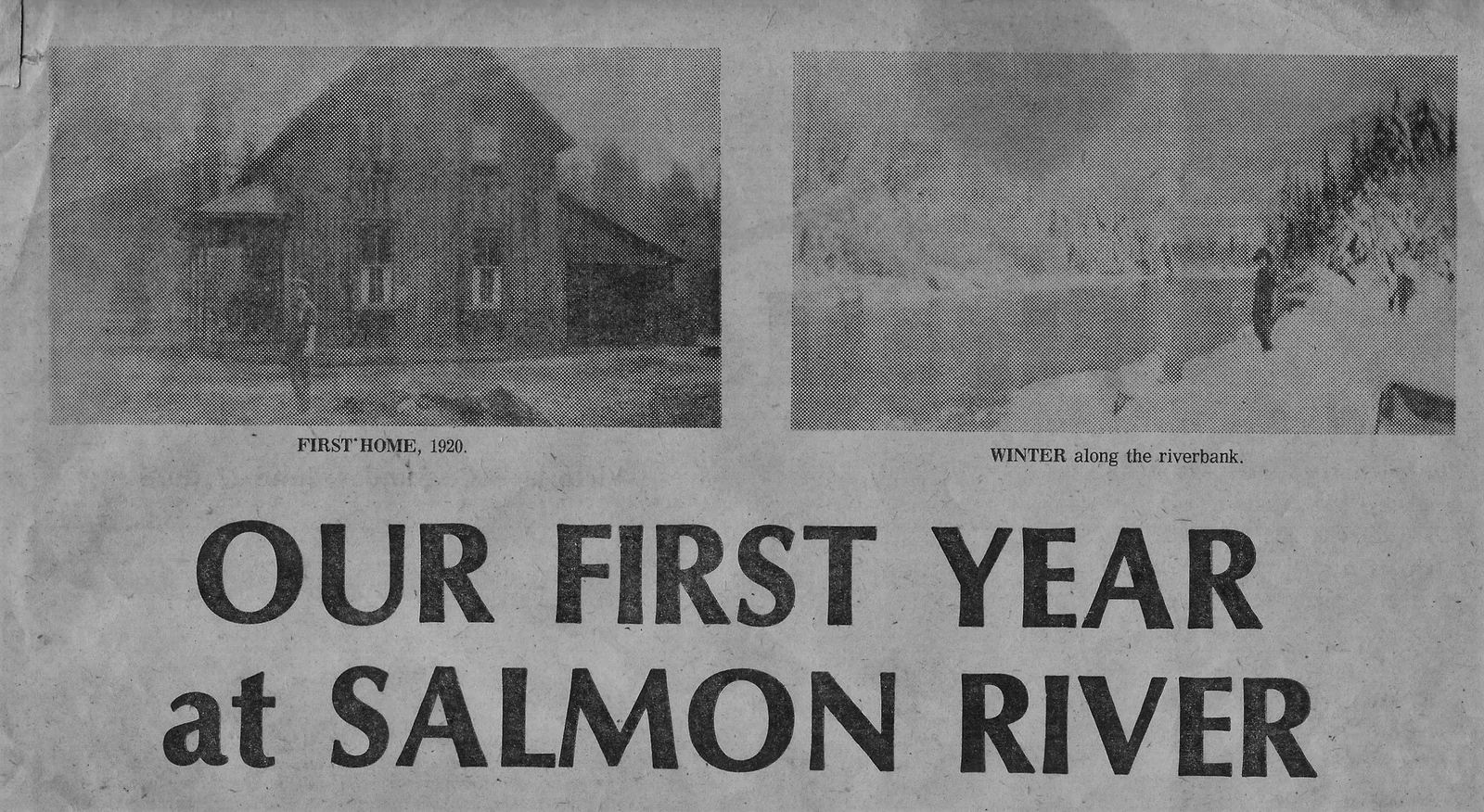
Life On The Edge Of Wilderness – A Pioneer’s First Year At Salmon River In The 1920s

In the early 1920s, the remote banks of the Salmon River near present-day Sayward were not yet the quiet, scenic destination many recognize today. Instead, they were the frontier—rugged, isolated, and filled with both promise and hardship for the first wave of settlers trying to carve out a life in the dense forests of northern Vancouver Island.

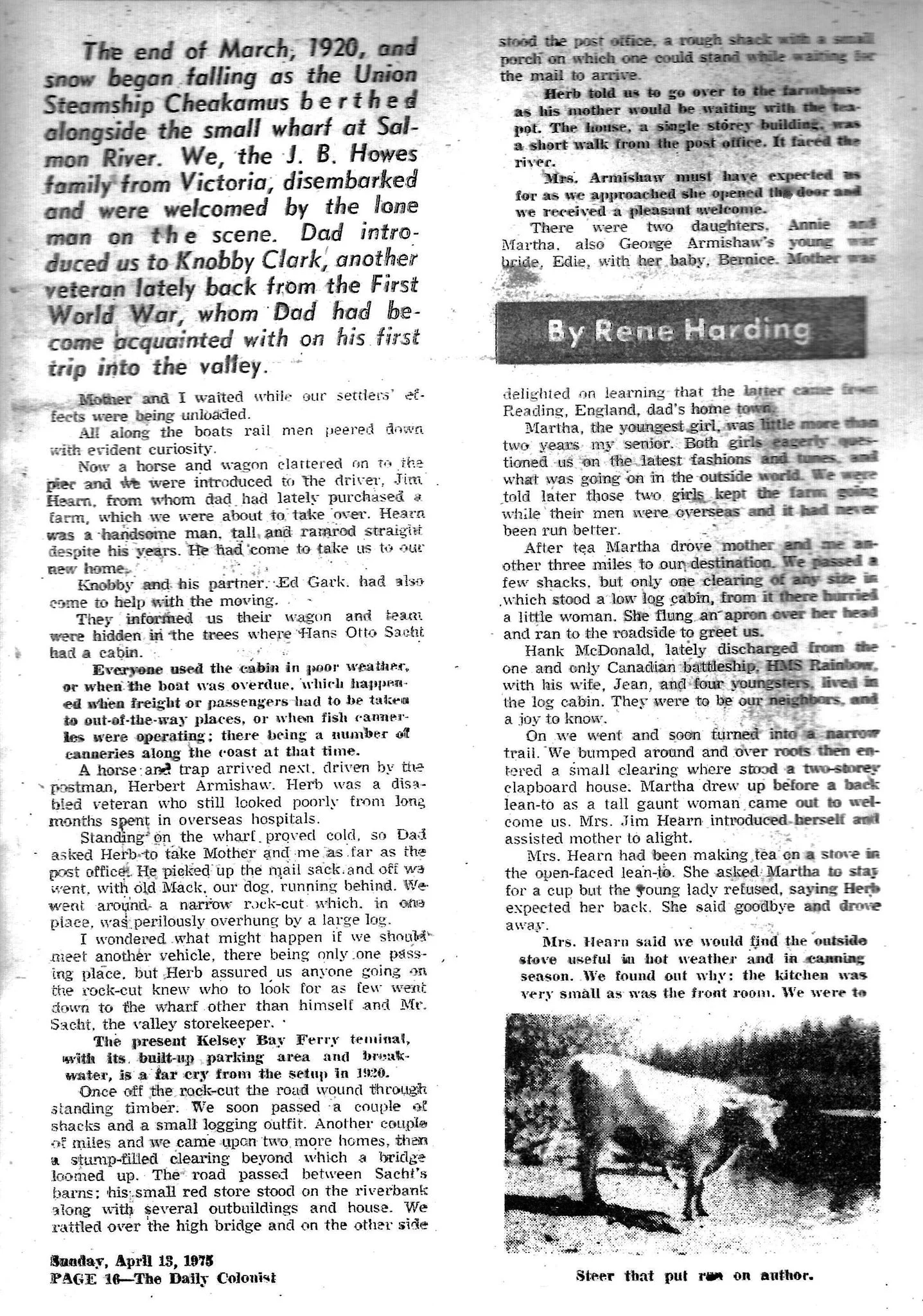
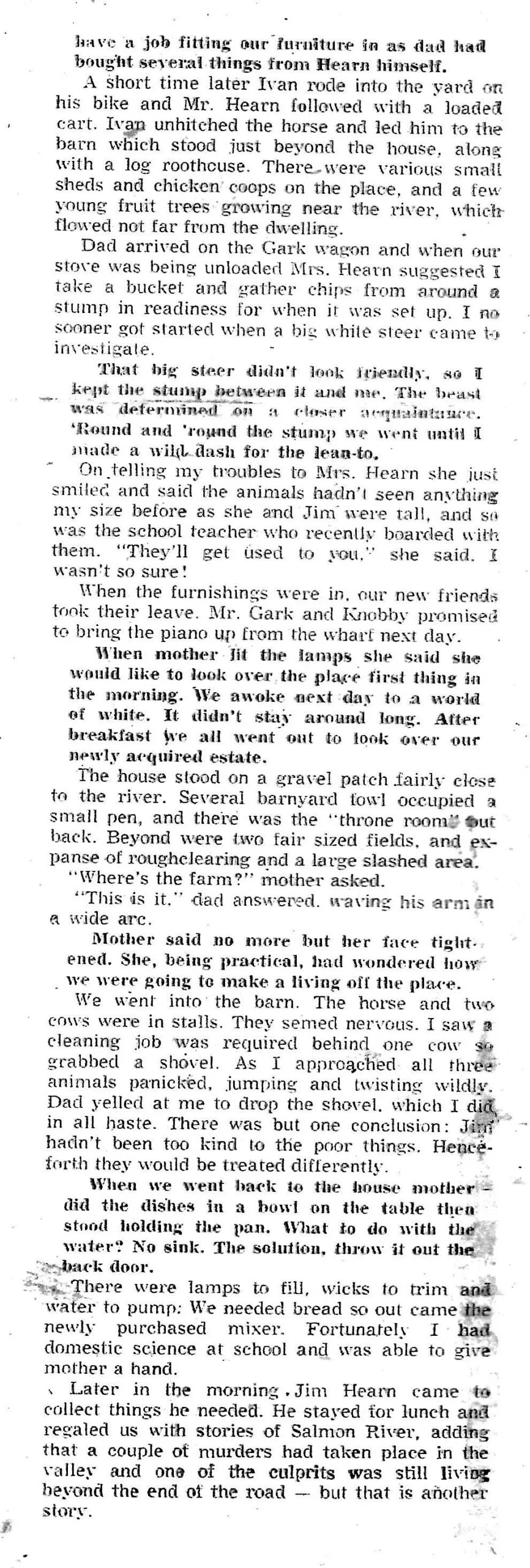
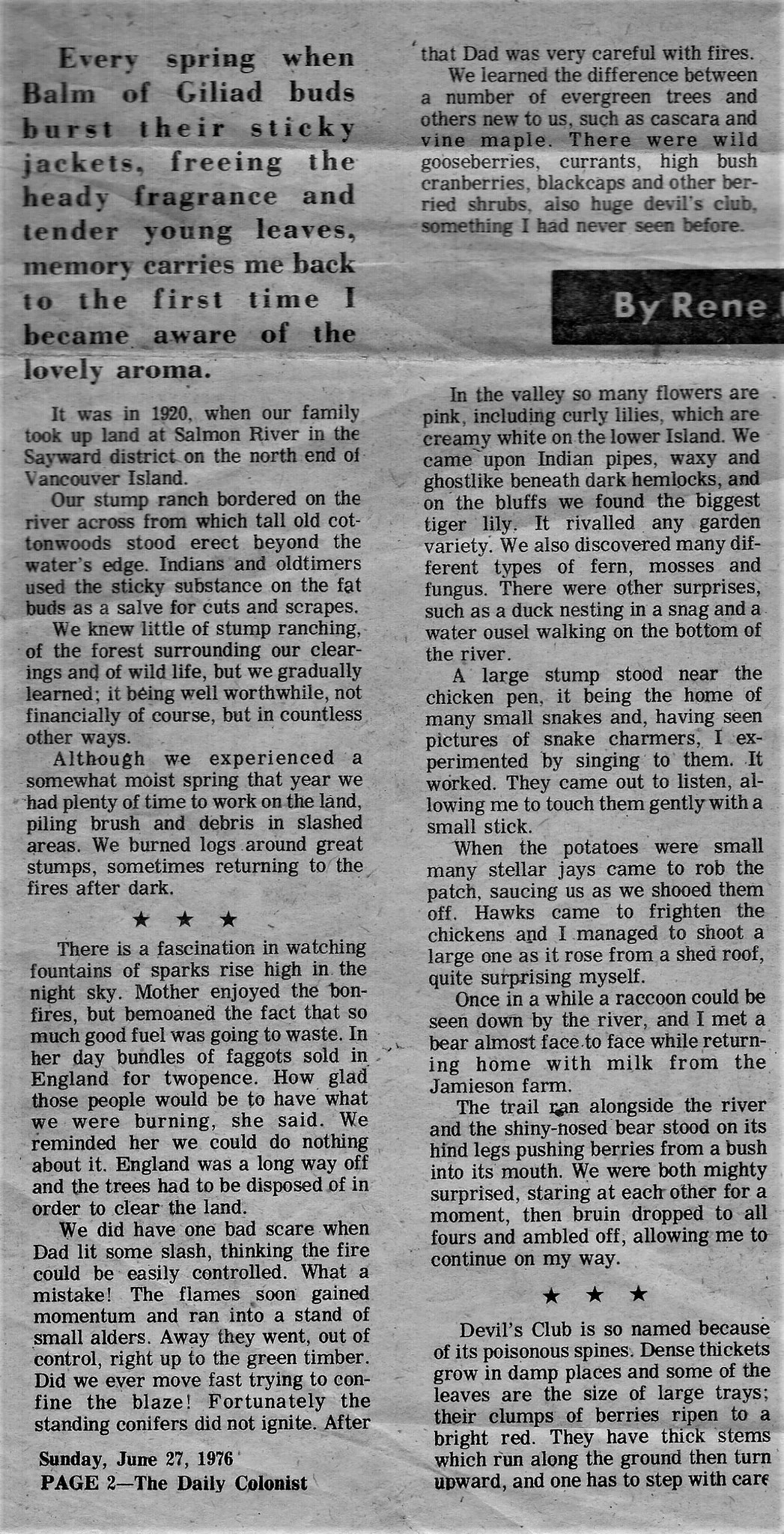
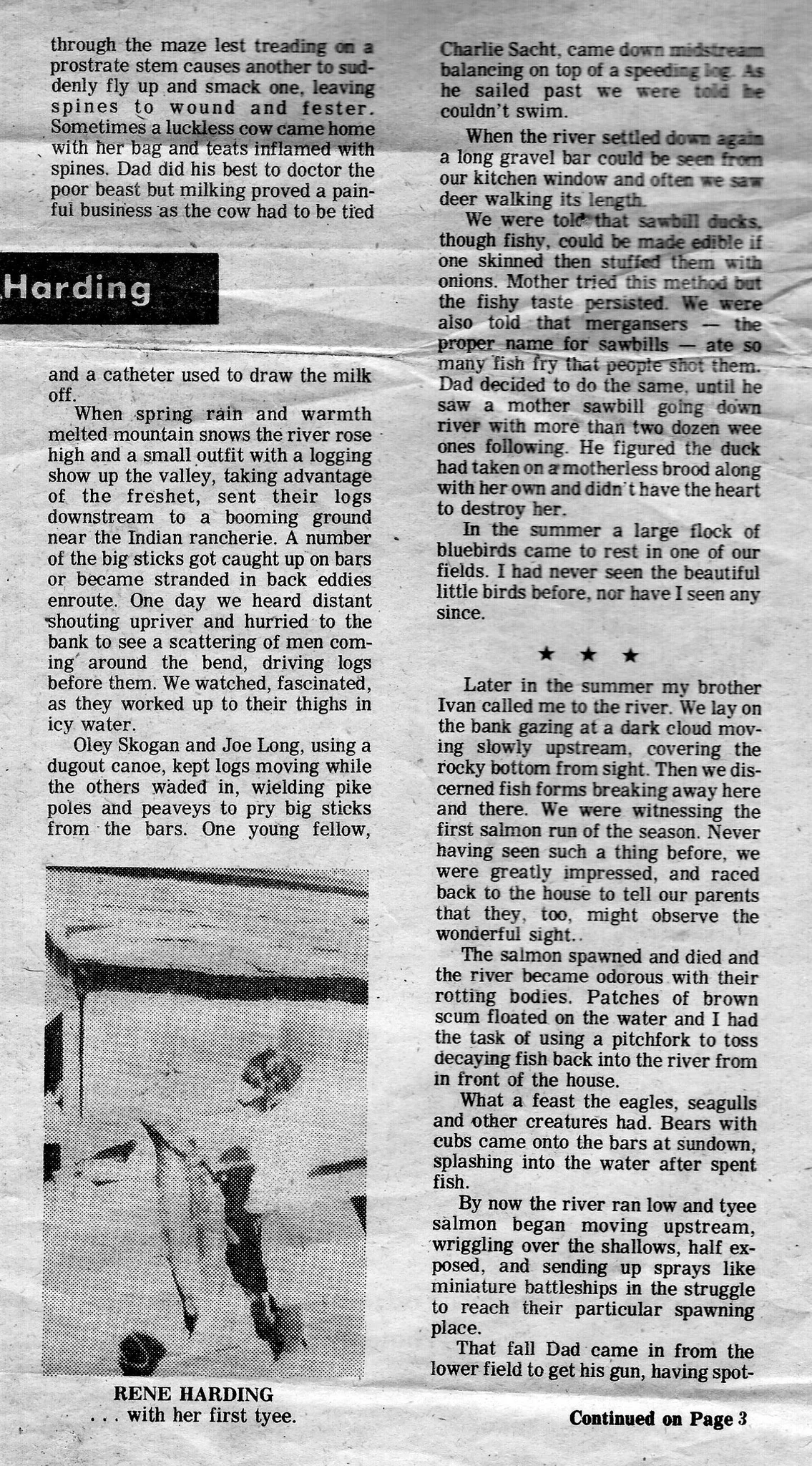
A newspaper account by Rene Harding, preserved by the Sayward Historical Society, offers a vivid glimpse into what that first year of settlement was really like.

A Land of Opportunity—and Challenge

The Salmon River Valley drew settlers with its fertile flats and towering timber. By the late 1800s and early 1900s, the region had already begun transitioning from a trading stop and Indigenous village site into a budding resource community fueled largely by logging and natural resource extraction.

But arriving in the 1920s meant stepping into a place where infrastructure was nearly nonexistent. Early pioneers had to build everything from scratch—homes, trails, and access routes—often using only hand tools and raw determination.

The Harding account describes a year defined by constant labour. Clearing land for farming was grueling work, with dense forest and heavy undergrowth slowing progress at every turn. Each acre gained was hard-won, and every structure built represented weeks of effort.

Isolation and Ingenuity

Life at Salmon River was marked by isolation. Transportation was limited, and connections to the outside world were infrequent. Supplies had to be carefully managed, and settlers relied heavily on one another for support.

Improvisation became a daily necessity. Families learned to adapt quickly—constructing shelters, sourcing food locally, and making do with what little they had. Hunting, fishing, and foraging were not hobbies, but essential survival skills.

Despite these hardships, there was a sense of optimism. The settlers believed in the long-term potential of the land, even when early conditions were harsh.

Weather, Work, and Resilience

The first year tested settlers in every season. Wet coastal weather, dense bush, and physical exhaustion created constant challenges. Yet the Harding account highlights a recurring theme: resilience.

Progress may have been slow, but it was steady. Gardens began to take shape, homes became more secure, and the beginnings of a community started to emerge.

This perseverance reflects a broader pattern seen across early Vancouver Island settlements—small, determined groups of people laying the groundwork for future generations.

Foundations of a Community

What makes this account especially compelling is how it captures a moment before Sayward became a structured community. At the time, the area was still evolving from its early identity as Port Kusam, a small settlement tied to trade, forestry, and river access.

The experiences described in that first year would ultimately contribute to the development of the Salmon River Valley and surrounding communities, helping shape the region’s identity as a forestry-driven hub in the decades that followed.

Remembering the Pioneers

Today, it’s easy to overlook the sheer effort required to establish communities in remote areas like Salmon River. Roads, services, and modern conveniences now connect the region—but they are built on the foundations laid by those early settlers.

Accounts like Rene Harding’s serve as a reminder of that legacy. They preserve not just the facts of history, but the lived experiences—the struggles, hopes, and determination—that defined life in the Sayward Valley a century ago.

Their story is one of endurance, adaptability, and belief in the land—qualities that continue to shape the community to this day.