
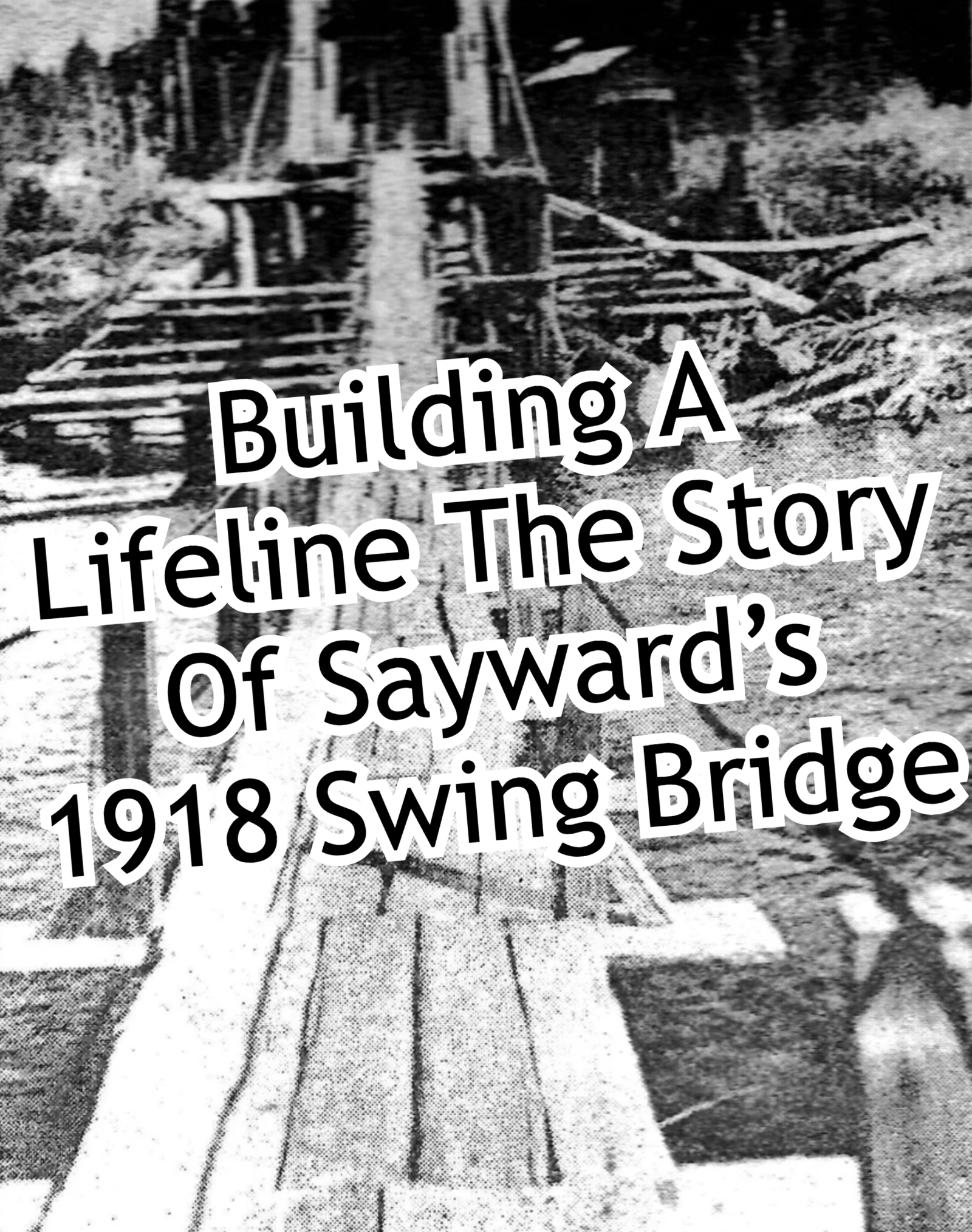
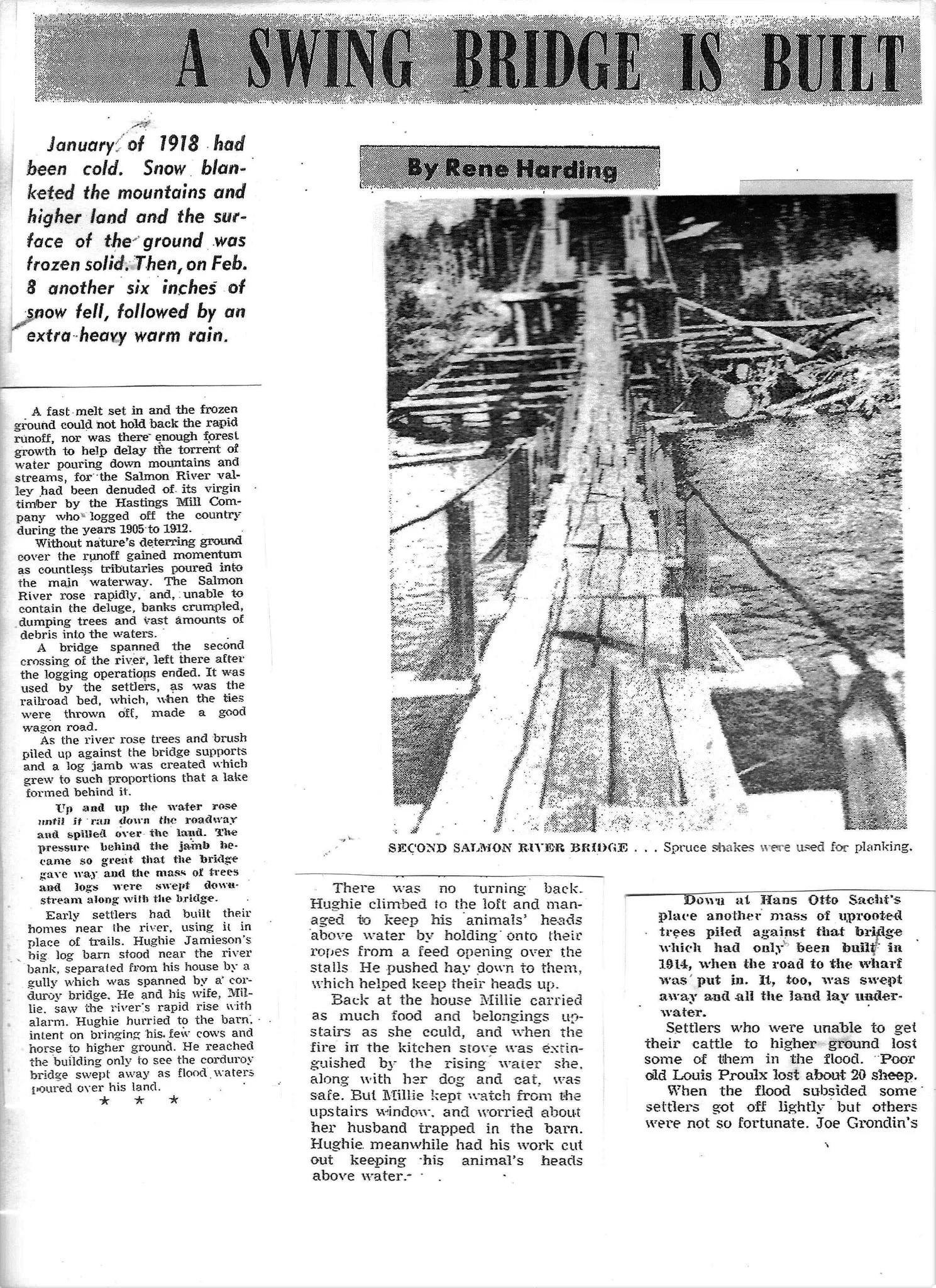
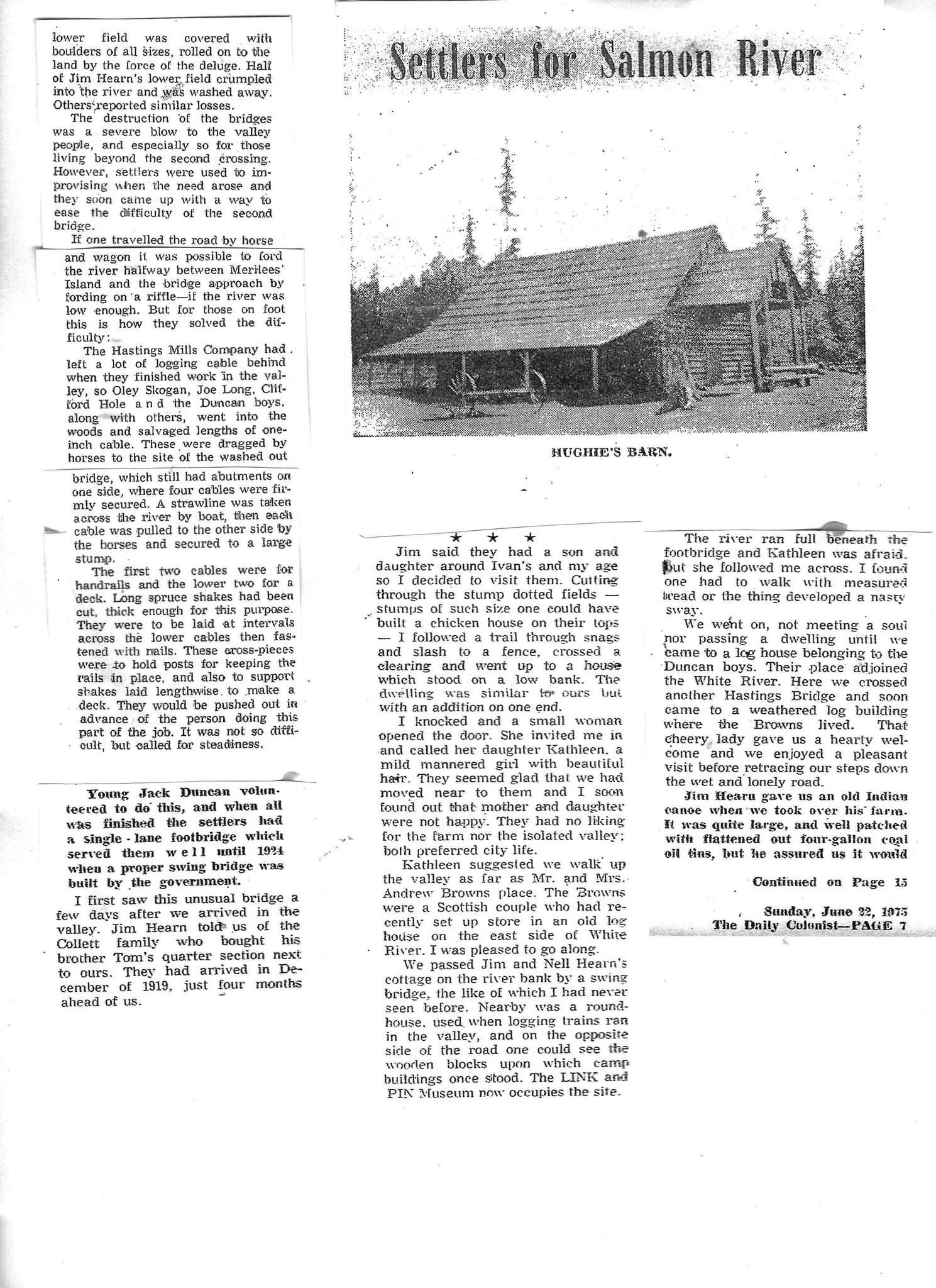
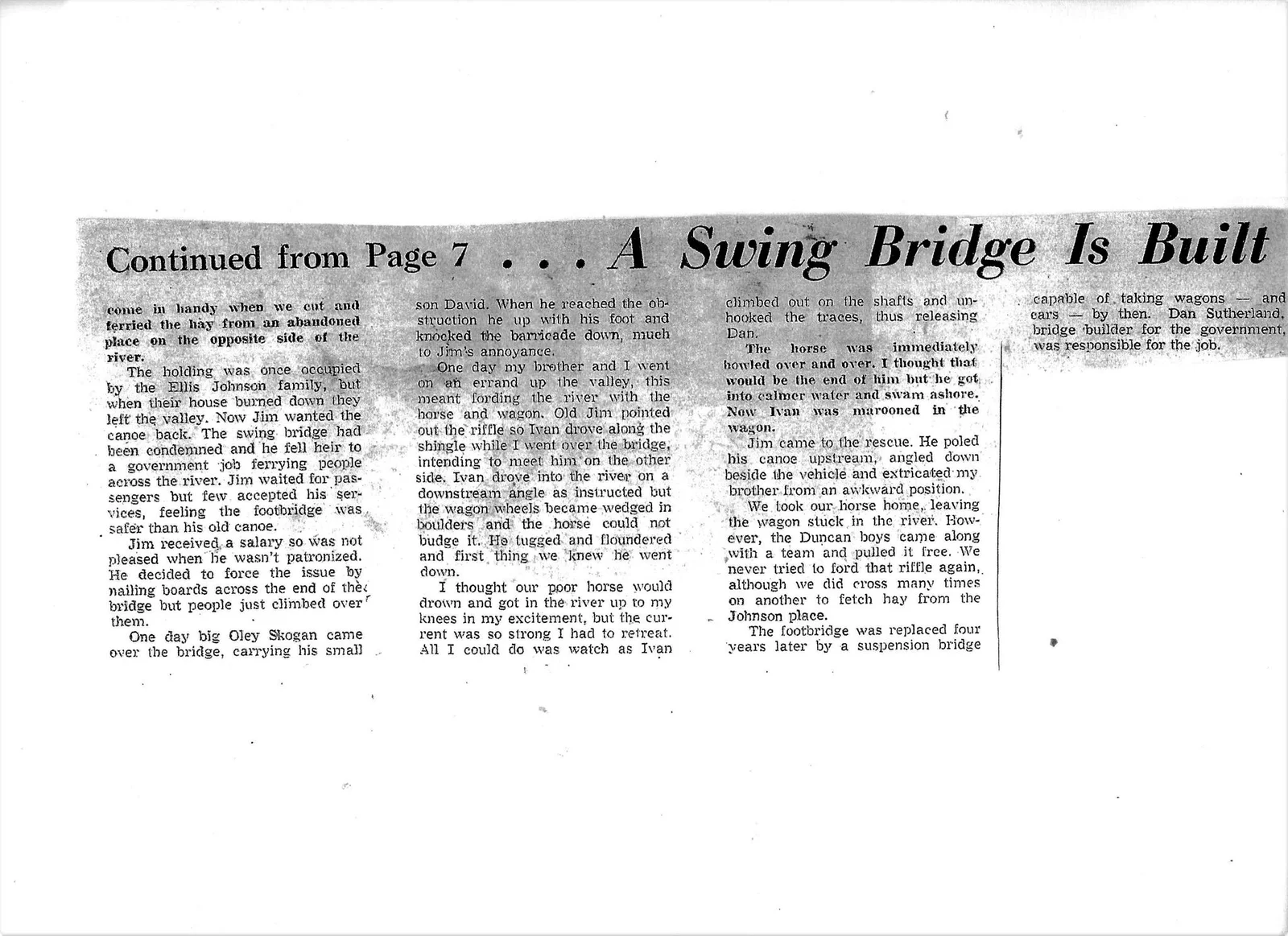
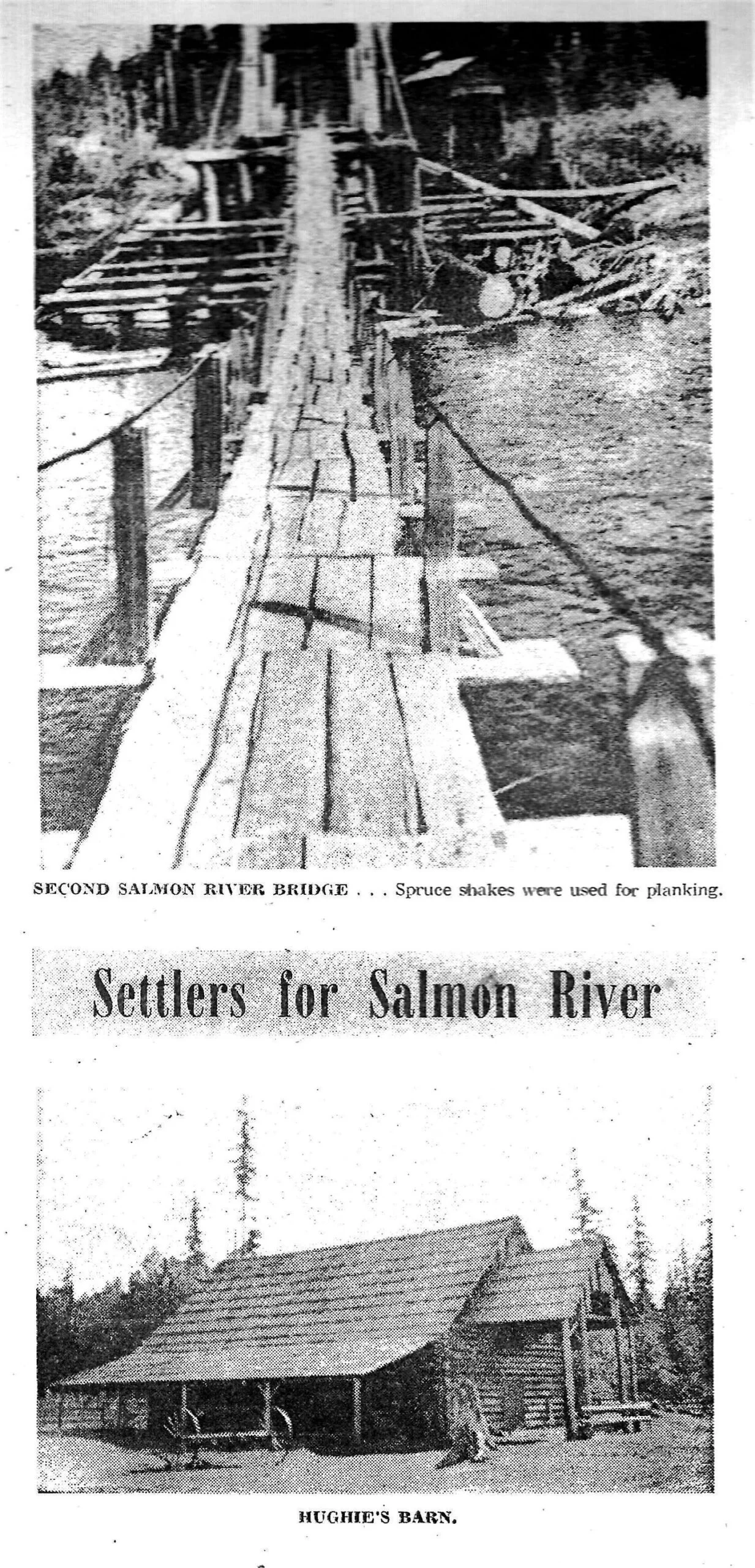
In the early 20th century, life in the remote communities of northern Vancouver Island was defined by isolation, ingenuity, and determination. A fascinating glimpse into that era comes from a Times Colonist newspaper account by Rene Harding, preserved by the Sayward Historical Society. Her recounting of a swing bridge built around 1918 captures a pivotal moment in the development of the Salmon River valley.
A Community Divided by Water
At the time, the Salmon River was both a lifeline and a barrier. It supported logging operations and transportation, but crossing it was a constant challenge for settlers, workers, and supplies moving through the rugged landscape. Without a reliable bridge, travel depended on boats, makeshift crossings, or risky seasonal routes.
The need for a permanent crossing became increasingly urgent as logging activity expanded and more people arrived in the region. Communities like Sayward and nearby camps were growing, but infrastructure lagged behind.
Engineering Meets Necessity
The solution came in the form of a swing bridge—a practical and widely used design in Canada during that era. Swing bridges could pivot open to allow boats, logs, and river traffic to pass through, then close again for foot or rail travel.
For a logging region like Sayward, this design made perfect sense. Rivers were not just obstacles; they were highways for floating timber. A fixed bridge would have blocked that movement, but a swing span allowed both land and water traffic to coexist.
Building Against the Odds
Harding’s account highlights the sheer effort required to construct such a structure in a remote, undeveloped area. Materials had to be transported over long distances, often by water or rough trails. Labour was intensive, and conditions were unforgiving.
This was not just a construction project—it was a feat of coordination and perseverance. Workers had to contend with weather, terrain, and limited equipment, all while building a structure that needed to be both strong and adaptable.
More Than a Bridge
When completed, the swing bridge did more than span the Salmon River—it transformed daily life.
- Improved access: Travel between settlements became faster and safer.
- Economic growth: Logging operations could expand more efficiently.
- Community connection: Families, workers, and goods could move with greater ease.
In many ways, the bridge symbolized a turning point. It marked the transition from isolation to connection, from temporary solutions to lasting infrastructure.
A Lasting Legacy
Today, the original 1918 swing bridge may no longer stand, but its impact remains part of Sayward’s story. Through historical records and images preserved by the Sayward Historical Society, we can still appreciate the ingenuity and resilience that defined the region’s early development.
The story of the swing bridge is a reminder that even modest structures can play an outsized role in shaping a community. Built out of necessity, it became a symbol of progress—linking not just two sides of a river, but a growing region to its future.