
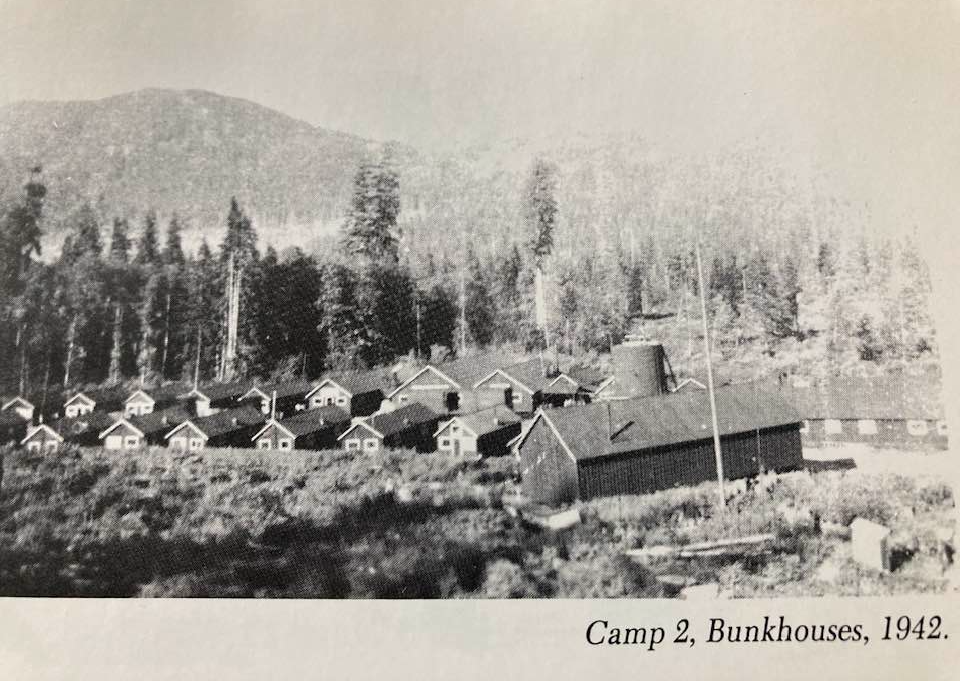
Hidden deep within the forests of the Sayward Valley, the historic Alice Lake Logging Camp 2 once stood as a bustling hub of coastal forestry life during the height of Vancouver Island’s railroad logging era.
In the 1940s, the forests surrounding Alice Lake were alive with the sounds of steam donkeys, locomotives, axes, and saws as logging crews harvested massive stands of old-growth timber throughout the region. The camps established in the valley were more than just temporary worksites — they were isolated communities where hundreds of workers lived, ate, and spent months at a time far from town.
Camp 2 was one of several numbered logging camps connected to the broader Kelsey Bay and Sayward Valley forestry operations. While Kelsey Bay served as the coastal shipping and industrial centre, inland camps like Camp 2 were built closer to active logging areas deep in the forest. Supplies, equipment, and workers often arrived by rail along rugged logging railways that stretched throughout the valley. Railroad logging had become a defining part of the region’s economy by the early 20th century.
The surviving photographs of Camp 2 offer a fascinating glimpse into daily life during this era. Long rows of bunkhouses lined the camp, housing loggers who worked grueling shifts in all weather conditions. Nearby cookhouses operated around the clock, feeding hungry crews with enormous meals designed to sustain men performing some of the toughest labour in British Columbia.
Life in the camps was physically demanding and often dangerous. Crews worked with primitive equipment by modern standards, relying heavily on steam-powered machinery, cable systems, and spar trees to move giant logs across steep terrain. Injuries were common, and isolation added another layer of hardship. Yet despite the difficult conditions, strong communities developed within the camps, with workers forming lifelong friendships and shared traditions.
The forests around Alice Lake were part of a much larger logging network that shaped the growth of Sayward and Kelsey Bay for decades. Historical records indicate that major logging operations expanded significantly across northern Vancouver Island during the 1940s, including activities connected to Alice Lake Logging and other forestry companies operating throughout the region.
Today, little remains of Camp 2 itself. The bunkhouses are long gone, and much of the valley has regenerated into second-growth forest. However, traces of the old railroad grades, logging roads, and industrial sites can still be found hidden throughout the backcountry around Sayward.