
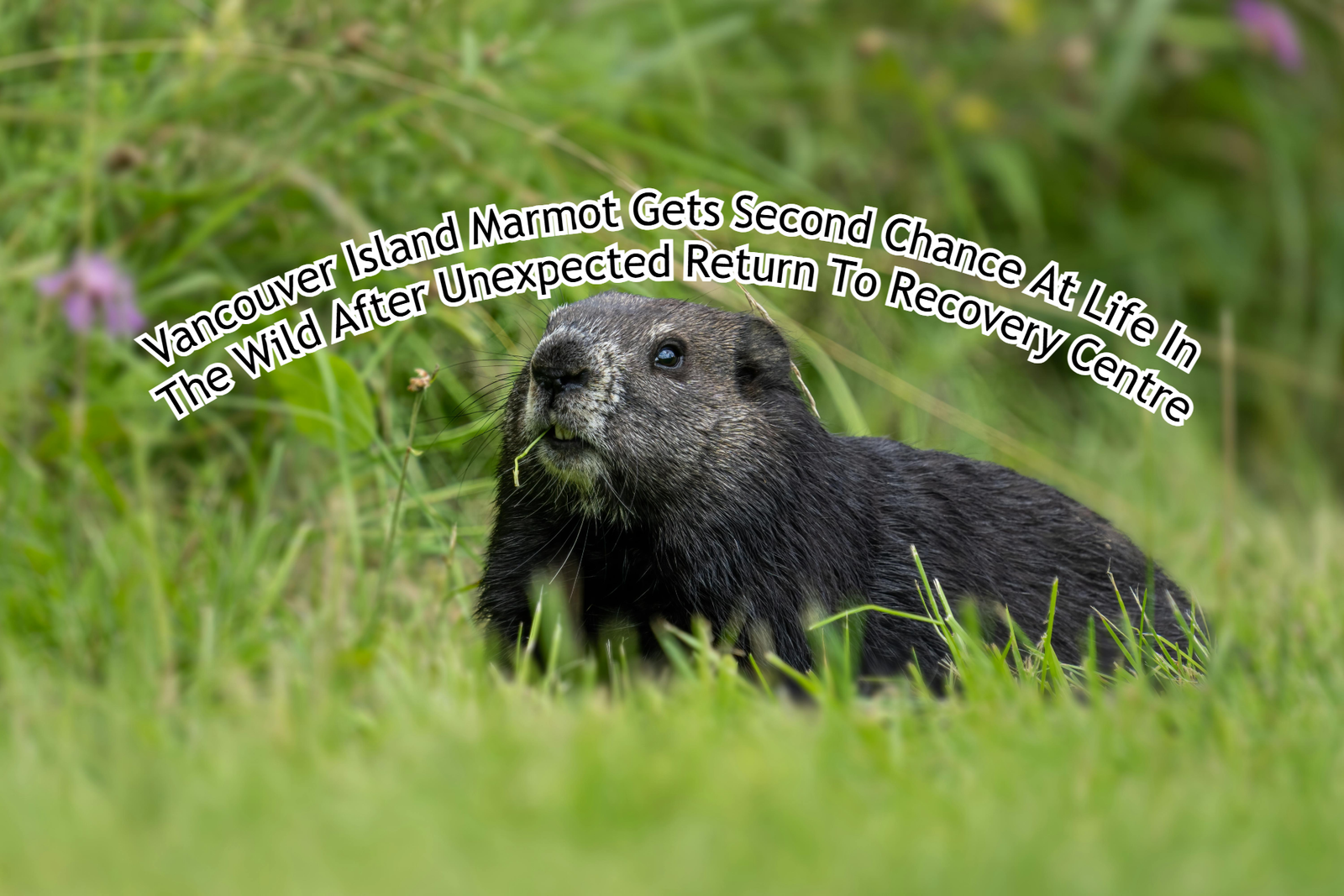
A young Vancouver Island marmot that surprised conservationists by returning to its breeding facility after being released into the wild is being given a second chance this spring, highlighting the ongoing effort to protect one of the Island’s most endangered species.
Gob, a captive-bred Vancouver Island marmot, was released on Mount Washington last year as part of recovery work led by the Marmot Recovery Foundation. The release was intended to help strengthen the fragile wild population of the species, which exists only on Vancouver Island and remains at risk despite decades of conservation efforts.
But shortly after his release, Gob did something few marmots have ever done — he returned to the breeding centre.
Within about two months, the young marmot made his way back to the facility and stayed nearby, interacting with marmots still in care and spending time around the buildings. Conservation staff observed him digging a hibernation burrow under the facility, a sign that he was not settling into alpine life as expected.
To protect his safety and give him another opportunity to adapt, staff brought him back into care for the winter. Now, with spring conditions returning to the mountains, Gob is preparing for a second release into the wild.
A rare but hopeful situation
Wildlife experts say most captive-bred marmots quickly disperse into alpine habitat after release, exploring their surroundings and joining colonies within a short time. Gob’s return was unusual, but it also showed the strong social nature of the species.
Vancouver Island marmots rely heavily on colony life, using vocal calls to warn each other of predators and working together to survive in the harsh mountain environment. Without strong social connections, survival in the wild can be more difficult for young animals.
Giving Gob another chance at release allows conservationists to place him in a setting where he can integrate with other marmots and develop the behaviours needed to thrive.
Importance to Vancouver Island ecosystems
The Vancouver Island marmot is one of the rarest mammals in the world and is found nowhere else. Alpine regions such as Mount Washington, Strathcona Park, and surrounding mountain ranges provide critical habitat for the species.
For communities across North Vancouver Island — including Sayward, Woss, Campbell River, and surrounding areas — the marmot represents a unique part of the region’s natural heritage. The species is often seen as a symbol of successful conservation and the importance of protecting local ecosystems.
Healthy marmot populations contribute to alpine biodiversity by helping maintain meadow ecosystems through burrowing and soil movement, which supports plant growth and other wildlife.
Recovery efforts continue
In the early 2000s, the Vancouver Island marmot population dropped to fewer than 30 animals in the wild, placing the species on the brink of extinction. Through captive breeding and coordinated release programs, the population has slowly rebounded to several hundred animals across Vancouver Island.
The Marmot Recovery Foundation continues to monitor colonies, breed marmots in captivity, and release animals each year to strengthen wild populations and maintain genetic diversity.
Each marmot released into the wild is considered an important step toward long-term recovery.
A second chance in the mountains
Gob’s story is a reminder that wildlife recovery is not always straightforward. Some animals adapt immediately, while others need more time and support to transition to life in the wild.
Conservationists remain optimistic that his second release will allow him to integrate into a colony and become part of the growing wild population.
As spring arrives and alpine habitats reopen, Gob will once again head into Vancouver Island’s mountains — a small but meaningful step in the larger effort to ensure the Vancouver Island marmot continues to survive for future generations.