
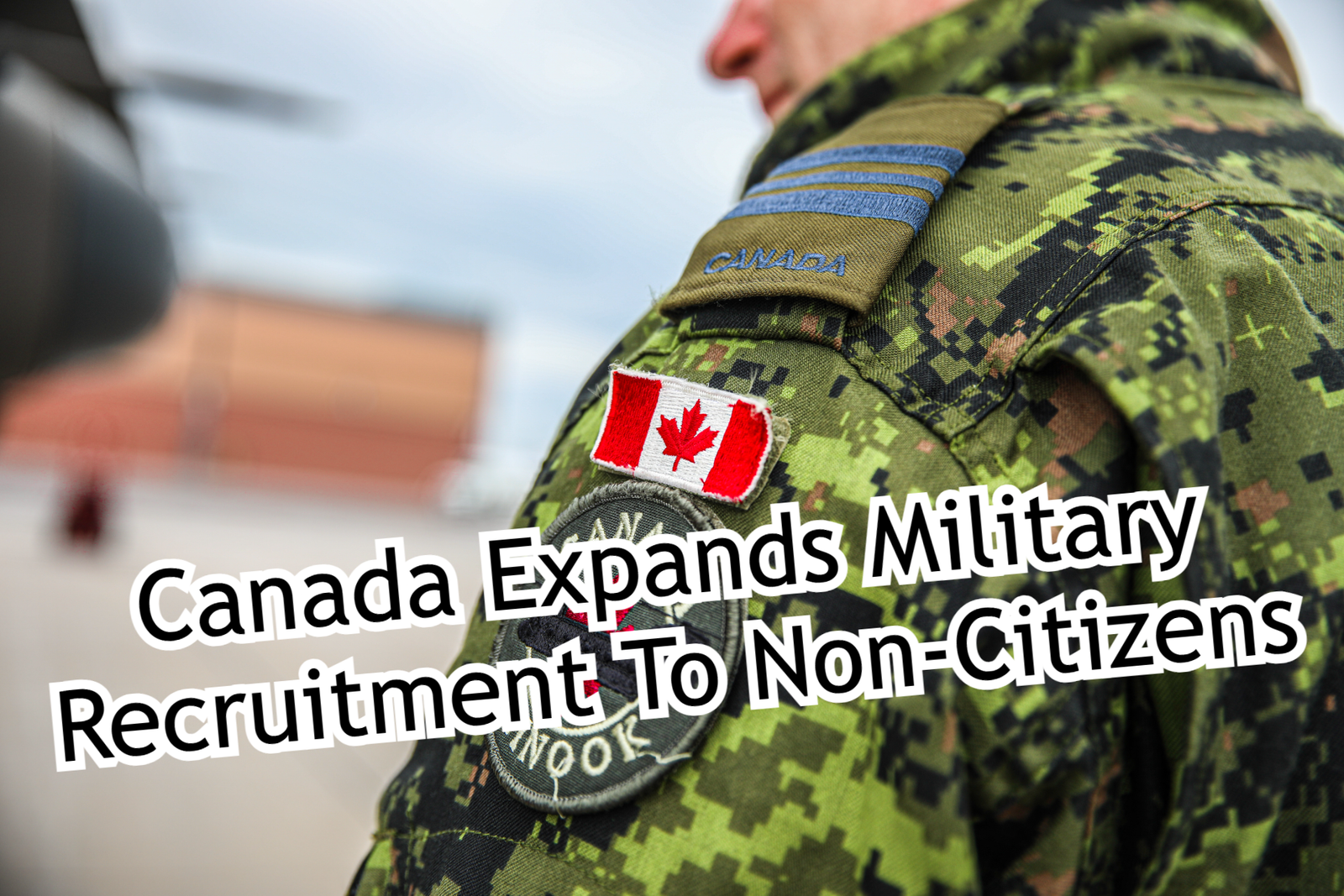
Canada’s armed forces are stepping up recruitment efforts, with permanent residents making up an increasingly significant share of new enrollees as the military works to address longstanding personnel shortages.
The Canadian Armed Forces (CAF) recently surpassed its annual recruitment target for the second consecutive year, enrolling more than 7,300 Regular Force members in 2025–26 — the strongest intake in more than 30 years. Of those, roughly 1,400 were permanent residents, a dramatic increase from previous years.
The surge reflects Ottawa’s push to rebuild military capacity amid rising global instability and growing defence commitments. For 2026–27, the CAF has raised its recruitment goal even further, aiming to bring in 8,200 new members.
To accelerate enrolment, the military has streamlined parts of its recruitment and screening process. While officials say these changes are intended to reduce delays and modernize onboarding, critics warn that speed must not come at the expense of rigorous standards, particularly when national security and operational readiness are at stake.
Concerns have also been raised about whether recruitment standards are being applied consistently. Some observers worry that pressure to meet ambitious targets could lead to a more flexible interpretation of entry requirements, especially for non-citizen applicants. Military leaders insist all recruits must still meet the CAF’s core standards for fitness, aptitude, security screening, and training.
Language proficiency is another important consideration. The CAF operates in both of Canada’s official languages, English and French, and effective communication is essential in training, operations, and emergency situations. While applicants are generally expected to be proficient in at least one official language, there have been questions about whether some recruits may begin the process with limited language skills, creating potential challenges during training and integration. In a military environment, clear communication is not simply an administrative requirement — it is a matter of safety, cohesion, and operational effectiveness.
Permanent residents are eligible to apply for more than 90 military occupations, although many specialized roles still require Canadian citizenship or a minimum period of residency before a recruit can become fully employable. In February, the CAF updated its eligibility rules, requiring permanent residents to have at least three years of physical presence in Canada before they can enrol.
Military officials maintain that once enrolled, permanent residents are held to the same professional, training, and performance standards as Canadian citizens. Still, the rapid expansion of non-citizen recruitment is likely to remain a subject of public debate as Canada works to rebuild and modernize its armed forces.
The challenge for the CAF will be balancing urgent recruitment needs with the high standards required of a modern military — ensuring that every new recruit, regardless of origin, is fully prepared to serve Canada effectively and safely.