
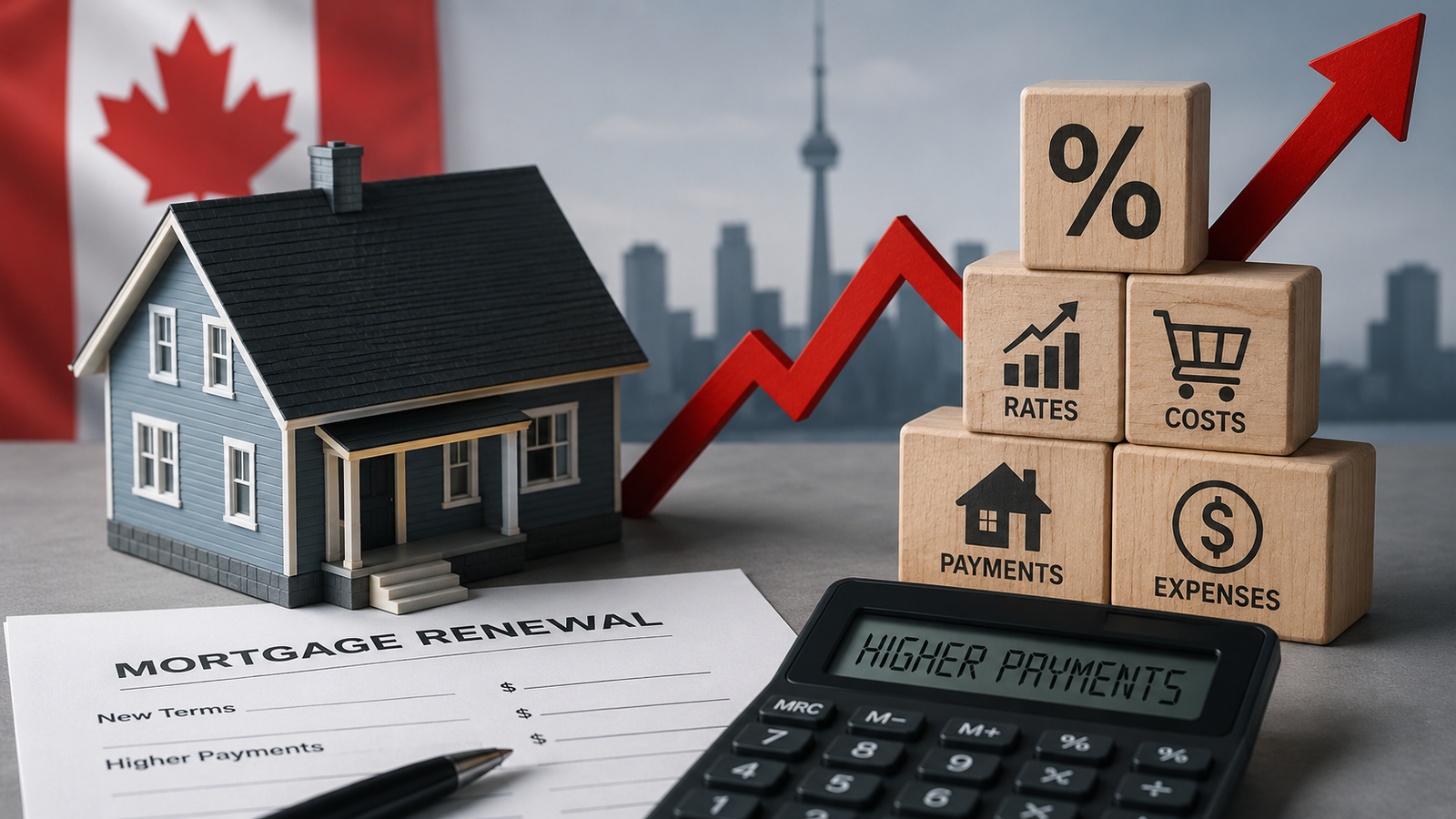
Thousands of Canadian homeowners are entering another important phase of the mortgage renewal cycle as borrowers who secured historically low interest rates during the COVID-19 pandemic face the prospect of higher monthly payments.
The Bank of Canada says about 60% of outstanding Canadian mortgages were expected to renew during 2025 and 2026. Its analysis found that roughly 60% of those renewing could face higher payments, although the impact varies considerably depending on the type and timing of the mortgage.
The issue is particularly relevant for homeowners who locked in five-year fixed rates in 2021, when borrowing costs were near historic lows.
At the time, the Bank of Canada’s overnight rate was just 0.25%. Mortgage rates subsequently rose sharply beginning in 2022 as the central bank increased interest rates to combat inflation.
Final Group Of Ultra-Low-Rate Mortgages
Royal LePage says many homeowners who took advantage of exceptionally low rates during the pandemic have already gone through the renewal process, but a significant group remains.
The company’s recent survey found that 38% of Canadians with a mortgage on their primary residence expect their monthly payment to increase when they renew. Of those, 26% anticipate a slight increase while 12% expect a significant increase.
Another 31% expect their payment to remain roughly unchanged, while 17% anticipate a decrease.
Expectations differ by region. In British Columbia, 37% of respondents said they expect their mortgage payment to increase at renewal.
The concern is more pronounced in areas where mortgage balances are larger. Royal LePage reported that 45% of respondents in Vancouver said they were more anxious about their upcoming renewal than their previous renewal.
Bank Of Canada Sees Continued Payment Increases
The Bank of Canada’s latest financial stability assessment indicates that the mortgage renewal process is continuing to affect borrowers, but so far it has not resulted in a broad wave of mortgage defaults.
The central bank reported that many homeowners who borrowed at very low pandemic-era rates renewed at higher rates during 2025 and the first half of 2026. Most borrowers have been able to manage the higher payments, and lenders have not experienced a broad increase in mortgage losses.
The Bank estimates that borrowers with five-year fixed-rate mortgages renewing in 2026 could see their payments rise by an average of about 20%, although individual circumstances vary.
Its 2026 Financial Stability Report also indicates that some of the final five-year fixed mortgages taken out during the pandemic will renew over the coming year, with average payment increases of approximately 15%.
Higher Rates, But Fewer Defaults Than Feared
Despite concerns about a major wave of mortgage defaults, Canadian homeowners have generally demonstrated an ability to adjust to higher borrowing costs.
The Bank of Canada says mortgage holders have benefited from income growth, accumulated home equity and the mortgage stress test that was in place when many pandemic-era mortgages were issued. More than 90% of borrowers who renewed during the past year did so at rates below the rates they had been required to qualify for under the stress test.
Homeowners are also responding by cutting discretionary spending, extending amortization periods, seeking additional household income or changing other financial priorities.
For some households, however, a higher mortgage payment can significantly reduce the amount of money available for groceries, utilities, transportation, savings and other expenses.
What It Means For British Columbia
The renewal issue is particularly significant in British Columbia, where homeowners in some markets carry comparatively large mortgages.
Royal LePage reported that 37% of British Columbia respondents expect their mortgage payment to increase at renewal, while 45% of Vancouver respondents said they feel more anxious about their upcoming renewal than they did previously.
For homeowners outside the province’s most expensive markets, the impact can be different because mortgage balances tend to be lower. Nevertheless, even a moderate increase in interest costs can put pressure on household budgets.
The Bank of Canada expects the mortgage renewal cycle to continue working its way through the system into 2027. By the second half of 2027, nearly all mortgage holders facing large payment increases are expected to have renewed.
For homeowners approaching renewal, the coming months may therefore be less about a sudden mortgage crisis and more about adjusting household finances to a borrowing environment that is significantly different from the one many Canadians experienced during the pandemic.
For Canadian homeowners, the era of ultra-low mortgage rates may be ending — but the financial consequences of that era are still being felt.