BC Government Bureaucrats Spent $35,000 Of Your Money On A Party With Open Bar

Taxpayers Question $35,000 Government Tab for Bureaucrats’ Open-Bar Party

Taxpayers are raising concerns after newly released documents showed more than $35,000 in public funds was spent on a government-hosted event that reportedly featured an open bar for federal bureaucrats.

Growing Criticism Over Use of Public Money

The Canadian Taxpayers Federation is pressing the federal government for a full explanation, arguing that taxpayers deserve to know why public dollars were used to fund what appears to have been a social gathering for government staff. Access‑to‑information records indicate the event included catered food and alcohol, with critics saying the open bar significantly inflated the overall cost at a time when many Canadians are struggling with rising expenses.

A spokesperson for the federation said the spending raises questions about judgment and priorities, noting that taxpayers “shouldn’t be forced to foot the bill for open‑bar parties for bureaucrats.”

What the Documents Reveal

Records show the event’s total cost reached roughly $35,000, covering the venue, catering, and beverages. While government departments do occasionally host staff events for recognition or professional development, the size of the bill has renewed debate about spending practices within the federal public service.

Critics argue the incident reflects a broader pattern of questionable expenditures that often remain hidden until disclosed through formal records requests. They say stronger transparency measures are needed to ensure public funds are used responsibly.

Differing Views on Staff Events

Some defenders of the spending say workplace gatherings can help with morale, retention, and team cohesion—especially in large departments where staff rarely interact in person. They argue that occasional events may have value, even if they come with a price tag.

Watchdog groups counter that any use of taxpayer money for social functions must be subject to strict scrutiny. They are calling for more details, including which department organized the event, who attended, and how the expenses were approved.

Calls for Accountability

The controversy comes as the federal government faces increasing pressure to demonstrate fiscal restraint. With public frustration growing, critics say Canadians deserve a clear explanation of how tens of thousands of dollars were spent on what appears to have been a government‑funded celebration.

BC Government Sticks Taxpayers With $400 Million Corporate Slush Fund As Provincial Debt Continues Climbing

New B.C. Investment Fund Draws Criticism as Corporate “Slush Fund”

A newly announced provincial investment fund is facing backlash from taxpayer advocates, who argue the initiative amounts to corporate welfare paid for by British Columbians.

The plan, unveiled by Premier David Eby, would establish a $400‑million government fund aimed at supporting selected companies and industries. Supporters say the program is designed to attract investment and boost economic development. Critics counter that it represents another expensive subsidy scheme that benefits large corporations at the expense of taxpayers.

The Canadian Taxpayers Federation has been particularly vocal, arguing the fund gives government officials broad discretion to hand out public money to preferred companies instead of reducing taxes for all businesses. B.C. director Carson Binda says the province is raising taxes on families and small businesses while offering financial incentives to major corporations — a move he calls unfair and poorly timed.

Concerns Tied to Rising Taxes and Growing Debt

The announcement comes on the heels of the province’s latest budget, which includes tax increases and a significant rise in projected borrowing. Critics question whether launching a new subsidy program is responsible when the province is already expecting to add tens of billions of dollars in new debt in the coming years.

Taxpayer advocates argue that directing public funds to corporations effectively shifts money collected from individuals and small businesses to larger companies chosen by government decision‑makers.

Ongoing Debate Over Corporate Welfare

Financial incentives, grants and subsidies for businesses are often labeled corporate welfare by opponents, who argue such programs distort markets by allowing governments to pick economic “winners and losers.”

Supporters maintain that targeted investments can help attract industries, create jobs and strengthen the province’s competitive position.

British Columbia has introduced several similar initiatives in recent years. Programs like the CleanBC Industry Fund have provided millions in support to major companies, including multinational firms operating in the province.

A Debate That Isn’t Going Away

The introduction of the new $400‑million fund is expected to intensify ongoing debates about government spending, economic strategy and the role of subsidies in B.C.’s economy.

Backers say strategic investments can stimulate growth and create employment. Critics argue that lower taxes and fewer subsidies would do more to support long‑term economic health.

As the province moves ahead with the initiative, corporate subsidies and fiscal policy are likely to remain central issues in B.C.’s political and economic conversations.

BC Budget Hits Taxpayers With Higher Taxes And Rising Debt

B.C. Budget Faces Pushback Over Tax Hikes and Rising Debt

British Columbia’s newest provincial budget is drawing sharp criticism from taxpayer advocates, who argue it will add financial strain to households already coping with high living costs — including those in smaller Vancouver Island communities.

The budget, introduced by Premier David Eby and his government, features a mix of tax changes, increased spending and significant new borrowing. Critics say the result will be higher taxes for residents and a growing long‑term debt load for the province.

Higher Taxes and Fewer Exemptions

The Canadian Taxpayers Federation says several measures in the budget will directly affect household finances. Among the most notable is an increase to the lowest provincial income tax bracket, a change that could mean higher annual income tax bills for many British Columbians, including working families on the North Island.

The government is also pausing inflation indexing for personal income tax brackets. Normally, indexing prevents taxpayers from being pushed into higher tax brackets simply because wages rise with inflation. Without it, more workers may face “bracket creep,” paying higher taxes even if their real purchasing power hasn’t improved.

In addition, the budget removes several provincial sales tax exemptions. Clothing repairs and certain telecommunications services — such as cable TV and landline phones — will now be subject to PST. While each change may seem minor on its own, critics argue the cumulative effect adds to the financial pressure on households.

Expanding Provincial Spending

The budget outlines billions in new spending for healthcare, housing, infrastructure and public services. Supporters say these investments are necessary to keep pace with population growth and address ongoing challenges like housing shortages and strained healthcare capacity.

Opponents, however, warn that the province is leaning too heavily on borrowing to fund these commitments. The budget forecasts billions in new debt over the next several years, raising concerns about the long‑term sustainability of provincial finances.

Analysts estimate that, if current projections hold, the province’s debt will amount to tens of thousands of dollars per resident. Critics caution that today’s borrowing could translate into higher taxes down the road as the province works to service and repay its growing debt.

Effects on Rural and Small Communities

For residents of smaller communities such as Sayward and other North Island towns, the financial pressures highlighted in the budget debate can feel especially pronounced.

Rural communities often face higher transportation costs, fewer local services and economies that rely heavily on industries like forestry, tourism and resource development. When provincial taxes rise or new fees are introduced, the impact can be felt quickly by families and small businesses operating on tight margins.

In places like Sayward, where local governments are already dealing with rising infrastructure expenses and increasing municipal taxes, provincial fiscal decisions can add another layer of concern for residents trying to manage household budgets.

Local advocates say the combined effect of rising federal, provincial and municipal costs is contributing to growing frustration among taxpayers.

Ongoing Debate in the Legislature

The provincial government maintains that the budget’s spending is essential to support economic growth and maintain critical services. Investments in healthcare, housing and infrastructure remain central to its agenda.

Organizations such as the Canadian Taxpayers Federation counter that the government should prioritize spending restraint and reduce the financial burden on residents.

As the budget moves through the legislative process, debate is expected to continue over whether the province has struck the right balance between funding public services and maintaining fiscal discipline.

For many British Columbians — including those in smaller Vancouver Island communities — the outcome of this debate may shape the province’s economic direction for years to come.


What Happens When You Can’t Pay Your Property Taxes

For most homeowners in Sayward, paying property taxes is a routine annual responsibility. But when finances tighten, falling behind can quickly become overwhelming. Knowing how the process works in British Columbia—and how it applies specifically in the Village of Sayward—helps residents make informed choices before the situation becomes serious.

Property Taxes Are a Legal Obligation

In British Columbia, municipal property taxes are mandatory. They are secured against the property itself rather than the individual owner. As a result, unpaid taxes stay with the land, regardless of who owns it or whether the property is refinanced.

If taxes are not paid by the annual deadline (usually July 2), penalties are applied immediately. In Sayward, as in most BC municipalities, a 10% penalty is added to any outstanding balance—even if only a small amount is overdue.

Year One: Arrears and Penalties

During the first year of non-payment, taxes move into arrears. Interest may also accumulate depending on local policy. The homeowner still retains full ownership, but the debt continues to grow.

Partial payments are typically allowed and can reduce interest charges, though they do not reverse penalties already applied.

Year Two and Beyond: The Property Tax Sale

If taxes remain unpaid for three consecutive years, the property becomes eligible for a tax sale. In BC, tax sales take place annually on the last Monday of September.

At a tax sale:

  • The municipality auctions the property to recover unpaid taxes, interest, and associated costs.

  • The opening bid equals the amount owed—not the property’s market value.

  • Properties may sell for significantly less than their assessed worth.

Importantly, ownership does not transfer immediately at the sale.

The One-Year Redemption Period

After the tax sale, the original owner enters a one-year redemption period. During this time, the homeowner can reclaim the property by paying:

  • All outstanding taxes

  • Interest

  • Penalties

  • Legal and administrative fees

If the full amount is paid within the year, the sale is cancelled and ownership remains with the homeowner.

If the Property Is Not Redeemed

If the homeowner does not redeem the property within the one-year period:

  • Ownership is legally transferred to the tax sale purchaser.

  • The former owner permanently loses the property.

  • No compensation is provided for any remaining equity.

This means a home worth hundreds of thousands of dollars can be lost over a relatively small tax debt.

Can the Municipality Take Your Home Directly?

BC municipalities cannot simply seize a property for unpaid taxes. They must follow the tax sale process. However, the end result—loss of the home—can still occur if taxes remain unpaid long enough.

Options for Homeowners Facing Difficulty

Homeowners who are struggling should act early. Possible steps include:

  • Contacting the Village for clarification or to discuss payment timing

  • Exploring refinancing or short-term borrowing

  • Applying for the BC Property Tax Deferment Program (available to qualifying seniors, families with children, and persons with disabilities)

Delaying action significantly reduces available options.

A Serious but Preventable Outcome

BC’s property tax enforcement system is strict but predictable. Losing a home over unpaid taxes is uncommon, yet it does happen—often because homeowners misunderstand the process or wait too long to seek help.

For Sayward residents experiencing financial hardship, early communication and a clear understanding of the system can be the difference between a temporary setback and a permanent loss.

Sayward Taxpayers Alliance Logo

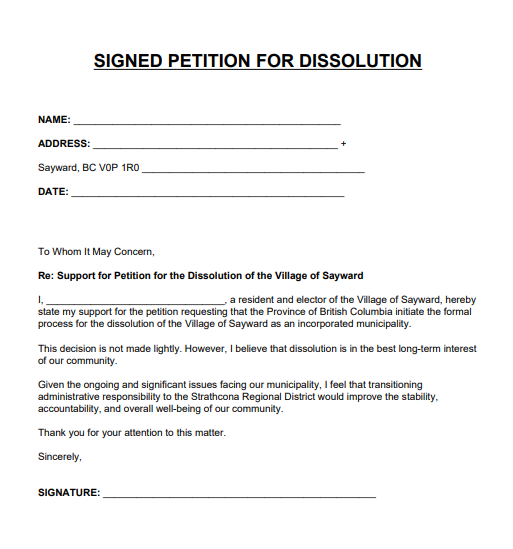
Signing the petition means your voice is heard in calling for: reduced administrative burden, governance improvements, respect of citizen concerns, fiscal responsibility and professionalism.

Petition

BC Residents Urge Province to Rein In Spending Instead of Raising Taxes or Increasing Debt

As the provincial government prepares to release its next budget, many residents in Sayward and other small communities are questioning how British Columbia is managing taxpayer dollars. Local taxpayers and fiscal advocates are urging Finance Minister Brenda Bailey to curb provincial spending rather than relying on higher taxes and increased borrowing.

Advocates note that provincial spending has grown rapidly in recent years and now exceeds the pace of B.C.’s economic growth. They argue this trajectory is unsustainable and places added pressure on families already dealing with rising costs for groceries, fuel, housing, and other essentials.

In practical terms, the province is projected to spend billions more this year than it did just a few years ago, even after adjusting for inflation. Meanwhile, economic growth has lagged behind, leaving less wealth to support expanding government budgets. Those monitoring the province’s finances say this imbalance is contributing to larger deficits and mounting debt — costs that ultimately fall on taxpayers through future tax hikes or reduced services.

For residents of Sayward, these broader fiscal concerns feel very real. Rural communities rely heavily on core public services such as health care, education, transportation, and emergency response. But when government debt grows, interest payments consume a larger share of the budget, leaving fewer resources for frontline services that communities depend on.

Critics of the current spending path are calling on the province to reassess its priorities and identify meaningful savings. They argue this could include reviewing the size of the provincial bureaucracy, cutting wasteful or low‑value spending, and focusing on essential services that directly support communities rather than expanding programs without clear justification.

Supporters of fiscal restraint say responsible budgeting today can help prevent steeper tax increases in the future and protect vital services for the next generation. As budget discussions continue in Victoria, residents in Sayward will be watching closely to see whether provincial leaders respond to calls for spending discipline — and whether the upcoming budget reflects the affordability concerns of rural British Columbians.

Black Bear Deaths in BC Drop to Lowest Level in Over a Decade

New data from the British Columbia Conservation Officer Service shows that fewer black bears were killed in the province in 2025 than in any year over the past decade, marking a significant decline in lethal wildlife encounters.

According to the figures, conservation officers dispatched 178 black bears for public safety reasons and euthanized 33 bears due to injury or welfare concerns. The combined total represents the lowest number of bears killed in conflict situations in roughly 15 years of available records and reflects a substantial drop compared with previous years, including a sharp decrease from 2023 levels.

Conservation officials note that bears are classified differently depending on circumstances. Bears are dispatched when they pose an immediate risk to public safety, often after becoming habituated to human food sources and repeatedly entering residential areas. Euthanization occurs when bears are suffering from serious injuries or health issues that cannot be treated.

Regionally, the West Coast recorded the highest number of bears killed for public safety reasons, while the Okanagan reported the most euthanizations linked to animal welfare concerns.

Strong Natural Food Supply Credited for Decline

Wildlife experts point to a particularly strong berry crop across much of British Columbia in 2025 as a key factor behind the reduced number of bear conflicts. When natural food sources are abundant, bears are less likely to roam into communities in search of unsecured garbage, compost, or other human-related attractants.

Some communities also reported fewer bear sightings overall, suggesting that many bears remained deeper in forested areas rather than venturing into populated zones.

Focus Remains on Prevention and Public Safety

Despite the encouraging numbers, conservation officers stress that human-bear conflicts remain largely preventable and continue to emphasize public education as a cornerstone of wildlife management.

Residents are encouraged to:

  • Secure garbage, compost, pet food, and bird feeders;
  • Keep barbecues clean and manage fruit trees carefully;
  • Practice bear-aware behaviour when hiking or living near forested areas;
  • Report bear sightings when animals show concerning behaviour.

Officials say proactive measures help protect both people and wildlife by reducing situations that lead to bears becoming habituated and ultimately destroyed.

A Positive Trend, With Caution

While the decline in bear killings is viewed as a positive sign for wildlife conservation in British Columbia, authorities caution that continued vigilance is necessary, particularly as communities expand into traditional bear habitat.

Conservation officers and wildlife advocates agree that ongoing education, community cooperation, and responsible management of attractants will be essential to maintaining and improving this trend in the years ahead.