Life and Labor at Kelsey Bay Logging Camp 2 (Circa 1950s)

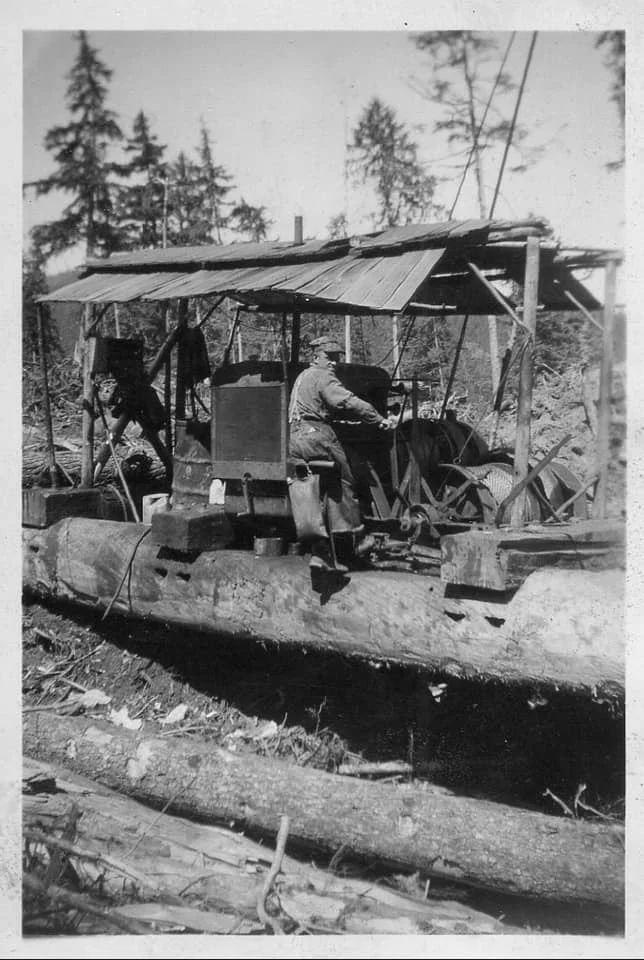
Tucked into the rugged landscape of northern Vancouver Island, Kelsey Bay Logging Camp 2 offers a fascinating glimpse into a time when the logging industry shaped both the land and the lives of those who worked it. The black-and-white image captures more than just a settlement—it reveals a story of resilience, industry, and community carved out of the wilderness.

A Camp Built from the Forest Itself

In the 1950s, logging camps like Camp 2 were often constructed quickly and efficiently using the very timber they harvested. Rows of modest wooden buildings—bunkhouses, cookhouses, and workshops—formed the backbone of daily life. These structures were practical rather than decorative, designed to withstand harsh weather and serve the essential needs of workers who spent long days in physically demanding conditions.

The surrounding landscape in the photo shows the aftermath of intensive logging: felled trees, scattered logs, and cleared land stretching toward the horizon. This was the raw reality of mid-century forestry—an industry driven by demand and powered by manpower, machinery, and determination.

The Rhythm of Camp Life

Life in Camp 2 followed a strict rhythm. Workers rose early, often before dawn, fueled by hearty meals prepared in the camp kitchen. Days were spent felling trees, operating equipment, or transporting logs, while evenings offered brief moments of rest and camaraderie.

Despite the tough conditions, these camps fostered a strong sense of community. Workers relied on one another not only for safety but also for companionship in an otherwise isolated environment. Stories, laughter, and shared experiences helped build bonds that often lasted long after the logging days were over.

Isolation and Connection

The image hints at the camp’s remoteness—dense forest and mountains encircle the settlement, emphasizing how cut off it was from urban centers. Access was typically limited to rough logging roads, rail lines, or coastal routes. Supplies had to be brought in, and communication with the outside world was minimal.

Yet, even in isolation, these camps were hubs of activity and productivity. They played a crucial role in fueling British Columbia’s booming forestry industry, contributing to economic growth and infrastructure development across the region.

A Changing Landscape

Looking back, scenes like this also invite reflection on environmental impact. The widespread clearing visible in the photograph contrasts sharply with modern forestry practices, which increasingly emphasize sustainability and conservation. The 1950s marked a period when efficiency often took precedence over environmental considerations—a perspective that has evolved significantly over time.

Preserving the Story

Today, images of places like Kelsey Bay Logging Camp 2 serve as valuable historical records. They document not only an industry but a way of life—one defined by hard work, ingenuity, and adaptation to a challenging environment.

This snapshot from the past reminds us how communities once thrived in remote corners of the world, built on the strength of shared purpose and the resources of the land around them.

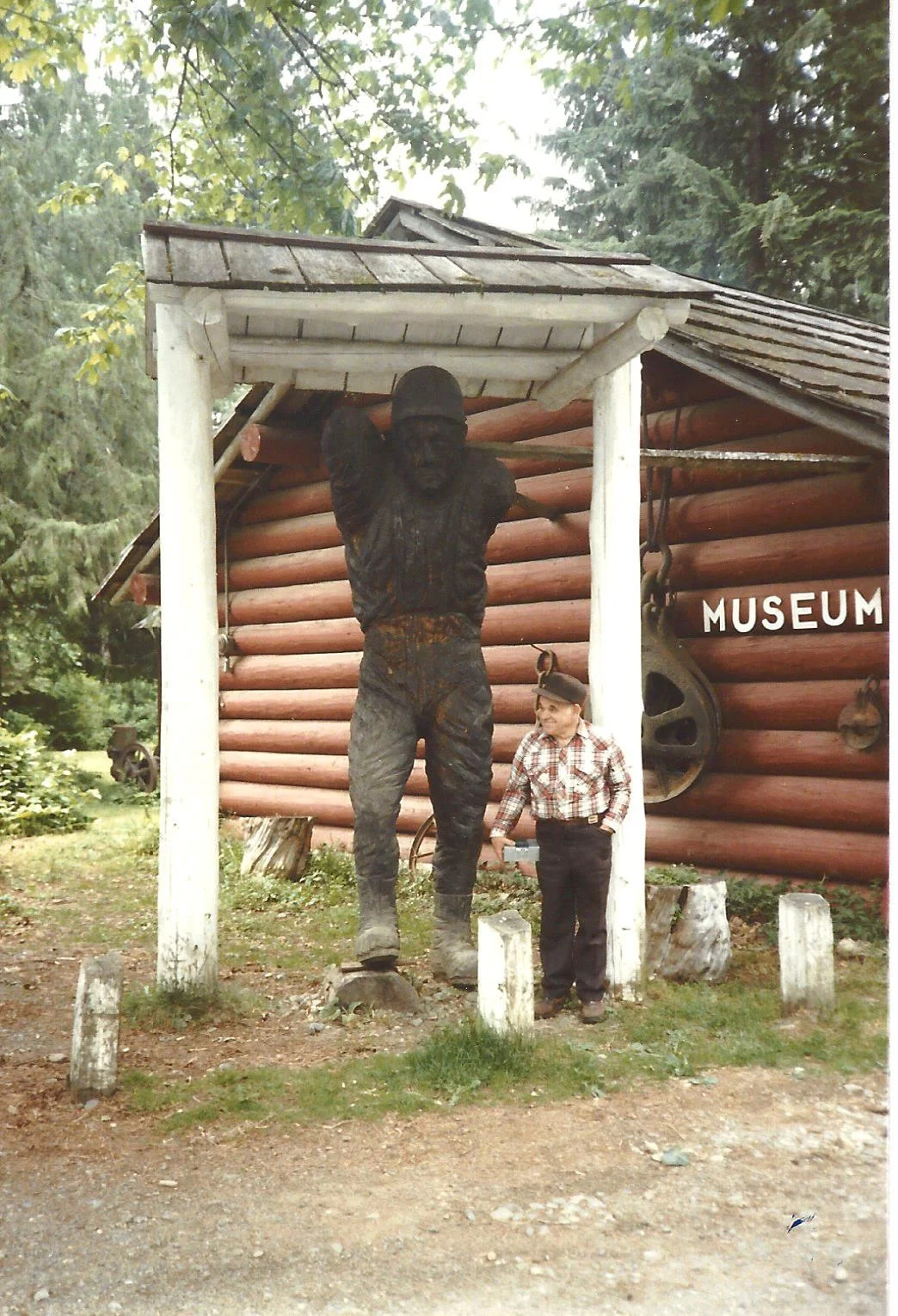
Shorty McKinlay – A Sayward Original

In small coastal communities, legends aren’t made in headlines—they’re built over coffee at the café, in the bush, on the docks, and around stories that get better every time they’re told. In the village of Sayward, one such figure still lives on in memory and local lore: “Shorty” McKinlay.

Nobody needed to ask who you meant when you said “Shorty.” In a place where everyone knows everyone, a nickname like that doesn’t just stick—it becomes a badge of identity. And like many nicknames on Vancouver Island, it likely had a story behind it that only got funnier (or more exaggerated) with time.

A Man of the Bush

To understand Shorty McKinlay, you have to understand Sayward in its working years. This was a community built on logging, fishing, and grit. The forests surrounding the valley weren’t just scenery—they were livelihoods.

Men like Shorty were part of that world. Whether he spent his days falling timber, running equipment, or working the rough edges of camp life, he would have been shaped by the same forces that defined generations of coastal workers: hard labor, unpredictable conditions, and a deep respect for the land.

Logging culture in mid-century Vancouver Island wasn’t polished—it was practical, tough, and often laced with humor. And that’s where personalities like Shorty stood out.

Larger Than Life

Ironically, nicknames like “Shorty” often belonged to men who were anything but small in presence. In communities like Sayward, reputation traveled fast, and being known usually meant you had a story—or a dozen—attached to your name.

Maybe it was his work ethic. Maybe it was his sense of humor. Maybe it was the way he handled himself in a tight spot. Whatever it was, Shorty McKinlay became one of those people others remembered, talked about, and pointed to as part of what made the town what it was.

These weren’t celebrities in the traditional sense—but in a place like Sayward, they didn’t need to be.

The Social Fabric of a Small Town

Beyond the work itself, life in Sayward revolved around community. Evenings might mean gathering at a local hall, sharing stories after a long shift, or catching up with neighbors who were often also coworkers.

People like Shorty were part of that fabric. They helped define the tone of the place—the jokes, the stories, the sense of belonging. In small towns, personality matters. It shapes how people remember their home.

Memory and Legacy

There may not be official records or plaques dedicated to “Shorty” McKinlay, but that’s not how legacy works in places like this. It lives in stories passed down through families, in offhand mentions that spark laughter, and in the quiet recognition of a name that still means something decades later.

In many ways, figures like Shorty represent a broader truth about communities like Vancouver Island: their history isn’t just built by companies or milestones, but by individuals whose lives—ordinary on paper—were anything but in practice.

A Name That Sticks

Today, Sayward is quieter than it was during its peak logging years, but its character remains. And woven into that character are the people who helped shape it—people like “Shorty” McKinlay.

You might not find his name in history books, but in Sayward, that hardly matters.

Because sometimes, the most enduring legacies aren’t written down—they’re remembered.

B&S&W Logging In The 1950s And The Early Days of Larry McKinlay

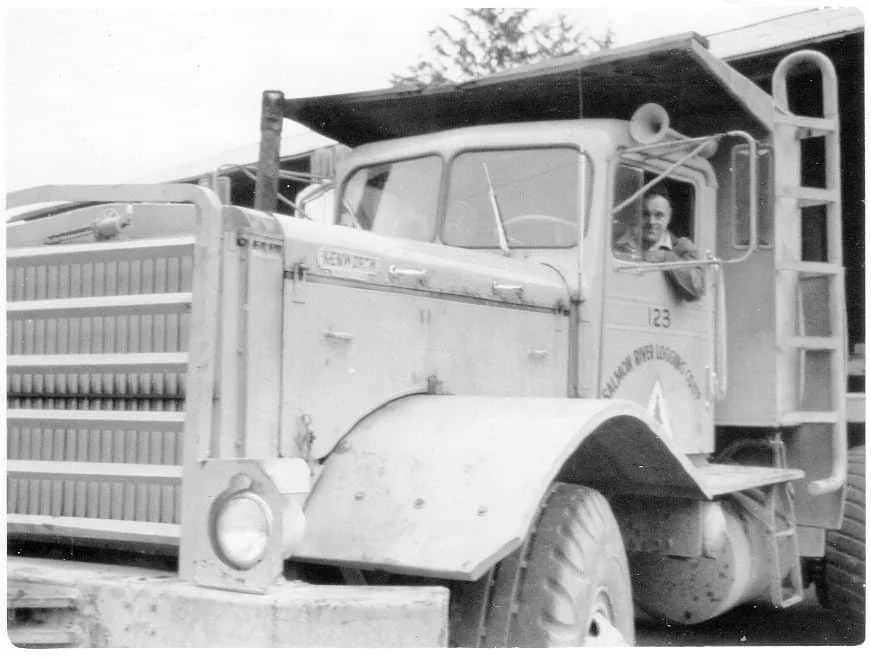
In the rugged coastal forests of northern Vancouver Island, the 1950s marked a defining era for industrial logging—and few names were as central to that story as Bloedel, Stewart and Welch. Operating extensively in and around the Sayward region, B&S&W helped transform a remote landscape into a hub of resource extraction, innovation, and tight-knit community life.

Amid the roar of chainsaws and the thunder of falling timber, a generation of young men came of age in the bush. Among them was a young Larry McKinlay—one of many who would be shaped by the grit, danger, and camaraderie of coastal logging camps.

The Rise of Industrial Logging in Sayward

By the early 1950s, Bloedel, Stewart and Welch had established itself as a dominant force in British Columbia’s forestry sector. With vast timber licenses and access to old-growth forests, the company set up operations throughout the Sayward Valley and surrounding inlets.

Logging in this era was not for the faint of heart. Crews worked in steep, rain-soaked terrain, felling massive Douglas fir and cedar trees that had stood for centuries. Equipment was evolving—steam donkeys were giving way to diesel-powered yarders—but the work remained intensely physical and often dangerous.

Logs were hauled to booming grounds in coastal inlets like Kelsey Bay, then sorted and transported to mills. The scale of operations was immense, and B&S&W played a key role in feeding both domestic and international demand for lumber during the postwar boom.

Life in the Camps

For workers, logging camps were more than just job sites—they were entire communities. Isolated from towns, these camps provided bunkhouses, cookhouses, and a structured daily rhythm built around long shifts and hard labor.

Meals were hearty, the coffee was strong, and the bonds between workers ran deep. In an environment where every man relied on the others for safety, trust was everything.

It was into this world that young Larry McKinlay stepped.

A Young Logger’s Beginning

Like many local boys, Larry McKinlay was drawn into the logging industry at a young age. Opportunities in Sayward during the 1950s were closely tied to the forest, and logging offered both a livelihood and a rite of passage.

Starting out in entry-level roles—perhaps as a chokerman or swamper—Larry would have quickly learned the realities of bush work: the unpredictability of falling timber, the precision required to rig cables, and the constant awareness needed to stay alive.

But beyond the danger, there was also pride. Logging wasn’t just a job; it was a craft. Young workers like Larry were mentored by seasoned hands, absorbing knowledge that couldn’t be taught in classrooms.

Innovation Meets Tradition

The 1950s were also a time of transition in the logging industry. Companies like B&S&W were beginning to adopt new technologies that would eventually reshape forestry work—chainsaws replacing crosscut saws, improved transportation networks, and early mechanization.

Yet much of the work still relied on human strength and skill. This blend of old and new defined the era, and those who worked through it—like Larry McKinlay—experienced firsthand the shift from traditional to modern logging practices.

A Lasting Legacy

The impact of Bloedel, Stewart and Welch on Sayward cannot be overstated. The company’s operations brought jobs, infrastructure, and a sense of purpose to the region. Roads carved through dense forest would later open access for residents and tourists alike.

For individuals like Larry McKinlay, the experience of working in the bush during this formative period likely left a lasting imprint—one of resilience, resourcefulness, and connection to the land.

Remembering the Era

Today, it’s easy to forget just how demanding and foundational this work was. The forests around Sayward still stand as a testament to both nature’s scale and the human effort required to harvest it.

Looking back at the 1950s, we see more than just an industry—we see a way of life. One where companies like B&S&W drove economic growth, and where young men like Larry McKinlay found their footing in a world defined by towering trees and the relentless rhythm of the saw.

It’s a story of hard work, community, and the enduring legacy of logging on Vancouver Island.

A Glimpse into the Sayward Valley in 1948 – Industry, Opportunity, and a Growing Community

Tucked away on northern Vancouver Island, the Sayward Valley has long been a region shaped by its rugged landscape, abundant natural resources, and quiet resilience. A recently surfaced excerpt from a 1948 government document offers a fascinating snapshot of life in the valley during a time when industry and settlement were beginning to take firmer root.

A Region on the Edge of Growth

In the late 1940s, the Sayward Valley was still very much in transition. The document highlights early signs of agricultural development, particularly in the Salmon River Valley, where farming was just beginning to expand. The construction of a highway through the area played a pivotal role, improving access and opening the door to both economic growth and tourism.

Even at this early stage, the region was already being recognized for its recreational appeal. Visitors were drawn by the promise of salmon fishing, a resource that would become synonymous with the area’s identity.

Logging: The Backbone of the Local Economy

If one industry defined the Sayward Valley at the time, it was logging. The document makes clear that forestry operations dominated the economic landscape, with several major and minor companies active in the region.

Large firms operated near key waterways like the Salmon River and Memekay River, using them as vital transportation routes for timber. Smaller outfits worked out of coastal inlets such as Rock Bay and Brown’s Bay, contributing to a bustling—if geographically dispersed—network of logging activity.

This reliance on forestry reflects a broader trend across British Columbia during the mid-20th century, where vast forests fueled both local employment and provincial economic growth.

Agriculture: Modest but Promising

Compared to logging, agriculture in the Sayward Valley was still in its infancy. The document describes small dairy farms supplying local markets, along with limited mixed farming. Large-scale crop production—especially truck farming—was virtually nonexistent.

However, there was optimism about the future. Officials identified thousands of acres of potentially viable farmland between Campbell River and Menzies Bay. With irrigation and favorable economic conditions, this land could significantly expand the region’s agricultural capacity.

This forward-looking perspective suggests that even in 1948, planners saw the valley not just as a resource hub, but as a place where communities could grow and diversify.

Recreation and Natural Appeal

While industry drove the economy, recreation was already emerging as an important secondary draw. The valley’s rivers and coastal waters offered excellent fishing opportunities, while forests and hills supported hunting for deer and grouse.

Small tourist lodges scattered throughout the area catered to visitors seeking a wilderness experience—an early indication of the tourism sector that continues to thrive on Vancouver Island today.

Little Mining, Big Potential

Interestingly, the document notes a complete absence of active mining in the Sayward region at the time. Whether due to lack of exploration or limited mineral deposits, this absence stands in contrast to other parts of British Columbia where mining was a major economic force.

Looking Back—and Forward

What makes this 1948 document so compelling is not just what it tells us about the past, but what it reveals about the trajectory of the Sayward Valley. It captures a moment when the region stood at the intersection of tradition and development—rooted in natural resource extraction, yet beginning to explore agriculture and tourism as complementary paths.

Today, the Sayward Valley still reflects many of these foundational elements. Logging remains part of the economy, while recreation and tourism have grown significantly. The seeds of diversification noted nearly 80 years ago continue to shape the region’s identity.

In many ways, this historical snapshot reminds us that even the quietest places have dynamic stories—stories of adaptation, opportunity, and the enduring relationship between people and the land.

The K’ómoks Peoples Of The Salmon River Region Circa 1917

The K’ómoks Peoples and the Salmon River Region: Relocation, Hardship, and the Formation of a New Community

The Salmon River area near present-day Sayward lies within the broader traditional territories associated with the K’ómoks First Nation. This region, along with nearby coastal areas such as Campbell River and Quadra Island, was historically used and occupied by several related Indigenous groups, including the Sathloot and Säsitla.

According to some regional historical accounts and community sources, the early 19th century was a period of profound disruption and change for these communities, involving a combination of disease outbreaks (including smallpox), flooding events, and inter-community conflict in certain areas. These pressures are described as having significantly impacted population stability and settlement patterns along parts of the northern east coast of Vancouver Island.

Abandonment of Northern Settlements and Movement South

Some accounts describe the gradual abandonment of northern village sites, including areas around the Salmon River, Campbell River, Quadra Island, and surrounding inlets.

Following these events, surviving members of the K’ómoks-related groups—including the Sathloot and Säsitla peoples—are described as having made a voluntary relocation southward in stages.

  • Early movements are often described as occurring around 1830–1835

  • The majority of relocation is said to have been completed by approximately 1850–1855

These movements are understood in these accounts as responses to changing safety, health, and environmental conditions, rather than a single event.

Settlement in the Comox Valley

After relocating south, these groups entered the territory traditionally associated with the Pentlatch people, settling around:

  • Comox Harbour

  • The Puntledge River estuary

  • The area of present-day Comox Valley

Over time, intermarriage, shared settlement, and social integration occurred between the incoming groups and the remaining Pentlatch population.

This process is widely described as contributing to the formation of the modern K’ómoks First Nation, which today represents the descendants of these merged communities.

Transformation of Northern Territories

In some historical and ethnographic accounts, the lands stretching from the Salmon River to the Oyster River—formerly associated with these northern settlements—are described as later becoming part of the territorial use areas of the Ligʷiłdaxʷ (Laich-kwil-tach / Lekwiltok), a Kwakwaka’wakw-speaking group.

These territorial changes reflect broader regional shifts in population distribution and coastal settlement patterns during the 19th century.

Interpreting a Complex History

The history of these movements is complex and is understood through a combination of:

  • Oral histories passed down within Indigenous communities

  • Early ethnographic and colonial-era records

  • Modern historical synthesis by regional historians

Because of this, details such as exact dates, causes, and sequences can vary between sources. What is consistent across accounts is that the early to mid-1800s were a period of major transformation along the northeast coast of Vancouver Island.

From Displacement to Continuity

While these events describe major relocation and change, they also reflect continuity. The formation of the modern K’ómoks First Nation represents the coming together of multiple related groups into a single enduring community, maintaining cultural identity and governance through adaptation.

Today, the K’ómoks First Nation continues to be an active and recognized government, with deep ties to the lands and waters of both the Comox Valley and its broader traditional territories.

Remembering the Salmon River Region

The Salmon River area remains part of a wider historical landscape shaped by:

  • Long-term Indigenous occupation and land use

  • Environmental events such as flooding

  • 19th-century population movements and regional consolidation

  • The eventual emergence of new community structures in the Comox Valley

    The Forgotten Coastal Community Of Port Kusam Near Sayward BC

    Hidden along the rugged coastline of northern Vancouver Island lies the historical site of Port Kusam, a little-known coastal community located near Sayward. Today, it is quiet and largely reclaimed by forest and shoreline, but in earlier decades it played a small yet meaningful role in the broader network of logging, marine transport, and settlement that shaped the region.

    Though not widely documented compared to larger hubs like Kelsey Bay, Port Kusam remains part of the layered industrial and cultural history of the Sayward Valley.

    A Remote Coastal Setting

    Port Kusam sits in a landscape typical of the outer Sayward coast—steep forested slopes dropping sharply into sheltered inlets, with dense temperate rainforest meeting tidal waters. Like many small coastal locations on northern Vancouver Island, it was never a large settlement, but rather a place shaped by resource use and temporary occupation.

    Its sheltered waters made it suitable for:

    • Small marine landings

    • Log handling and booming activities

    • Short-term work camps or industrial staging areas

    In many ways, Port Kusam was less a town and more a working place tied to the land and sea.

    Logging and Coastal Industry

    The history of Port Kusam is closely tied to British Columbia’s coastal logging economy. As logging expanded through the Sayward region in the 20th century, remote inlets like Kusam were often used for:

    • Temporary logging camps

    • Log sorting and booming grounds

    • Transfer points for timber moving by barge or tug

    Before extensive road networks reached every cutblock, the coast itself was a transportation system. Logs could be moved efficiently by water, making small protected inlets valuable operational sites.

    Port Kusam fit naturally into this system.

    Connection to Sayward’s Industrial Network

    Port Kusam was part of a wider coastal-industrial landscape that included logging operations in the Sayward Valley and marine transport hubs like Kelsey Bay.

    Timber harvested inland would often make its way:

    1. From forest cutblocks down rough logging roads

    2. To shoreline staging or booming areas

    3. Out to larger sorting or shipping points such as Kelsey Bay

    In this system, small coastal sites like Port Kusam acted as supporting nodes—quiet but functional parts of a much larger industrial chain.

    Life in a Temporary Landscape

    Unlike permanent towns, places like Port Kusam rarely developed long-standing infrastructure or large residential populations. Instead, they were characterized by:

    • Temporary camps rather than established communities

    • Seasonal or project-based occupation

    • Minimal permanent buildings

    • Constant movement of workers and equipment

    Life in such places was shaped by work schedules, weather conditions, and the demands of the logging industry rather than traditional civic life.

    Nature Reclaims the Coast

    As logging practices modernized and transportation shifted toward improved road systems and centralized marine facilities, many small coastal sites like Port Kusam gradually fell out of regular use.

    Over time:

    • Temporary structures were removed or decayed

    • Industrial activity shifted elsewhere

    • Forest growth reclaimed old clearings and access points

    Today, little remains on the surface to indicate the site’s former role, aside from subtle traces in the landscape and archival references.

    A Quiet Part of a Larger Story

    Although Port Kusam was never a major settlement, its history reflects a broader truth about coastal British Columbia: much of the region’s development was built on small, temporary, and often unnamed industrial sites.

    Together with places like Sayward and Kelsey Bay, it formed part of a network that supported:

    • The coastal logging industry

    • Marine transport routes

    • Resource-based settlement patterns

    These places were small individually, but collectively they shaped the economic and social history of the region.

    Remembering Port Kusam

    Today, Port Kusam stands as a quiet reminder of how deeply industry and geography were intertwined along the Sayward coast. It represents a time when the shoreline itself was an active workspace—where inlets, bays, and forest edges served as vital infrastructure for moving timber and sustaining communities.

    Though largely forgotten in everyday conversation, its legacy remains embedded in the landscape of northern Vancouver Island—alongside the forests, waterways, and working histories that continue to define the region.