
Island Wind Farm Firm Assures Quality Care Despite Absence of Formal Assessment

A proposed wind farm for the Strathcona Regional District is one of nine renewable energy projects that received approval earlier this week.

To expedite these projects, the province announced it is waiving environmental assessments (EA).

Energy and Climate Solutions Minister Adrian Dix announced this exemption at a press conference on December 9. He confirmed that the wind power projects, which will be co-owned by First Nations, will receive 30-year production contracts with BC Hydro.

“We urgently need these new energy generation projects to meet the growing demand for power and to accelerate our efforts to build a prosperous and inclusive clean economy,” Dix said. “We’re going to work together with BC Hydro, First Nations, and project proponents to get these projects built quickly, responsibly, and efficiently, and get those turbines spinning.”

Named the Brewster Wind Project, the plan includes a capacity of up to 200 megawatts with around 30 wind turbines. According to current provincial regulations, wind projects exceeding 50 megawatts or more than 15 turbines typically require an EA.

Megan Hunter from Capstone Infrastructure, the Toronto-based company behind the project, expressed surprise at the EA exemption but said it is too early to discuss changes in the construction timeline.

“B.C. has strong environmental protections, and we plan to complete robust consultation and engagement with Indigenous groups and the local community, as their input will improve the project,” Hunter stated in an email. “Wildlife, environmental, noise, and cultural impact studies will still be conducted.”

Chief Chris Roberts of Wei Wai Kum First Nation, partnering with Capstone, emphasized the nation’s commitment to sustainable development and environmental stewardship. He expressed confidence in Capstone’s capability as a seasoned developer, owner, and operator of renewable energy facilities.

“We understand there is an enhanced permitting process being developed to reduce duplication and inefficiencies in the current EA process,” Roberts wrote. “Our goal is to minimize and mitigate potential negative impacts on wildlife and the environment, regardless of the permitting process.”

The province reiterated its commitment to “robust environmental standards” in a December 9 media release, mentioning a “one window” permitting approach to streamline regulatory processes.

The decision to waive environmental assessments has been met with some surprise.

UBC professor emeritus Michael Healey highlighted the challenges associated with wind farms, such as potential harm to birds, significant land use, and noise concerns.

“I personally don’t think it’s wise to start any large industrial project without thorough environmental analysis, regardless of who is involved,” Healey wrote in an email. “Assuming that First Nations’ involvement means all environmental issues will be fully considered is misguided. The government often incentivizes Indigenous governments to accept projects they might otherwise reject.”

Dissatisfaction with the EA process among First Nations in B.C. has been growing for years. A significant portion of EA litigation in the province has been initiated by First Nations, encompassing broader concerns such as strategic planning, land use, and assessment procedures, according to a 2010 report by UVic’s Environmental Law Centre.

Tahsis Mayor Martin Davis, a regional district director and cave researcher, called the EA exemption decision “surprising.” He emphasized the need for some form of assessment from an economic standpoint.

When the wind project was proposed late in the summer, Davis highlighted the importance of consulting caving and paleontology experts to assess the area. He noted that some ridges in the area contain limestone, which would need to be avoided to ensure the turbines remain stable.

“From an economic perspective, placing wind turbines on limestone could lead to structural failures,” Davis told the Mirror.

Davis also mentioned that caves in the area could serve as critical habitats for bats.
Mount Cain Team Hoping For Pre-Christmas Opening With Favorable Weather Forecast

As of December 12th, 2024, the lower weather station reports 32cm of snow, with the ridge run at 49cm. Unfortunately, conditions are not suitable for opening just yet. There is potential good news, though, as long as it stays cold. Snow is in the forecast starting this weekend and into next week, so while it’s not guaranteed, there’s a chance Mount Cain might open just before the holidays.

Stay tuned for another snow update on December 18th! The Cain Lodge Hostel calendar will be live for bookings on Wednesday, December 25th at 5 PM!

In the meantime, here are some classic snow rituals to keep the snow vibes going:

1. Wear your pajamas inside out.
2. Sleep with a spoon under your pillow.
3. Flush ice cubes down the toilet.
4. Place a white crayon on the windowsill.
5. Do a snow dance.
6. Put a spoon in the freezer.
7. Throw ice cubes out the window.
8. Eat a sardine while doing a headstand.
9. Leave a penny on the windowsill.
10. Place an ice cube in each corner of the house.
11. Wear a toque to bed.
12. Run around the dining table five times before eating.
13. Make a sacrifice to Ullr.
14. Buy your Cain membership online to save time at the ticket booth. (You’ll thank me when it’s snowing and you’re in the lift line!).

And hey, if you’ve been holding onto some old pennies (since they’re not as useful these days), now’s the time to put them to work! Place one on your windowsill for some extra snow magic.

Proposal for 30 Turbine Wind Farm Northwest of Campbell River Unveiled

Toronto Energy Company Proposes 200 Megawatt Wind Farm Between Campbell River And Sayward

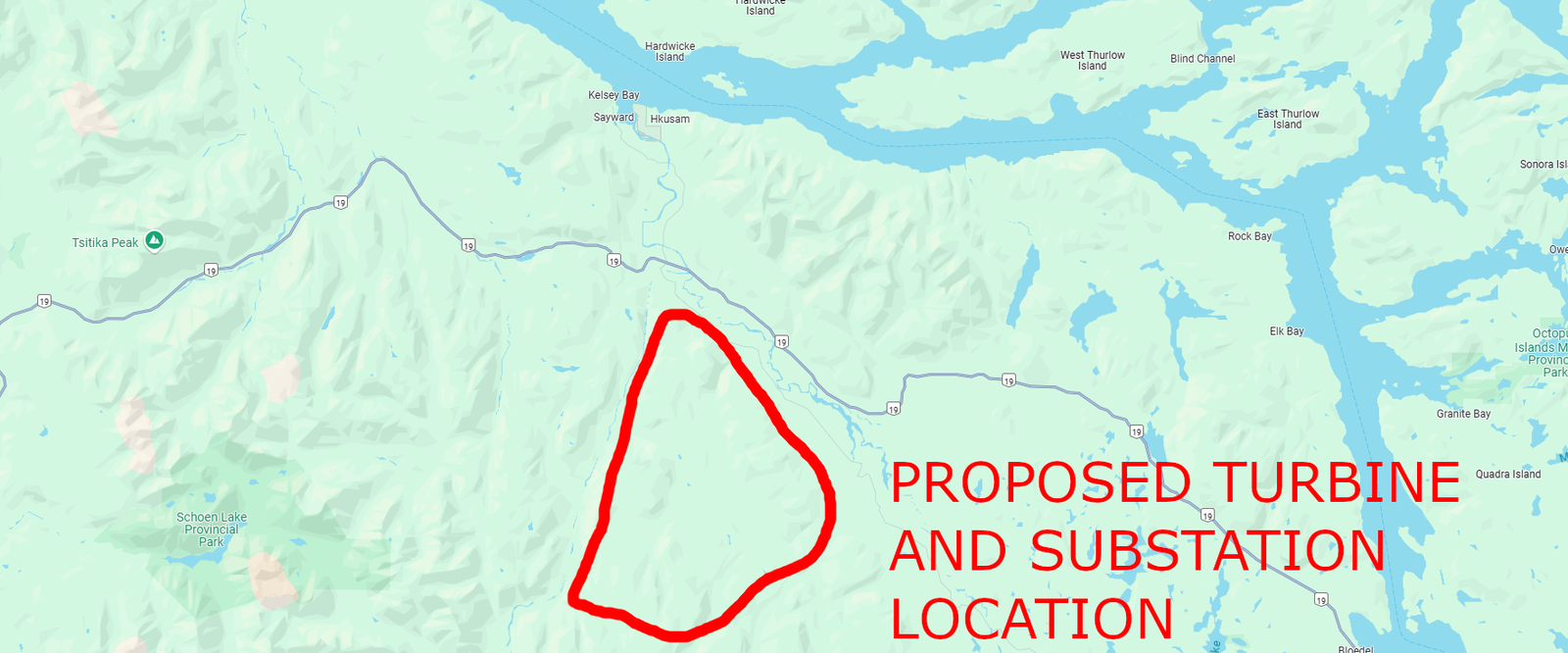
A wind farm is being proposed for a site 40 kilometres northwest of Campbell River in the Strathcona Regional District.

The Brewster Wind Project aims to have a capacity of up to 200 megawatts, featuring about 30 wind turbines. The project will also include a substation, access roads, an interconnection transmission line, and ancillary equipment, operating for 30 years.

In a letter to the regional district submitted in August, Andrea Kausel, Vice President of Development at Capstone Infrastructure, stated that the company is reaching out to provide preliminary notice and begin early-stage consultation.

According to a map submitted by the company, the towers will be erected in two clusters southwest of Sayward.

The letter highlights the need for new resources due to a 15 per cent increase in electricity demand by 2030. The 2024 Call for Power by BC Hydro aims to contract the lowest-cost projects that provide maximum value to the grid and rate-payers.

Last month, the regional district advised the company to consult with caving and paleontology experts, such as those at the British Columbia Paleontological Alliance and Royal B.C. Museum, given the region’s unique cave formations.

At a Sept. 25 district meeting, Martin Davis, an SRD director and cave researcher, emphasized the importance of identifying stakeholders early to assess the proposal’s feasibility. Davis noted that limestone could make the land “inherently unstable,” as evidenced by a previous wind farm proposal near Port Alice that faced environmental challenges.

Capstone Infrastructure’s website addresses the potential effects of wind farms on wildlife, acknowledging that these large-scale infrastructure projects can pose risks. The company mentions that early planning stages can help evaluate impacts. While birds and bats are particularly at risk, careful siting and design, along with in-depth field surveys, can help quantify, avoid, or mitigate impacts to acceptable levels.

Capstone Infrastructure has also proposed a 35-turbine wind farm between Kamloops and Merritt, B.C., in the Thompson-Nicola Regional District. The company operates various power facilities across Canada, including a 16-megawatt hydro power station in Sechelt.

Proposals were due in September, and BC Hydro will award the agreements in December. According to the company, new projects are set to launch between 2028 and 2031.

If successful, the Brewster Wind Project will require an environmental assessment, starting in 2025. The company also plans to conduct further engagement with local communities.

Toronto Energy Company Proposes 200 Megawatt Wind Farm Between Campbell River And Sayward

Hand Carved Raven Feather Wall Plaque On Reclaimed Cedar Fencing – By Carole’s Inspirations

Raven feathers hanging have been found on local property here in Sayward.

Asking $55.00 shipping is additional.

Measures approximately 38″×5.75″.

Carole's Inspirations

Carole's Inspirations

About Carole's Inspirations

Carole’s Inspirations is the place to find handcrafted, unique and gorgeous pieces for your home. Specializing in custom wood work.

  • Driftwood sculptures
  • Custom bird houses
  • Custom planters
  • Photography image transfer to wood, metal or glass
  • Fractal burning
  • Wood burning

Contact Carol's Inspirations

Phone

778.288.5558

Facebook

Carole’s Inspirations

Store

1581 Sayward Road
Sayward, BC
V0P 1R0

All About Mom – Photo By Dene Rossouw

“I don’t think mom will ever come back.” Nah, she will. You’ll see. In British Columbia.

Dene Rossouw

Dene Rossouw

About Dene

Dene spends weekends photographing wildlife with a Nikon Z9, D850 and Nikkor 400mm f/2.8G ED VR, plus portrait, micro and landscape lenses.

Many of Dene’s photographs are available for purchase on his website.


The Importance Of Cleaning Out House Gutters During Storm Season

As the storm season approaches, many homeowners prepare by securing windows, stocking up on emergency supplies, and ensuring their roofs are in good condition. However, one crucial task often overlooked is cleaning out the house gutters. While it might seem like a minor chore, keeping your gutters clean can significantly impact your home’s protection during heavy rains and storms. Here’s why it’s so important:

Prevent Water Damage

Gutters are designed to direct rainwater away from your home’s foundation. When gutters are clogged with leaves, twigs, and other debris, water can overflow and seep into your home’s foundation, walls, and basement. This can lead to extensive water damage, mold growth, and structural issues that can be costly to repair.

Avoid Roof Damage

Clogged gutters can cause water to back up onto the roof, leading to rotting wood, damaged shingles, and leaks. Over time, this can compromise the integrity of your roof and result in expensive repairs or even a full roof replacement. By keeping your gutters clean, you ensure that water flows properly off your roof and away from your home.

Prevent Pest Infestations

Debris-filled gutters create an ideal environment for pests such as mosquitoes, rodents, and birds. These unwanted guests can cause additional damage to your home and pose health risks to your family. Regular gutter cleaning helps eliminate these potential breeding grounds and keeps your home pest-free.

Protect Landscaping

Overflowing gutters can erode soil and damage plants, flowers, and shrubs around your home. Excessive water can wash away mulch and create unsightly ditches in your landscaping. By ensuring your gutters are clear, you protect your garden and maintain your home’s curb appeal.

Increase Gutter Longevity

Routine maintenance and cleaning extend the life of your gutters. When debris accumulates, it can cause gutters to sag, bend, or even detach from the house. Properly maintained gutters are less likely to suffer from these issues, saving you money on replacements and repairs.

Ensure Proper Drainage

During storm season, heavy rainfall can quickly overwhelm your gutter system if it’s not functioning correctly. Clean gutters ensure that rainwater is efficiently channeled away from your home, preventing water from pooling around the foundation and causing potential flooding.

Tips for Cleaning Gutters

  • Safety First: Always use a sturdy ladder and wear gloves to protect your hands. It’s also a good idea to have a friend nearby in case you need assistance.
  • Remove Debris: Use a scoop or small garden trowel to remove leaves, twigs, and other debris from the gutters.
  • Flush with Water: After removing the bulk of the debris, use a garden hose to flush out any remaining dirt and check for proper water flow.
  • Check for Damage: Inspect your gutters for signs of damage, such as rust, holes, or loose brackets, and make necessary repairs.
  • Install Gutter Guards: Consider installing gutter guards to reduce the amount of debris that enters your gutters, making future cleanings easier.

In conclusion, cleaning your gutters is a vital part of home maintenance, especially during storm season. It helps prevent water damage, protects your roof and landscaping, avoids pest infestations, and ensures proper drainage. By taking the time to clean your gutters, you safeguard your home against the challenges of heavy rains and storms, ultimately saving yourself time, money, and stress. So, as you prepare for the storm season, don’t forget to add gutter cleaning to your to-do list!